


 Shkruar nga Hal Brands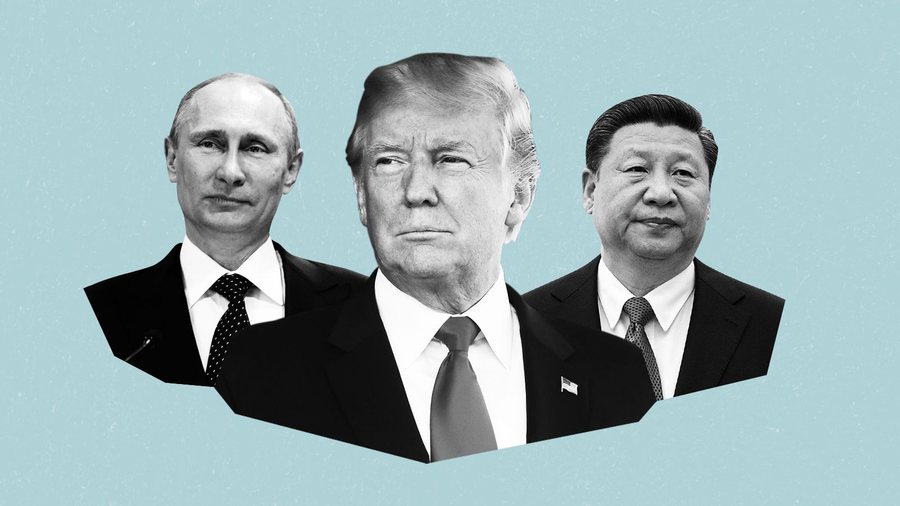
China-Russia tensions are still much lower than they were in Kissinger's time.
During the Cold War, the US isolated China from Russia, putting pressure on its weaker partner. But that strategy won't work against Moscow today.
President Donald Trump's team is pursuing a strategy similar to that of the late former diplomat Henry Kissinger, but this time in the opposite direction. By also taking the post of National Security Advisor, Secretary of State Marco Rubio has achieved the formidable combination of titles that Kissinger held in the 1970s.
But unfortunately, President Donald Trump will find it harder to succeed in separating Russia from China, just as Kissinger succeeded in separating China from the Soviet Union in the 1970s. Disrupting rivals is an ever-favored strategic tradition.
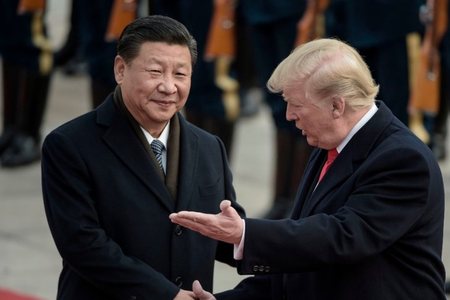
But as Chinese leader Xi Jinping’s trip to Moscow this week confirmed, the China-Russia relationship is not going to break down anytime soon. During his first term, Trump saw rapprochement with Russia as a way to isolate China. Some geopolitical dreams hardly die out despite the passage of time.
The view, in some segments of the second Trump administration, is that Moscow and Beijing have been forced to come together as a result of the war in Ukraine. They argue that ending that war and mending ties with Russian President Vladimir Putin could weaken the Moscow-Beijing alliance.
It could even make Moscow a partner with Washington in containing Beijing. The aspiration is admirable. The secret agreement between the two Eurasian giants is a frightening contemporary reality. And a split between them would benefit only the United States. Trump is not the only recent president to consider such a thing: Joe Biden never saw Putin as a potential ally, but hoped that a “stable and predictable” relationship with Russia would focus US energy on Beijing.
It didn’t work, because Putin was less interested in stability than in devouring Ukraine. And by participating in Russia’s highly militarized annual celebration of its victory in World War II, Xi showed that divide and rule will fail again.
Of course, Xi's visit cannot hide some tensions between the two countries. With their long history of territorial claims against each other, China and Russia are natural rivals. The war in Ukraine has pushed the two autocratic powers towards a strategic rapprochement, which is nevertheless awkward for both sides.
Not every Russian ultranationalist is happy with Moscow’s deepening dependence on an ambitious and expansionist China. And Xi, it seems, is not pleased that the war in Ukraine has created a rift between China and Europe, making it difficult for Beijing to exploit Trump’s divisive behavior to present itself as a responsible global power.
However, China-Russia tensions are still much lower than they were in Kissinger's time. The very idea of a Kissingerian strategy but in the opposite direction is misleading, because with his surprise trip to China in 1971, Kissinger took full advantage of a division that had already occurred.
In 1969, the two neighbors fought a bloody border conflict, with the Soviet Union even considering striking China's nuclear facilities. The Chinese Communist Party's Chairman, Mao Zedong, was even willing to use "distant barbarians" (the United States) to confront "nearby barbarians" on his country's borders.
However, today the strategic unity of the world's major revisionist states is very strong. Moscow and Beijing are trying to create a radically different international order. An order in which American power is undermined, American alliances are broken, and autocracy reigns as the global dominance of democracy is destroyed.
Moreover, both powers know that they cannot defeat the United States if they simultaneously try to defeat each other. China and Russia, Xi says, must fight “side by side” against their common enemies.
Putin, meanwhile, may appreciate a softening of hostility with the US, but he will not trade Russia's vital alliance for a fragile deal with an America that is showing increasing instability under Trump. In fact, easing the pressure on Russia could be counterproductive.
One of the reasons Beijing has not moved towards deeper defense technology cooperation with Russia is the concern that its companies will fall into the trap of Western sanctions. If this fear is alleviated, ties with Russia could flourish in this sector as well.
More specifically, an easing of US pressure could convince Xi and Putin that their partnership is working, while undermining the transatlantic alliance that Washington needs to keep its two enemies in check.
The path to challenging Sino-Russian relations is long and difficult, but it is more like the “opposite of the Dulles scheme” than the opposite of Henry Kissinger’s strategy.
During the 1950s, Secretary of State John Foster Dulles declared that the key to breaking the Sino-Soviet alliance was to exert relentless pressure on the weaker party in order to make costly and intolerable demands on the stronger party.
The closer the two aggressive autocracies got, the more miserable they would make each other. It took about 15 years for the Sino-Soviet split to prove Dulles right. The key today is to maximize the costs that China and Russia have to pay for their relationship.
This means sanctioning Beijing for its ties to Moscow, and forcing Russia into a humiliating and precarious dependence on China. Doing so will not produce overnight miracles. But it could covertly widen Sino-Russian rifts, creating the possibility of a split that would create greater opportunity for the United States.
When might that happen? Perhaps after Putin and Xi, with their strategic brotherhood, leave the scene. Until then, however, the Kissingerian strategy in reverse will remain an illusory shortcut, and an avoidance of the historic challenge posed by the alliance between two hostile giants.
Xi and Putin get along well because they are both at war with the US world order. The sooner we understand this, the better. / Adapted from "Pamphlet" by "Bloomberg"
*Note: Hal Brands, professor at the School of Advanced International Studies at Johns Hopkins University.



Lini një Përgjigje