


 Shkruar nga Pamfleti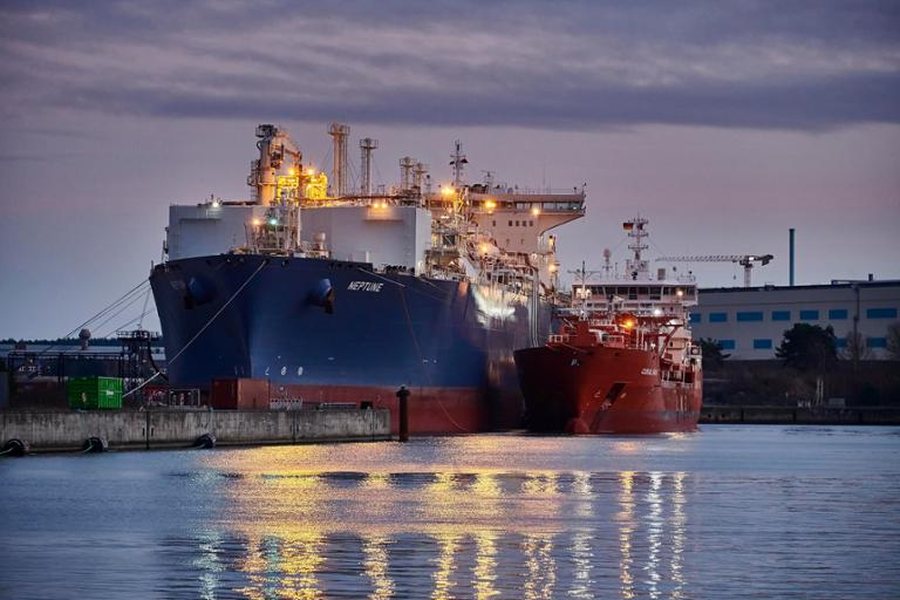
Over 90% of global trade is carried out via sea routes. Despite massive sanctions from the West, Russia consistently manages to circumvent economic restrictions. The shadowy Russian fleet also plays a key role in this.
But now Moscow is officially opening a new sea route: Russia has completed construction of its first domestically built ice-class LNG tanker, as reported last week by the Russian state news agency Interfax. The vessel is capable of breaking through Arctic ice up to two meters thick.
Sanctions imposed as a result of Vladimir Putin's war of aggression against Ukraine make it difficult for Russia to purchase such ships. The construction was also affected by economic constraints: the completion, originally planned for 2023, was delayed by almost two years. "Today is a historic day for the entire Russian shipping and shipbuilding industry, we are putting the first Russian-built gas tanker into operation," Interfax quoted Igor Tonkovidov, executive director of the Sovkomflot shipping group, as saying. "Never before has our country built such complex ships, both in terms of engineering and technology," Tonkovidov continued.
The new tankers are designed for year-round transportation of liquefied natural gas in extreme conditions, specifically for the Arctic LNG 2 energy and infrastructure project, Reuters reported on Wednesday (December 24). The tanker was built by the Zvezda shipyard, and two more of the type are scheduled to arrive in 2026. A total of 21 tankers have been ordered, 15 of which are Arc7-class ice-resistant tankers, according to Russian energy company Novatek, which holds a 60 percent stake in LNG 2.
About the Arctic LNG 2 project
The Arctic LNG 2 project on the Gydan Peninsula in the Arctic envisages the construction of three LNG liquefaction plants, each with a capacity of 6.6 million tons per year. According to government figures, this will result in a total capacity of almost 20 million tons. In comparison, the US was the world's largest LNG exporter in 2024, with 88.42 million tons of liquefied natural gas. Russia aims to triple its LNG exports by 2030.
The ice-class LNG tanker is designed for use in the Arctic regions, especially in the Northeast Passage. This sea route in the Arctic Ocean is approximately 6,500 kilometers long and connects the Atlantic and Pacific oceans. Essentially, the Northeast Passage is a shortcut: traveling from Europe to East Asia, it saves about 40 percent of the distance compared to the Suez Canal. Normally, the passage is blocked by ice, although climate change has recently caused the ice to melt more often, allowing regular commercial ships to pass. However, with its ice-class LNG tanker, Russia is now largely independent of these conditions.
The timing couldn’t be better: The Russian-flagged LNG tanker Buran was reportedly forced to turn back after repeatedly failing to reach an LNG terminal in the Arctic. That’s due to early and heavy ice formation this year, which has hampered Russia’s LNG supplies. The Arctic has also recently shifted into sharper geopolitical focus. World powers Russia, China and the US are competing for access to trade routes, natural resources and control of maritime corridors there. While the Northeast Passage remains a special route for global trade, the passage now appears to be secured for Moscow.







Lini një Përgjigje