


 Shkruar nga Pamfleti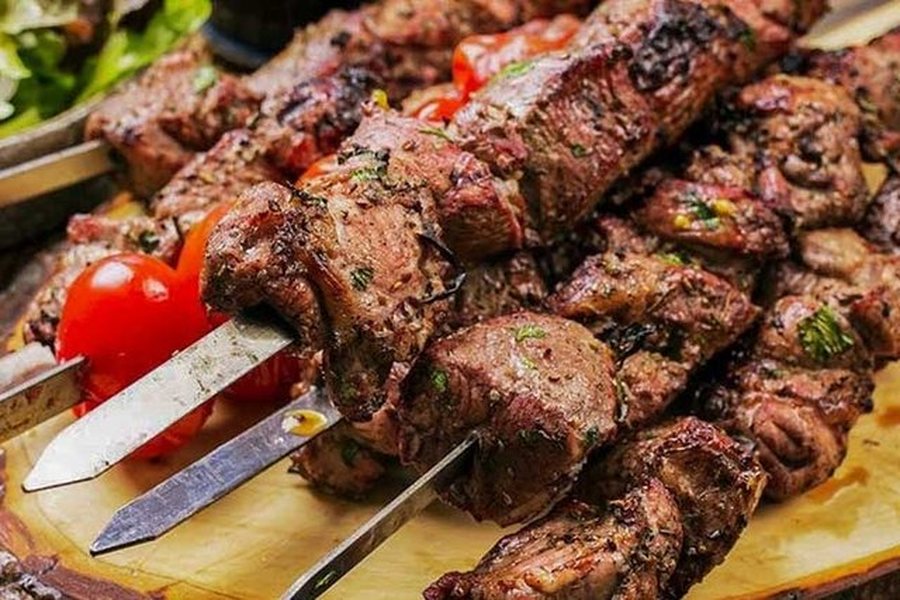
A food "war" is at the center of discussions in Germany, according to the BBC.
The Turkish government's demand that the kebab be recognized as a Turkish specialty, everyone's favorite late-night food, is the main topic of discussion in Germany at the moment.
If there's one thing that unites Berliners, it's the appetite for kebabs.
Office workers looking for a quick lunch, kids on their way home from school or late-night revelers all regularly stop by one of the city's many kebab shops.
What lures hungry Berliners is spice-rubbed beef, skewered, thinly sliced and piled into crunchy salad pitas, often slathered in garlic-infused sour cream.
It's a German take on the traditional Turkish kebab – the same meat served on a plate with rice and salad.
However, even though there are more than 1,000 such shops in Berlin, they may soon be banned from selling kebabs under that name.
In a recent application to the European Commission, the Turkish government requested that the kebab be recognized as a Turkish specialty, which was born and developed in what is today's Turkey.
This would give it the same status as Italy's Neapolitan pizza or Spain's Serrano ham.
Only kebabs that adhere to strict criteria can be called a kebab, although the Berlin version would not pass the test.
Germany's Federal Ministry of Food and Agriculture (BMIL) was one of 11 organizations to lodge an objection.
"We have considered the application from Turkey with some surprise," a spokesman said.
"Kebap is a part of Germany and the variety of methods of its preparation reflects the diversity of our country - this must be preserved", he continued.
"In the interest of the many 'fans' in Germany, we are committed to ensuring that the kebab remains as it is prepared", he emphasized.
The Berlin version of the kebab was born in the early 1970s, according to "Visit Berlin".
Two men claim its creation: Mehmet Aygun and Kadir Nurman were both part of the wave of Turkish "guest workers" that helped fuel Germany's post-war economic boom.
They took the classic Turkish kebab and turned it into an easy-to-eat sandwich that's now an economic force in its own right.
"This sandwich is estimated to generate annual sales of around 2.3 billion euros in Germany alone and 3.5 billion euros across Europe," according to the Berlin-based Turkish Doner Producers Association.
The reasonable price has made it a tool for political points as well.
Earlier this year, the left-wing German party "Die Linke" asked the government to introduce a cap on the Dönerpreisbremse price, but it refused.
The European Commission has instructed the Turkish and German governments to engage in talks to find a compromise, but the fallout from any deal is likely to be felt around the world, where the kebab has become one of Turkey's most popular exports.



Lini një Përgjigje