


 Shkruar nga Pamfleti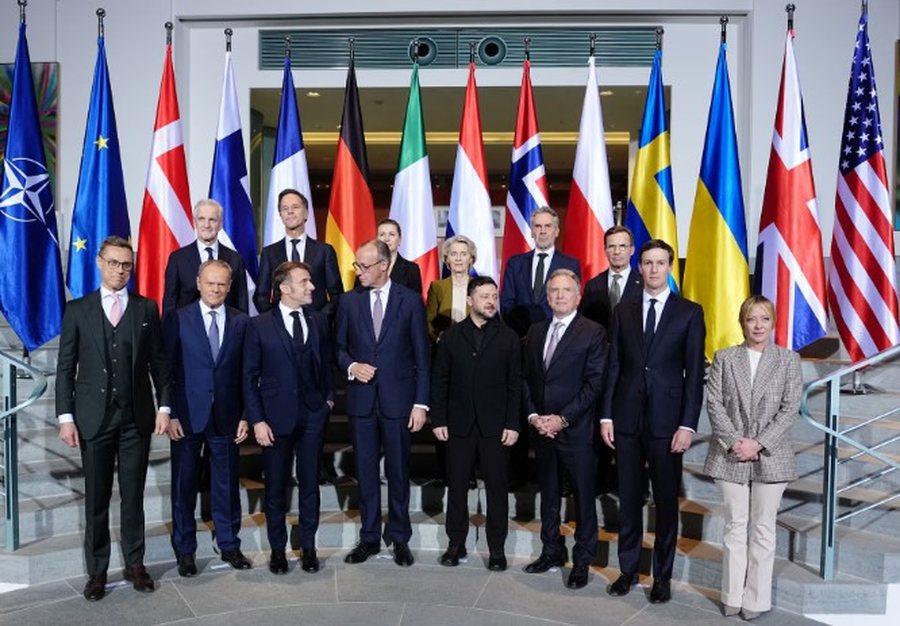
The world order seems to be unraveling, but what comes next? This year's Munich Security Conference seeks answers.
The general atmosphere among European leaders on the eve of the Munich Security Conference (MSC 2026) can be described as more disillusioning than hopeful. Just over a year after Donald Trump began his second term as US President, transatlantic relations are seen as shaken. Trump's misguided foreign policy is casting a shadow over the high-level meeting (13. 02. – 15.02. 2026) known internationally as the Munich Security Conference.
Violation of the main feature of current politics
The conference has been calling itself transatlantic for decades. But in fact, an “unprecedented crisis of confidence” prevails, said conference chairman Wolfgang Ischinger. The “Munich Security Report,” published alongside this year’s Security Conference, bears the telling title “In Disarray.”
Donald Trump is classified in the report as a "demolition man," a head of state who, with his "demolition gun" policy, is destroying existing rules and respected institutions. Trump's remark that he does not need international law is just one of many pieces of evidence for this.
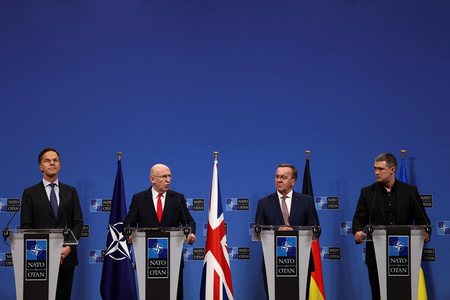
Although under an unprecedentedly difficult sign, the Security Conference, founded more than 60 years ago, continues to serve as a forum for exchange and dialogue. Among the approximately one thousand participants, over 200 are representatives of governments from 120 countries.
The prestigious and traditional Bayerischer Hof hotel, where the conference is taking place, will host Ukrainian President Volodymyr Zelensky, French President Emmanuel Macron, Chinese Foreign Minister Wang Yi, and Mette Frederiksen, the Danish Prime Minister, who recently courageously said stop to Donald Trump when he raised claims to ownership of Greenland, which belongs to Denmark.
The US government sends Secretary of State Marco Rubio
Despite the tensions in transatlantic relations, a large delegation is coming from the US this year, although the Trump administration is represented by Secretary of State Marco Rubio. Conference chairman Ischinger says he expects Rubio to talk about “American foreign policy and not about topics that are not directly related to his department.” This is based on the speech by US Vice President JD Vance last year that irritated the public at the conference. Vance, who is not on the list of participants this year, criticized the alleged lack of freedom of expression in Europe in his speech.
But the US delegation is not just made up of Trump supporters. The participants also include opponents of the US president, such as Gavin Newsom, the governor of California. In his speech at the World Economic Forum in Davos, he made it clear that he expects “more backbone” and stability from the Europeans in the future – because they are quickly bowing to Trump.
Europe on the verge of a new era of self-affirmation?
With this speech, Newsom touched on the essence of one of the topics that will play an important role this year at the conference: How should Europe reorient itself in the changed world situation? What role can Germany play in this regard? Friedrich Merz, who will open the conference on Friday (13.02.2026), for the first time in the position of Chancellor, will speak on this.
In a government statement to the Bundestag, Merz recently called on Europeans to “learn to speak the language of power politics themselves.” This includes massive investments in European defense capabilities as well as building new partnerships.
Everywhere in the world there are “expanding democracies with increasingly open markets that demand exactly what we have to offer,” Merz emphasized in the Bundestag. Referring to the United States, he added: “As democracies, we are partners and allies, not subordinates.” In Munich, the chancellor could explain these thoughts in even more detail – setting the tone for a debate in which the current crisis is also seen as a catalyst for strategic change.
Unwanted Iranian regime representatives
Invitations to the Munich Security Conference are highly coveted, but they are given with great care. Unlike in previous years, representatives of the Iranian government are not welcome in Munich this year. The reason: The massive violence with which the leadership in Tehran crushed recent demonstrations in the country. Representatives of the Iranian opposition and civil society will be given the floor at the conference.
Although Russia’s war on Ukraine will be a central topic at the conference, representatives of the Russian government will not be present. In 2022, shortly before the start of the Russian attack on Ukraine, the Russian delegation collectively canceled its participation, conference director Ischinger recalls. Since then, he says, he has heard “no word” from Moscow about a possible participation.
Referring to the talks on the last chance of war, Ischinger emphasizes that Russia, while pretending to be ready for talks, continues to terrorize the Ukrainian civilian population. For this reason, the Ewald von Kleist Prize of the Munich Security Conference is not being awarded to a single individual this year, but to "the entire courageous Ukrainian people."/ DW



Lini një Përgjigje