


 Shkruar nga Josef Braml & Mathew Burrows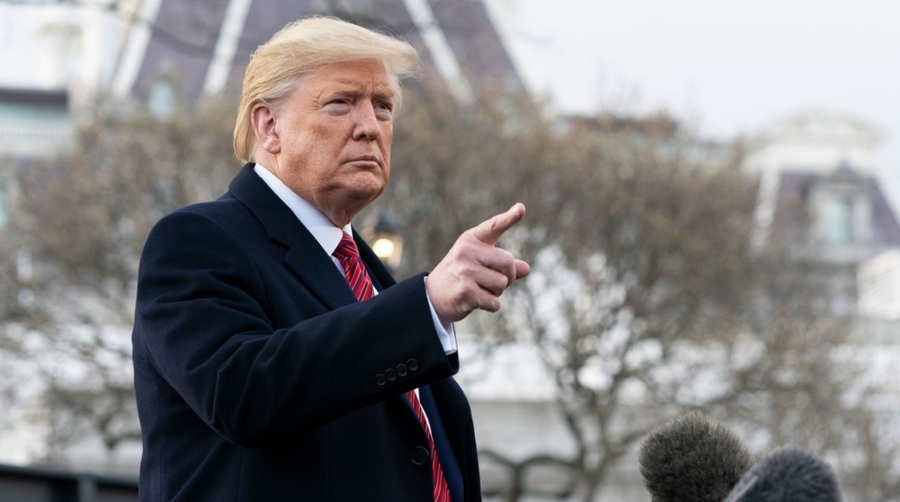
There are two ways out of the current impasse. The first is war.
“The old world is dying, the new world is barely being born. Today is the time of monsters!” wrote the Italian philosopher Antonio Gramsci at the end of World War I. A witness to the rise of fascism in Italy, Gramsci understood that transition could be dangerous. The world finds itself in a similarly critical situation today.
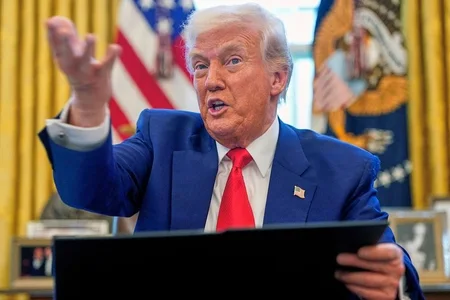
With Donald Trump's victory in the 2024 presidential election, the liberal Western order led by the United States since the end of World War II has come to an end. How will America, Europe, and the rest of the world manage this development?
Trump’s disregard for the plight of others will be a problem for the West but even greater for countries in the Global South. Many challenges and problems await us, but we hope and believe that a new, more just world can emerge from this chaos and that nations can build a new order that renews global cooperation.
So what are the lessons we need to change the current course dominated by the self-interest of states towards a cooperation where everyone benefits?
1. Avoiding World War III
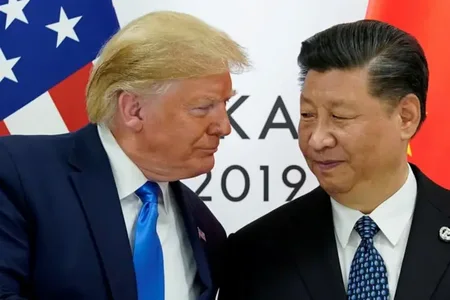
There are two ways out of the current impasse. The first is war, which Harvard political scientist Graham Allison sees as the historical norm for resolving disputes between the two rivals. Under the Biden administration, tensions flared and there were concerns that the US and China were heading for war over Taiwan, but both sides backed down.
Even Putin threatened nuclear war to deter Western support for Ukraine. The second way is to learn from past centuries of great powers trying to live together in peace and apply them to international relations today.
The US must understand that global hegemony is not sustainable. The cost of maintaining it would be bankruptcy at home and conflict abroad, perhaps culminating in a nuclear holocaust. The United States will remain a great power, but over time it must recognize China and Russia as legitimate players, acknowledging that the world is multipolar and that America can no longer dictate all the rules alone.
An expert on US-China relations has suggested that Washington should declare that it approves of Taiwan's unification with China if it happens peacefully. The Middle East is perhaps the most difficult challenge, given the number of players and the long wars.
Annexation of Palestinian territories will fuel additional unrest. Five million Palestinians cannot be oppressed forever. Hamas and Hezbollah are unlikely to disappear, although they have been greatly weakened. The only solution is Palestinian self-rule in the West Bank and Gaza.
2. Cooperation instead of competition
Efforts to mitigate and adapt to climate change offer another opportunity to renew U.S.-China relations and build trust. This must be a global effort, as success depends on it. China’s role in green technology makes its cooperation vital.
The United States fears an expansion of China's monopoly on battery production, and wants Western countries to eliminate any dependence on China and produce their own batteries. Instead of competing with each other, some key technological innovations should be shared as public goods for the benefit of all. China has become a global leader in renewable energy over the past decade, and is expected to exceed its 2030 solar energy targets this year.
Russia has the greatest potential for solar, wind and nuclear energy, but its reliance on oil and gas revenues to finance the war in Ukraine is a major obstacle to the green energy transition. Instead of confrontation, more cooperation is needed to address global climate change and prevent another financial crisis.
3. Avoiding the next financial crisis
In today's multipolar world, international coordination will once again be needed to avoid deepening macroeconomic imbalances, which have the potential to turn into crises. These risks were also evident during the global economic and financial crisis of 2007-2008.
Inequalities are growing and will not be reduced by Trump’s tariffs and the disruption of supply chains, but by long-term processes of structural adjustment. Surplus countries like Germany and China should save less and consume more. Such action by Germany would also strengthen Europe’s political unity. Deficit countries like the United States should save more and reduce their deficits and government debt, which are also fueling macroeconomic imbalances.
4. A more representative multilateral system
While UN membership has grown from 51 to 185 countries, the Security Council seats have only increased from 11 to 15 since the mid-1960s. The five permanent members were victors in World War II, and each retains veto power. Without reform of the Security Council and other multilateral institutions, developing countries will tend to place more hope and trust in bodies founded by Russia and China, such as the BRICS, where their voices are more likely to be heard. Reform is not just about avoiding war; it is also about creating a future where shared prosperity, security, and stability become the foundation of a truly global order. The alternative is not just failure, it is the collapse of everything we hold dear. / Adapted from “Pamphlet” by “The National Interest”




Lini një Përgjigje