


 Shkruar nga Pamfleti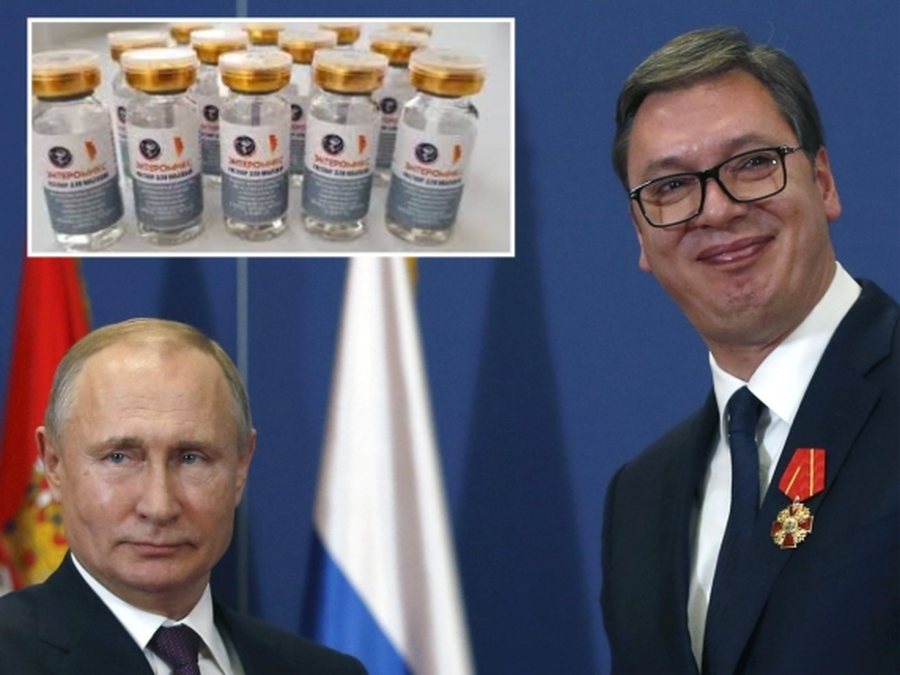
The Serbian government has announced that it will become the first country in the world to test the new Russian tumor vaccine, called Enteromix, developed by the Moscow Medical and Radiological Research Center.
Minister for Economic Cooperation, Nenad Popovic, stated that thanks to artificial intelligence, the vaccine will be "personalizable" and easy to produce within European territory, including in Belgrade hospitals.
According to him, within just seven days it will be possible to combine the patient's genetic material with tumor tissue and intervene on melanoma or colon cancer metastases.
In the background, there is a direct agreement between Russian President Vladimir Putin and Serbian President Aleksandar Vučić, while a team of Serbian specialists is expected to travel to Moscow for training at the Gamaleya and Herzen institutions.
The first doses are expected to be produced at Belgrade's Torlak Hospital as early as 2026, and will also be used for patients from other European countries. But the global scientific community has great reservations. Enteromix is not a preventive vaccine, but an experimental treatment that involves the injection of four harmless viruses to reduce tumor mass by 60–80%, according to Russian claims. So far, the results have only been visible in animals, and clinical trials in humans (48 volunteers) only began in June.
Moreover, Russia has chosen to present this product in an economic, not scientific, forum – avoiding the international academic community and Western laboratories that have been working on cancer vaccines for years.
Critics say it's a propaganda campaign personally led by Putin, who met with former Health Minister Veronika Skvortsova to promote the vaccine. For Moscow, Serbia remains its most loyal partner in Europe, the only country that has not imposed sanctions on Russia, that rejects the democratic reforms demanded by the EU, and that maintains close relations with Moscow and Beijing.
Russia has directly funded Serbian nationalists, particularly in Republika Srpska, while dozens of Serbian mercenaries have been involved in the war in Ukraine. A camp where over 170 Eastern Europeans were trained in urban warfare was recently discovered in Loznica, central Serbia, leading to the arrest of three Russian instructors who were also involved in unrest in France and Germany.
Besides the vaccine, another factor pushing Vučić towards Putin is energy dependence. Serbia's main oil company, NIS, is under US sanctions due to Russian ownership, while gas supplies from Russia, via Balkan Stream, risk being cut off due to EU policies.
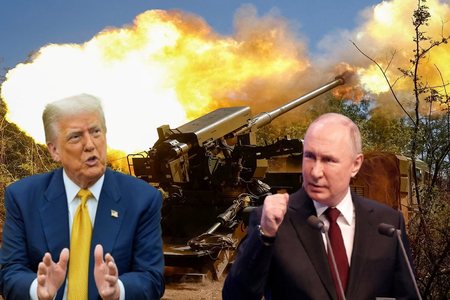
Serbian Energy Minister Dubravka Djedovic-Handanovic describes the situation as “almost hopeless,” while Finance Minister Sinisa Mali warns of an “energy catastrophe.” To avert the crisis, Vucic has traveled to Budapest for talks with Viktor Orban and has offered a safe corridor for Putin through Turkey, the Mediterranean, and Montenegro, in case Russia attends an upcoming summit with Trump on Ukraine.
In this new scheme of vaccine diplomacy, Serbia seems poised to become Europe's Russian laboratory, even as science, politics and national interests have mixed into a cocktail that could have far broader consequences than it seems at first glance. /Corriere Della Sera


Lini një Përgjigje