


 Shkruar nga Pamfleti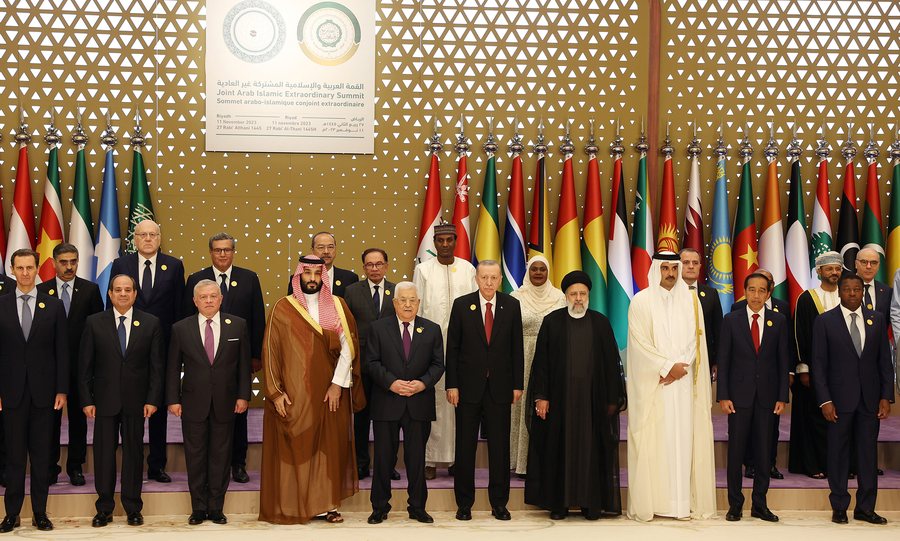
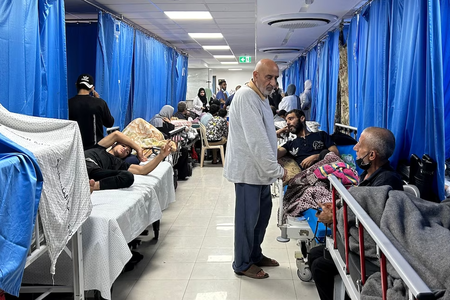
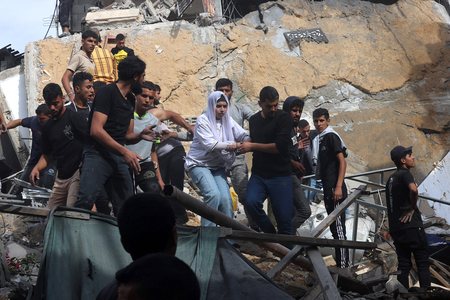
Leaders at the Extraordinary Joint Arab-Islamic Summit in Riyadh on Saturday reiterated calls for a ceasefire between Israel and Hamas as the humanitarian situation in Gaza worsens.
Iranian President Ebrahim Raisi is in the Saudi capital for the summit, marking the first trip by an Iranian leader to Saudi Arabia in 11 years, since the two countries restored diplomatic relations in March. Raisi said those present had gathered there on behalf of the Islamic world to "save the Palestinians".
Meanwhile, Saudi Crown Prince Mohammed bin Salman said "we categorically oppose this brutal war" in opening remarks.
Palestinian Authority President Mahmoud Abbas said the United States, "which has the greatest influence on Israel, bears responsibility for the lack of a political solution."
" We demand that they stop the Israeli aggression and the Israeli occupation of our land ," he said.
He called on the United Nations Security Council to "immediately end the brutal Israeli aggression against the Palestinians" and reiterated the need to ensure the flow of aid supplies to Gaza.
" My mind cannot believe that this is happening under the eyes and ears of the world, without calling for an immediate stop to this brutal war ," he added.
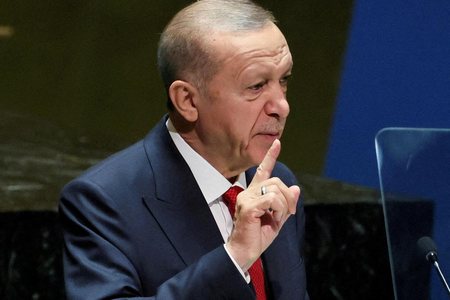
Turkish President Recep Tayyip Erdogan said at the summit that "the world's silence in the face of this brutality shames us all."
" Gaza is almost completely destroyed and Western countries are not even calling for a ceasefire. ...There is no doubt that anyone who is silent about injustice is a partner in the practice of injustice ," Erdogan added.
The Turkish president said Israel is trying to avenge the Hamas attacks on October 7, adding that while no one supports what happened that day, it is not an excuse for Israel to kill civilians.
"Words have become insufficient to describe what is happening in Gaza and Ramallah since October 7," Erdogan said, claiming that Israel was targeting civilians, hospitals, ambulances and places of worship in a "brutal and barbaric way that is unprecedented in history" , concluded Erdogan.
Syrian President Bashar al-Assad criticized the normalization agreements between Arab countries and Israel, saying the policy does more harm than good.
" More hands outstretched by us means more massacres against us ... what we need to do to help Palestine is to use actual political tools, not rhetorical tools, and that is first to stop any political process with the Zionist entity ," he said.
Assad said that what is happening today in Gaza should not be treated in isolation, but should be seen as a "manifestation" of the Palestinian cause and an "open expression of the suffering" of the Palestinians.
" If we continue to face the aggression against Gaza today with the same methodology, then we will pave the way for the end of the carnage ... and the death of the cause ," he said.
Qatari Emir Sheikh Tamim bin Hamad Al Thani criticized the international community for failing to "stop war crimes and massacres" in Gaza.
" We wonder how long the international community will continue to treat Israel as if it is above international law and how long it will be allowed to disregard all international laws in its brutal and endless war against the country's indigenous population. " , said the ruler of Qatar.
The emir said Qatar continues to support all regional and international diplomatic efforts for " de-escalation, containment of bloodshed and protection of civilians, including continued efforts in humanitarian mediation for the release of hostages ," adding that it hopes to reach a humanitarian ceasefire very soon./ CNN




Lini një Përgjigje