


 Shkruar nga Sinan Ciddi & William Doran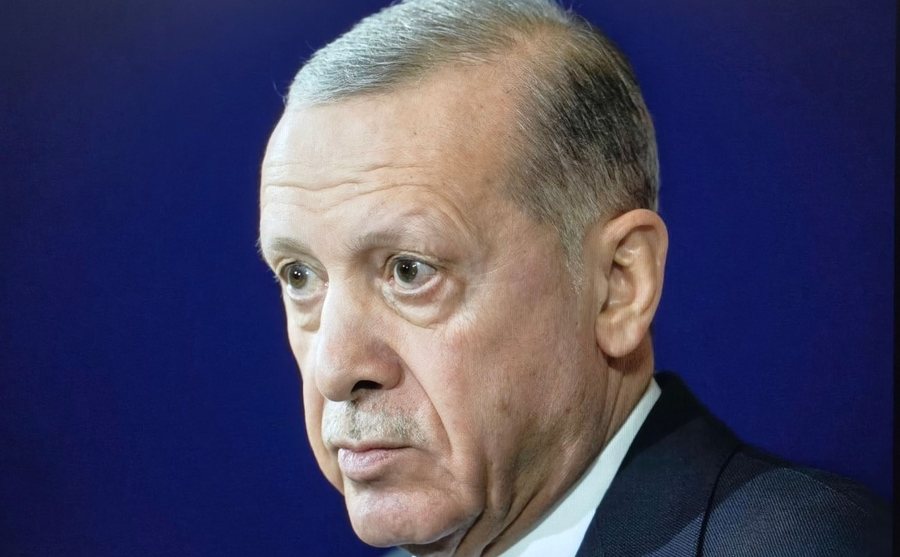
Erdogan is destroying democracy stone by stone and the West is watching without reacting
Turkish President Recep Tayyip Erdogan’s latest moves in his “anti-opposition law” offensive demonstrate a dangerous combination of desperation and political calculation as he seeks to extend autocratic control over the state. For years, Erdogan has worked to crack down on the Republican People’s Party (CHP), the only political force with real capacity to challenge the regime. The arrests of key figures, including Istanbul Mayor Ekrem Imamoglu, and court decisions to dissolve the party’s leadership constitute a silent and prolonged self-coup against the democratic order.
As the country awaits the next results from this legal offensive, Erdogan has shifted his focus to Ankara, aiming to prevent the CHP from producing a strong presidential candidate for 2028. The closer the theoretical end of his term approaches, the more aggressive the moves to paralyze the opposition become.
The method behind Erdogan's strategy
The main objective is to consolidate a one-party state. Since the fall of 2024, AKP-controlled institutions have authorized the arrest of hundreds of CHP officials, including important mayors. Imamoglu, eight months after his arrest, continues to be held in pretrial detention without formal charges, while government-controlled courts have produced swift decisions to justify other previous convictions.
In addition to the political crackdown, the government has intensified pressure on the media. In the summer of 2025, courts launched new trials against independent journalists, while prominent television figures, such as Fatih Altayli, were arrested on absurd charges of “threatening” the president, simply for expressing public criticism. The goal is clear: no one with media influence should challenge the government’s narrative.
The private sector has also been targeted. International reports have documented how the AKP has used anti-corruption laws to seize hundreds of private companies, transferring them to the state deposit guarantee fund, a mechanism that is turning into an enrichment scheme for party officials.
The second strategic goal is to reduce the opposition to an empty symbol. The case of Imamoglu clearly illustrates this: the day before his arrest, Istanbul University revoked the validity of his degree, a necessary criterion for running for president. The arrest then served as an additional guarantee, plunging the CHP's election into a deep crisis.
The attacks have extended to other party leaders, including national leader Ozgur Ozel and the local leadership in Istanbul. A court's decision to declare the CHP's Istanbul congress invalid, pushing for the installation of an AKP-favored leader, represents a direct intervention in the opposition structure, a practice typical of autocratic regimes.
The mayor of Ankara, the next target
Next, Mansur Yavas, the popular mayor of Ankara and one of the most respected figures in the CHP, appears to be the target. Ankara prosecutors have opened an investigation into “corruption” related to the financing of a concert, charges that Yavas has dismissed as politically motivated lies, although he has agreed to cooperate with authorities.
Yavas is seen as a dangerous rival: in the 2024 elections he won with 60% of the vote in a city of 6 million people, and national polls showed him as the only candidate who could defeat Erdogan by a significant margin. With Imamoglu blocked, the CHP is likely to rely on Yavas, which is why Erdogan aims to neutralize him before he officially enters the race.
The US and NATO must give a clear signal
Protests within Turkey against growing authoritarianism have not been met with a strong stance from Western allies. Washington continues to see Erdogan as a useful partner on regional issues – from Ukraine to Syria to Gaza. Meanwhile, the EU has preferred silence, putting geopolitical stability over the protection of democratic values.
But the situation calls for a new reflection. The US and NATO do not need to intervene in Turkey's domestic politics to defend democracy, it is enough to signal that attacks on the opposition and abuses of power have costs. Legal measures against officials who appropriate private companies, restrictions on the sale of security equipment that could be used against pro-democracy protesters, and diplomatic pressure on Ankara would send a clear message.
The opportunity to halt Turkey's slide towards a centralized authoritarian state is running out; without a coordinated response from the West, the process may already be irreversible. /Adapted from "Pamphlet" by The National Interest




Lini një Përgjigje