


 Shkruar nga Juri Morico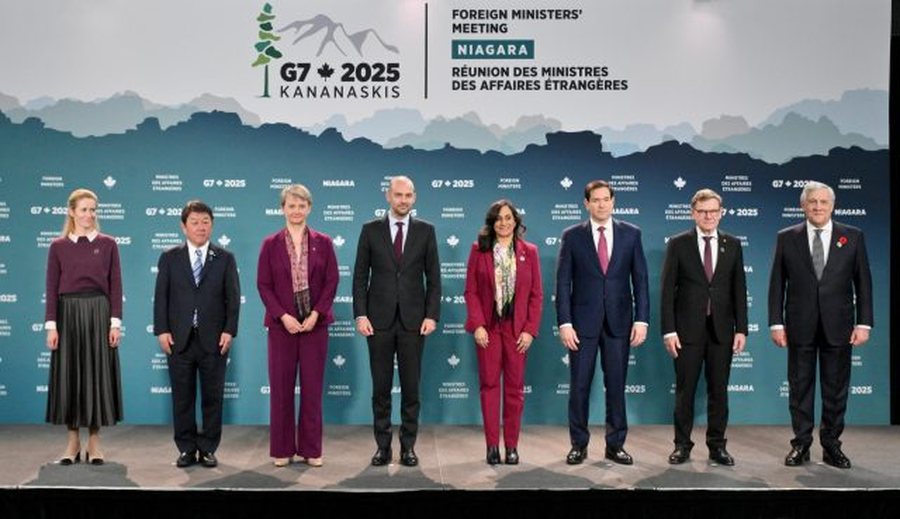
In addition to economic disputes, the G7 faced two geopolitical crises that are reshaping the global balance: the war in Ukraine and the conflict in Gaza. Both issues highlighted how US leadership is now being contested among its allies…
The recent meeting of G7 foreign ministers, hosted by Canada in Southern Ontario, took place in an international context marked by deep political and strategic divisions.
The discussions focused on three global issues: the war in Ukraine, the humanitarian and political crisis in Gaza, and the trade and tariff policies promoted by the US administration.
But more than a demonstration of unity among major industrialized democracies, the summit highlighted the growing divergences between the United States and its historic allies.
The summit, chaired by Canadian Foreign Minister Anita Anand, brought together representatives from the United States, the United Kingdom, France, Germany, Italy, Japan, and the European Union, as well as a number of invited countries such as Australia, Brazil, India, Saudi Arabia, Mexico, South Korea, South Africa, and Ukraine.
US Secretary of State Marco Rubio, representing President Donald Trump, emphasized US national security as the top priority of American foreign policy, causing discontent among other participants, concerned about Washington's increasingly one-sided stance.
Trade tensions between the US and Canada
Among the main sources of tension is the deterioration of bilateral relations between the United States and Canada, historically characterized by close economic and military cooperation. The Trump administration’s imposition of tariffs on Canadian imports has caused a climate of growing distrust. However, the widespread perception is that Washington is now prioritizing the pursuit of its own national economic interests over multilateral cooperation. This trend poses challenges for Canada, which, despite being a member of the G7 and a historical ally of the United States, currently finds itself in an ambiguous position: on the one hand, the need to maintain economic ties with its American partner; on the other, the desire to protect its political and commercial autonomy.
The weight of international crises: Ukraine and Gaza
In addition to economic disputes, the G7 faced two geopolitical crises that are reshaping the global balance: the war in Ukraine and the conflict in Gaza. Both issues highlighted how US leadership is now being contested among its allies. The summit was attended by the Ukrainian foreign minister, welcomed as a priority interlocutor. European countries, notably the United Kingdom, announced new aid packages, including a British contribution of thirteen million pounds intended to repair Ukrainian energy infrastructure damaged by Russian attacks. Canada expressed a similar commitment, a sign of coordination between European and North American allies that, however, does not always align with US priorities. The Trump administration, while continuing to declare support for Kiev, has demonstrated a more cautious and negotiating stance. This stance has raised concerns among G7 partners, who fear a weakening of pressure against Russia. While European countries are pushing for a strong policy, Washington seems to favor a pragmatic approach, closer to the logic of containment than prevention. This divergence undermines the G7's ability to present a united front against Moscow. In the Middle East, the situation is even more complex, with the American initiative for a ceasefire in Gaza directly promoted by Trump. Canada, France and the United Kingdom have expressed their intention to recognize a Palestinian state even in the absence of a final solution to the Israeli-Palestinian conflict, a move that contradicts Washington's cautious and conditional stance. The gap remains clear between the American vision, focused on Israel's strategic interests, and the European one, more attentive to the humanitarian dimension and the need for regional political balance.
The controversial issue of defense spending
Një fushë tjetër konflikti janë kërkesat e SHBA-së në lidhje me shpenzimet ushtarake. Presidenti Trump u ka kërkuar partnerëve të NATO-s, shumica e tyre anëtarë të G7, të ndajnë 5 përqind të produktit të tyre të brendshëm bruto për mbrojtje. Kjo është dukshëm më e lartë se angazhimi i mëparshëm prej 2 përqind i rënë dakord brenda NATO-s. Shumë vende, përfshirë Kanadanë dhe Italinë, kanë shprehur vështirësi në përmbushjen e kësaj kërkese, të cilën e konsiderojnë të paqëndrueshme në afat të mesëm. Kanadaja ka vendosur një objektiv për të arritur 5 përqind të PBB-së deri në vitin 2035, por angazhimi duket më simbolik sesa konkret. Propozimi amerikan pasqyron dëshirën për të zhvendosur një pjesë të barrës financiare të sigurisë kolektive nga Shtetet e Bashkuara tek aleatët e saj, por rrezikon të thellojë përçarjet e brendshme dhe të minojë solidaritetin atlantik. Në këtë kontekst, i vetmi aleat që duket se përputhet plotësisht me strategjinë amerikane është Japonia, e cila, pavarësisht se nuk është anëtare e NATO-s, ka rritur ndjeshëm shpenzimet e saj ushtarake në një përpjekje anti-Kinë dhe anti-Korenë e Veriut.
Ekuilibri i vështirë midis lidershiptit dhe bashkëpunimit
Samiti kanadez nxori në pah kështu një dinamikë të fragmentimit në rritje brenda G7-ës. Ndërsa Shtetet e Bashkuara vazhdojnë të përfaqësojnë qendrën politike dhe ushtarake të gravitetit të aleancës, lidershipi i saj kontestohet gjithnjë e më shumë, veçanërisht kur kjo përkthehet në imponime të njëanshme. Prioriteti i deklaruar i Rubios për "vënien e sigurisë së amerikanëve në vend të parë" përmbledh në mënyrë efektive filozofinë e politikës së jashtme aktuale amerikane: një vizion në të cilin interesi kombëtar mbizotëron mbi çdo konsideratë shumëpalëshe. Kjo qasje bie ndesh me qasjen e anëtarëve të tjerë, të cilët e shohin G7-ën si një mjet për bashkëpunim global dhe jo si një zgjatim të strategjive të Uashingtonit. Tensioni ka të bëjë jo vetëm me politikat konkrete, por edhe me vetë konceptin e rendit ndërkombëtar. Për Evropën dhe Kanadanë, stabiliteti global kërkon kompromis, multilateralizëm dhe investim diplomatik afatgjatë; për Shtetet e Bashkuara të Trump-it, megjithatë, përparësia është të arrihen përfitime të menjëhershme për sigurinë kombëtare dhe ekonominë, madje edhe me koston e dobësimit të institucioneve ndërkombëtare.
Drejt një G7 të fragmentuar?
The picture emerging from the Canadian summit is that of a G7 plagued by rising tensions and a sense of uncertainty about its ability to effectively influence major global issues. The lack of a common line on Gaza, unequal defense commitments, divergences in trade policies, and the growing assertiveness of the United States create a picture of strategic disarticulation. The alliance that once represented the political and economic core of the West now seems engaged in a difficult process of redefinition. The rise of new global players, such as India, Brazil, and Saudi Arabia, invited to the summit, signals that the G7 is no longer the sole decision-making center of the industrialized world. In this scenario, the ability of the United States to exercise leadership will depend on its willingness to recognize the autonomy of its partners and return to a logic of balanced cooperation.
A new balance to be built
The G7 Foreign Ministers' Summit in Canada provided an eloquent picture of the current state of transatlantic relations. The United States, while maintaining a dominant role, now has to confront growing intolerance among allies towards perceived unilateral policies.
Canada, Europe and Japan are trying to reconcile the need to cooperate with Washington with the desire to maintain a space for decision-making autonomy.
Thus, the G7 faces a dual challenge: on the one hand, maintaining its relevance in a multipolar world; on the other, rebuilding an internal balance based on mutual trust and a shared vision.
Crisis management in Ukraine and Gaza, trade policymaking, with the tasks continuing to shake European and global stock markets, and the issue of defense spending will be crucial tests of whether the group will be able to overcome its current divisions or whether, conversely, the tension between American leadership and multilateral cooperation will mark the beginning of a slow decline of the G7 as a cohesive political player on the international stage. /Adapted from The Conservative/




Lini një Përgjigje