


 Shkruar nga Pamfleti
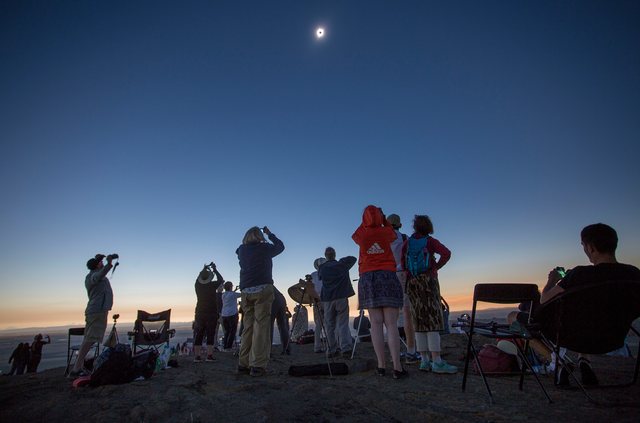
Thousands of eager spectators have flocked to the small Maine town of Houlton to get some of the best views of today's eclipse.
Today, the sky will darken for a few minutes for millions of Americans who are in the path of the 2024 solar eclipse.
This is the first solar eclipse to pass over North America in seven years. This will also be the only chance for some Americans to see a total solar eclipse, as the next one expected to be visible to America will be in 20 years.
The exact time the solar eclipse will occur will vary, depending on the state and time zone. And of course, the visibility of the eclipse will also depend on the weather.
What time will the 2024 solar eclipse occur?
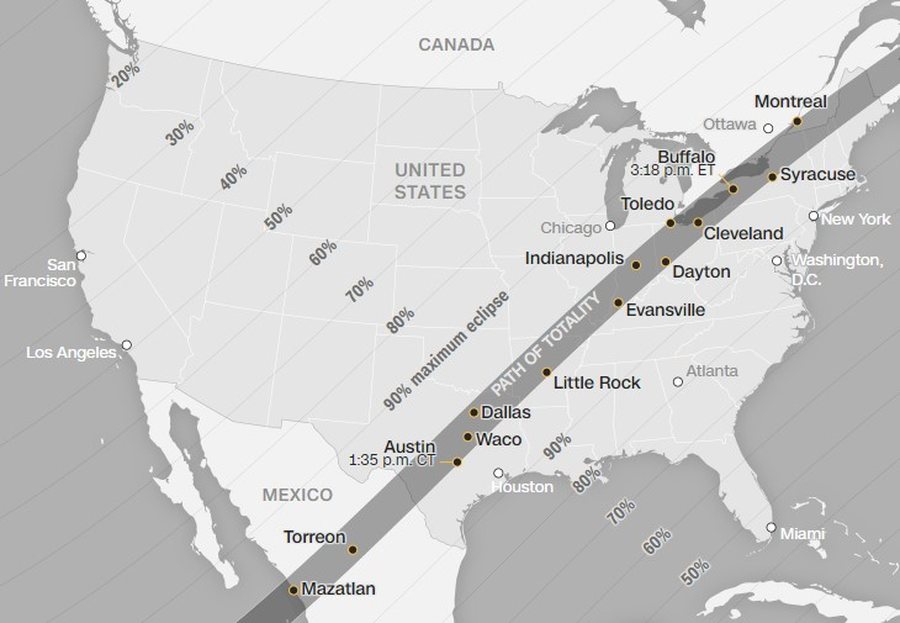
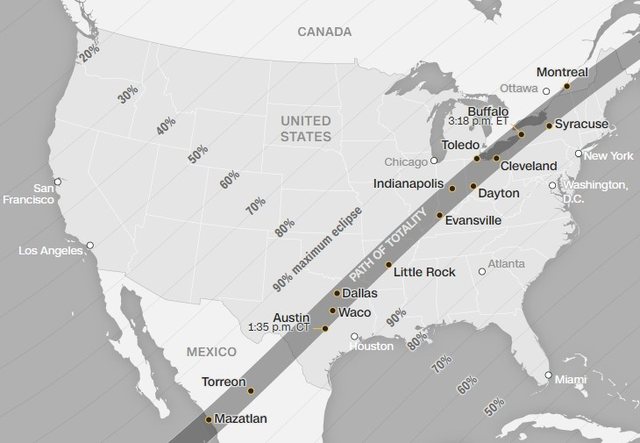
The eclipse will begin in Mexico around 11:07 a.m. (local time), before passing over Texas at 1:27 p.m. (local time). It will end in Maine at 3:35 pm (local time).
Here are the top cities in each state where the total eclipse can be seen:
Dallas, Texas: 1:40-1:44pm CDT
Idabel, Oklahoma: 1:45-1:49 pm CDT
Little Rock, Arkansas: 1:51-1:54 pm CDT
Poplar Bluff, Missouri: 1:56-2:00 pm CDT
Paducah, Kentucky: 2-2:02pm CDT
Carbondale, Illinois: 1:59-2:03pm CDT
Evansville, Indiana: 2:02-2:05 pm CDT
Cleveland, Ohio: 3:13-3:17 pm EDT
Erie, Pennsylvania: 3:16-3:20 pm EDT
Buffalo, New York: 3:18-3:22 pm EDT
Burlington, Vermont: 3:26-3:29 pm EDT
Lancaster, New Hampshire: 3:27-3:30 pm EDT
Caribou, Maine: 3:32-3:34 pm EDT
Although not all Americans will be able to see the total eclipse, they will still be able to see a percentage of it.
The path that the eclipse will follow:
The eclipse begins in Mexico and then crosses into the US through Texas. From there, the path of totality, which is approximately 115 miles wide, stretches northeast, passing through 13 states. In the US, the eclipse will end in Maine, but the eclipse will eventually enter the Maritime provinces of Canada.
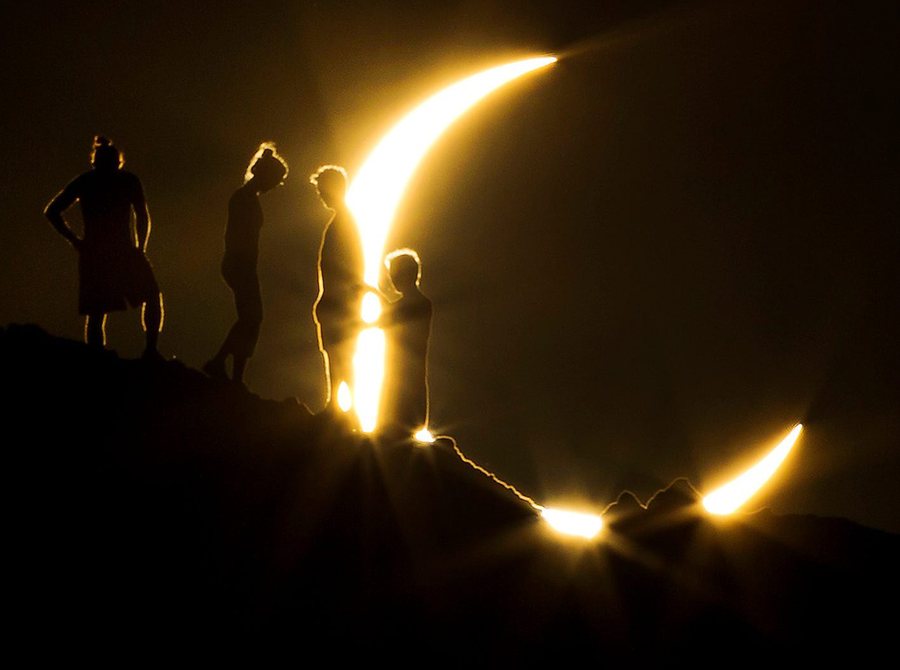
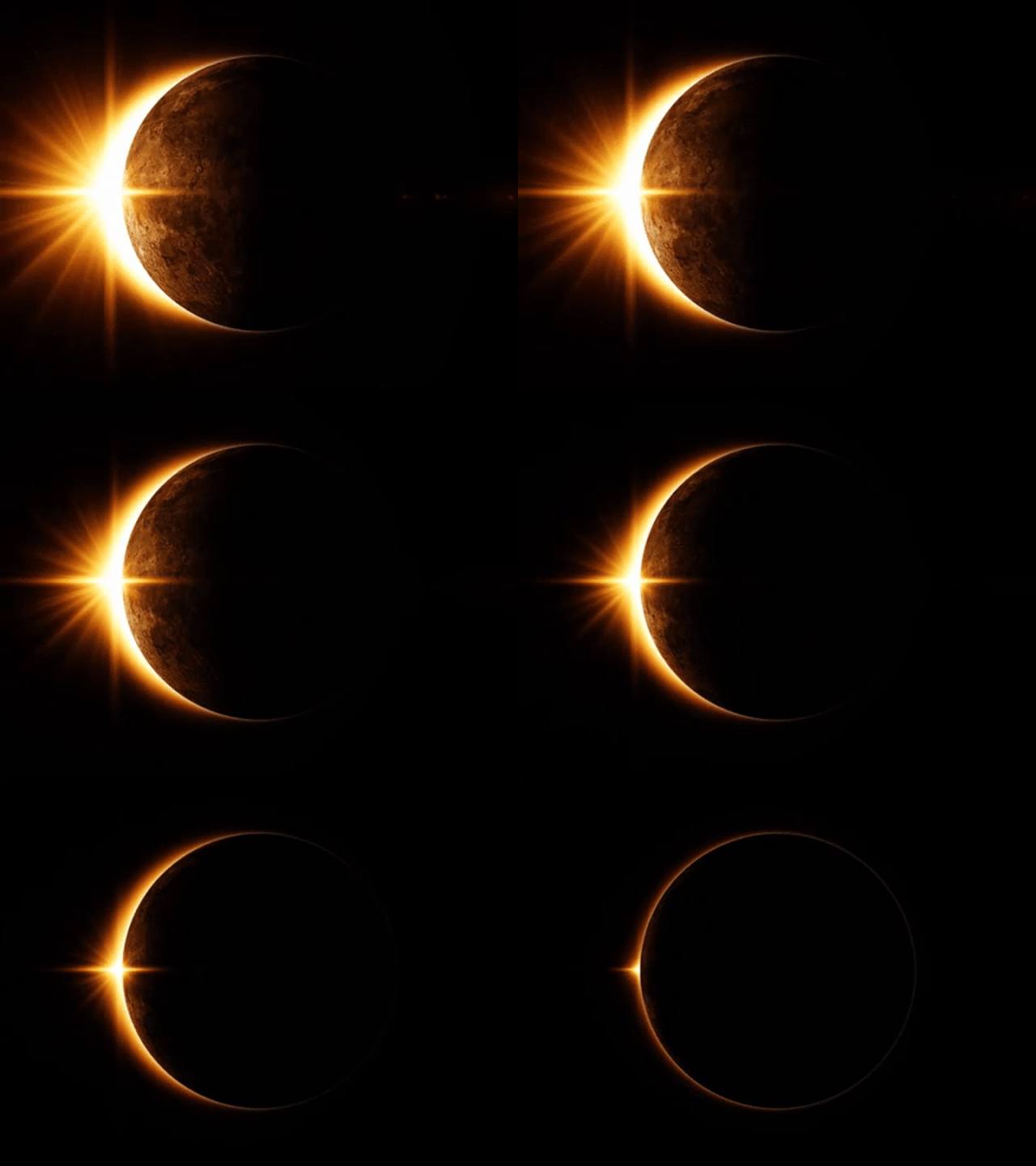
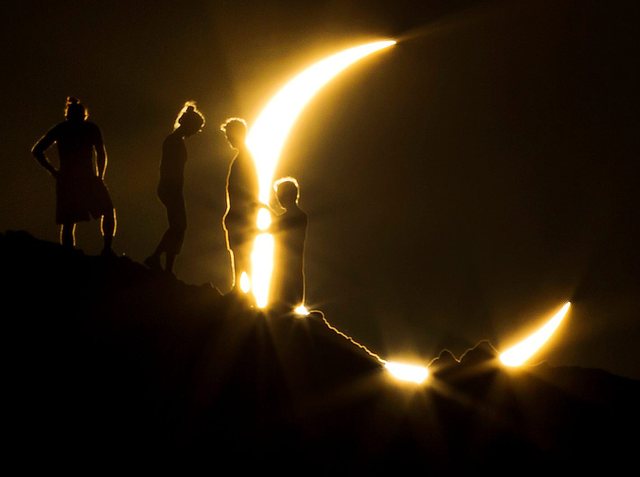
A total solar eclipse occurs when the moon passes between the Earth and the sun, completely blocking the face of the sun. During a total solar eclipse, the sky will darken as it would at dawn or dusk.
Parts of Europe, including areas of Greenland, Iceland, Spain, Russia and a small area of Portugal, will see the world's next total solar eclipse on August 12, 2026, according to NASA.
An annular solar eclipse will be visible in South America later this year on October 2. There will be another in February 2026 for parts of Antarctica.
Meanwhile, NASA's Eclipse Soundscapes project will collect public observations, photos and videos of animal behaviors and human reactions to the eclipse through written reports and audio recordings of the environment during the solar event.
Total solar eclipses are rare events that offer scientists rare opportunities to gather data on behavioral responses to the phenomenon, said Kelsey Perrett, communications coordinator for the Eclipse Soundscapes Project.
Meanwhile, 2,500 people have already signed up for NASA's project to provide the space agency with as much data as possible about the phenomenon.

Thousands of eager spectators have flocked to the small Maine town of Houlton to get some of the best views of today's eclipse. Millions more are also getting ready to witness a rare and incredibly magical phenomenon.
Meanwhile, interest has been high in Houlton, where almost 59,000 pairs of glasses have already been purchased by viewers eager to see the eclipse.
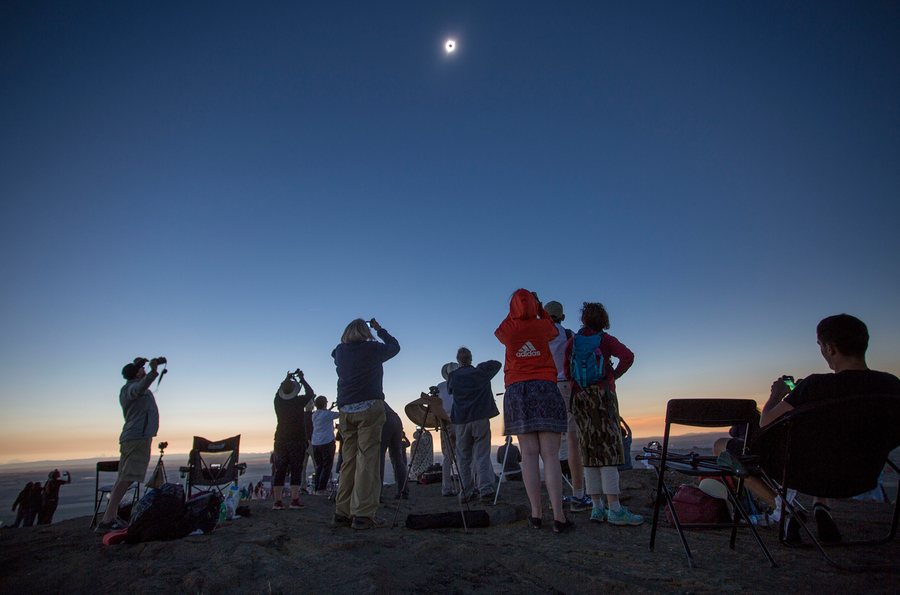
A total solar eclipse offers a unique opportunity to see the corona, the sun's outer atmosphere. It's usually not visible because the sun's surface is much brighter, but with the moon blocking it during totality, the outer edge shines.
Compared to the 2017 solar eclipse, the sun's corona will be more active this year, according to NASA. This means there is a better chance of seeing curls, loops and flares from the sun from behind the moon.
That's because the sun was in a minimum solar cycle in 2017, meaning it was more magnetically balanced. In April 2024, the sun will reach its peak solar maximum, known as Solar Cycle 25. Lucky for eclipse watchers on Monday, Solar Cycle 25 is expected to put on a show.
The cycle has already been full of activity, according to data from the National Oceanic and Atmospheric Administration. The added animation has included powerful solar flares and coronal mass ejections, or large clouds of ionizing gas called plasma, and magnetic fields erupting from the sun's outer atmosphere.
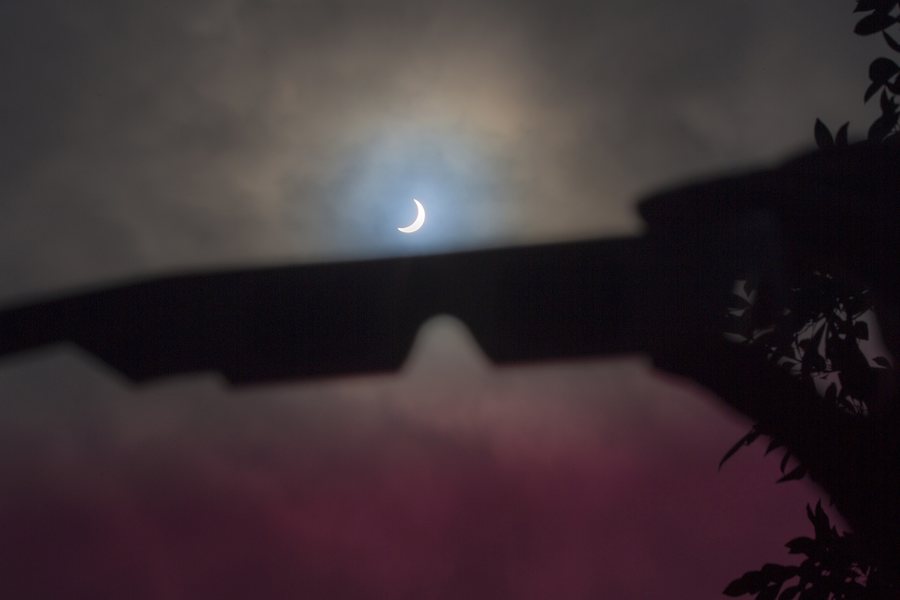
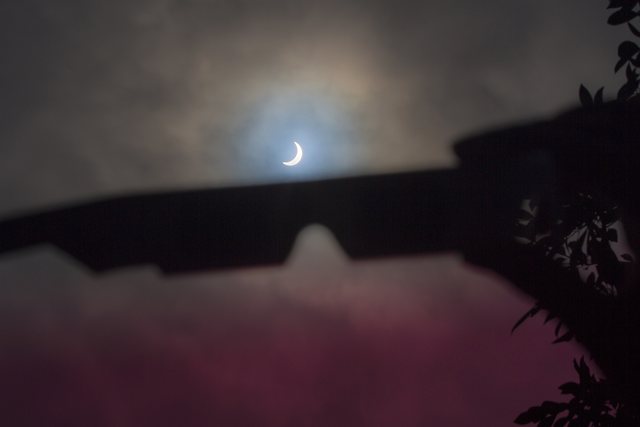
Authorities have advised citizens to wear special glasses to view the eclipse, or else they could permanently damage their eyesight. Sunglasses do not block infrared radiation.
The lenses of the solar eclipse glasses are made of black polymer, or resin filled with carbon particles, that blocks almost all visible, infrared and ultraviolet light, according to The Planetary Society./ Pamphlet









Lini një Përgjigje