


 Shkruar nga Pamfleti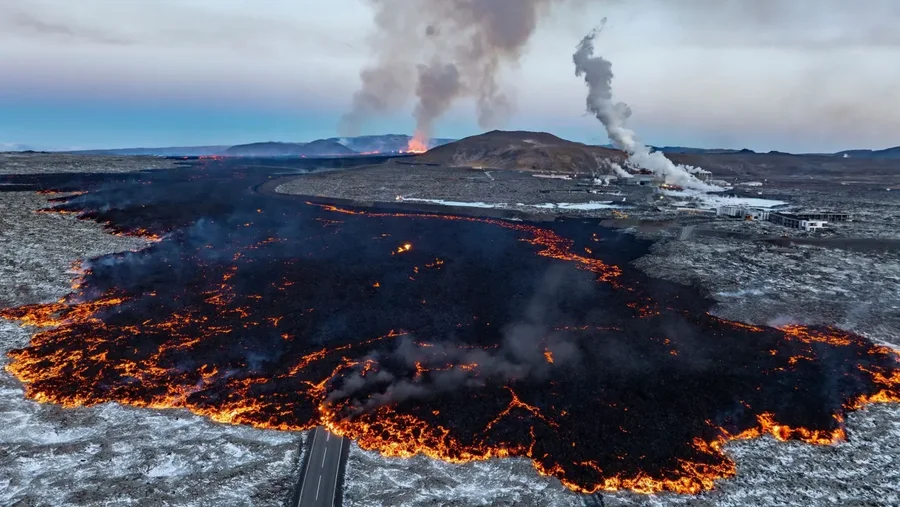
A volcano erupted in southwestern Iceland today, authorities said, with live images from media showing billowing smoke and significant lava flows, the latest in a series of eruptions near the capital in recent years.
This North Atlantic island nation, often described as a land of ice and fire, with its multitude of glaciers and volcanoes, has recorded 12 eruptions since 2021, when geological systems on the Reykjanes Peninsula became active again, and nine since the end of 2023.
The magma penetrated the Earth's crust, opening a large crack 700 to 1,000 meters long, the meteorological service announced. But it does not threaten any infrastructure, the meteorological service said in its statement.
UPDATE A volcano erupted on Wednesday in Iceland's Reykjanes peninsula, weather authorities said, the ninth eruption to hit the region since the end of 2023.
— AFP News Agency (@AFP) July 16, 2025
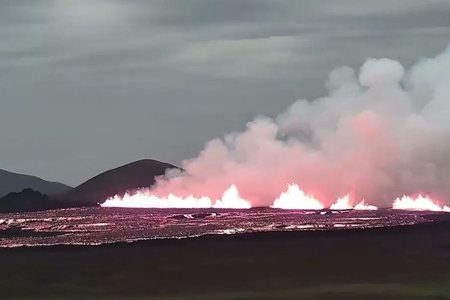
Live video feeds showed lava spewing out of a fissure in the ground pic.twitter.com/6vb17GakvD
Based on GPS measurements and deformation indications, it is likely that this was a relatively small explosion. Flights at Keflavik Airport in the capital Reykjavik were not affected.
Public broadcaster RUV reported, citing police, that holidaymakers were evacuated from the Blue Lagoon, a luxury geothermal resort, and from the neighbouring town of Grindavík.
Grindavik, home to nearly 4,000 people before evacuation was ordered in 2023, has remained almost deserted ever since, for fear of lava and earthquakes associated with volcanic eruptions.
The eruptions in Reykjanes have so far not threatened Reykjavik, nor have they spewed large volumes of ash into the stratosphere to cause problems for air traffic.
Experts have said that eruptions in the area could recur periodically for decades, even centuries.
These fissure eruptions, as they are known, are characterized by the fact that lava emerges from large fissures rather than from a central crater.





Lini një Përgjigje