


 Shkruar nga Pamfleti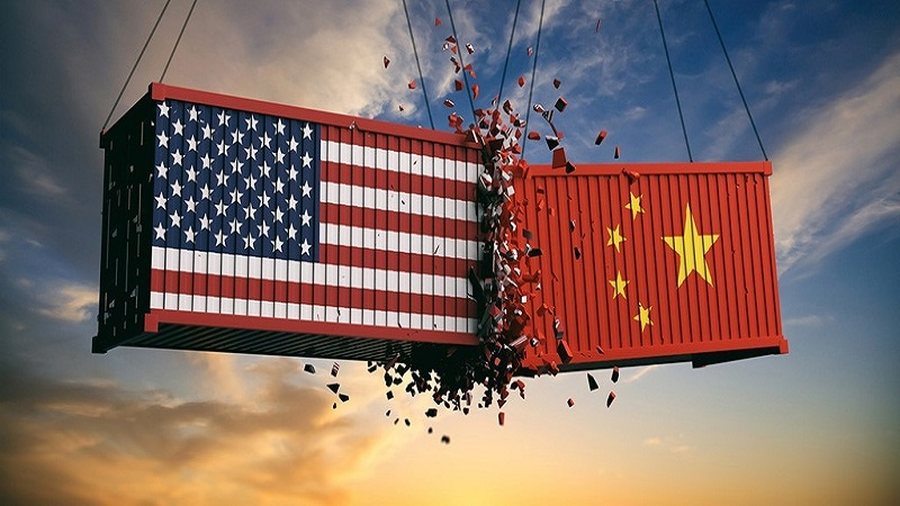
Escalating trade hostilities between China and the United States could jeopardize Ukraine's supply of drone parts, which are crucial to its fight against Russia.
US media reports that Chinese manufacturers are restricting sales of vital drone parts to companies in the United States and the European Union that supply Ukraine with those parts.
These restrictions from China could hamper Ukraine on the battlefield, where drones have played a crucial role. Kiev's arsenal of cheap but effective drones is used for tracking, dropping bombs on targets and defending against Russian attacks.
Beijing's move is seen as a response to Washington's decision in December to limit the sale of large material storage chips and other semiconductor equipment to China. Beijing has already banned the sale of dual-use items to the US military and some materials with technological and military applications to US companies.
But the curtailment of supplies of drone parts that are a key part of Ukraine's efforts in its war against Russia is a new element of growing trade tensions.
China's move, according to experts, is also a message to the incoming administration of US President-elect Donald Trump about China's ability to defy sanctions imposed by Washington.
"This is partly a response to US tariffs and a form of punishment for US export control measures," said Joseph Webster of the Atlantic Council. "But limiting this drone technology will have battlefield consequences for Ukraine and could be important ahead of potential ceasefire negotiations," he added.
Affordable and readily available drones have become an important part of the nearly three-year war in Ukraine for both sides, Kiev and Moscow.
The United States is in first place in terms of the largest military drones. But China dominates the market for cheaper, smaller drones and their parts, which are dual-use, for both civilians and the military.
Some independent surveys estimate that China controls 90 percent of the drone market in the United States and 80 percent globally.
Given this position, experts have warned of an increasing dependence on China's control over global supply chains for drones. Washington has expressed the need to create new supply chains, as trade disputes between Beijing and Washington are expected to escalate under Trump's second administration.
"These new control measures only underscore the importance of strengthening our efforts with other countries to reduce risk and diversify critical supply chains away from [China]," a US State Department spokesperson told REL.
China's Ministry of Commerce and Ministry of Industry and Information Technology did not respond to REL's request for comment.
Trade war meets drone war
Since 2019, China has created what it calls an "unsafe entity list" to punish companies that harm China's national interests and introduced rules to punish firms that comply with U.S.- to share with Chinese entities.
The broad reach of these laws enables Beijing to potentially block global access to important components, including materials such as rare minerals and lithium that form essential components in everything from smartphones to electric vehicles.
As for the recent restrictions on shipments of drone parts to the United States and Europe, Chinese manufacturers of motors, batteries and flight controllers have reduced the amount they ship or, in some cases, stopped shipments altogether.
A notable example occurred in October when US drone manufacturer Skydio, which supplies the Ukrainian military, was hit by Chinese sanctions in response to winning a contract from the Taiwanese government.
Skydio has been hailed as the American alternative to Chinese manufacturers and dependence on Chinese supply chains.
While the American firm had spent years building a supply chain outside of China for its products, it still depended on the country for a key component: batteries.
China's decision to limit the supply of batteries to Skydi forced the company to look for alternative sources and reversed the distribution of shipments to its customers, including the US Army, which in turn supplies Kiev.
In search of new supply chains
For Kiev, easing its dependence on the Chinese supply chain to provide drones for the battlefield has proved difficult, because many Ukrainian drone manufacturers still rely on Chinese parts to produce the cheap and efficient weapons.
China in July banned the export of drones for military use, and Beijing has claimed it does not provide weapons to Russia or Ukraine.
But the steady flow of dual-use equipment from China to Russia has helped the Kremlin to carry out its full occupation of Ukraine.
Now, new restrictions from the Chinese government have made it more difficult for Ukraine to secure drones and their parts.
In the case of Skydio, Beijing imposed sanctions before the company secured alternative suppliers, but the firm is reportedly in talks with several companies in Asia, including those in Japan and Taiwan.
Taiwan, which China claims as its territory, is trying to strengthen its drone supply chain, given their growing importance in modern warfare and fears of a potential conflict with Beijing.
Taiwan, a self-governing island, has stepped up efforts and established ties with European countries in the field of drone technologies. Taiwan's foreign minister led a delegation to discuss the topic in Latvia, Lithuania and Poland in November and signed memorandums of understanding to advance drone development with the three countries.
"These Chinese trade restrictions could lead to the creation of new drone supply chains," Webster said. "But expect China to also want to limit their development"./REL







Lini një Përgjigje