


 Shkruar nga Andrea Walton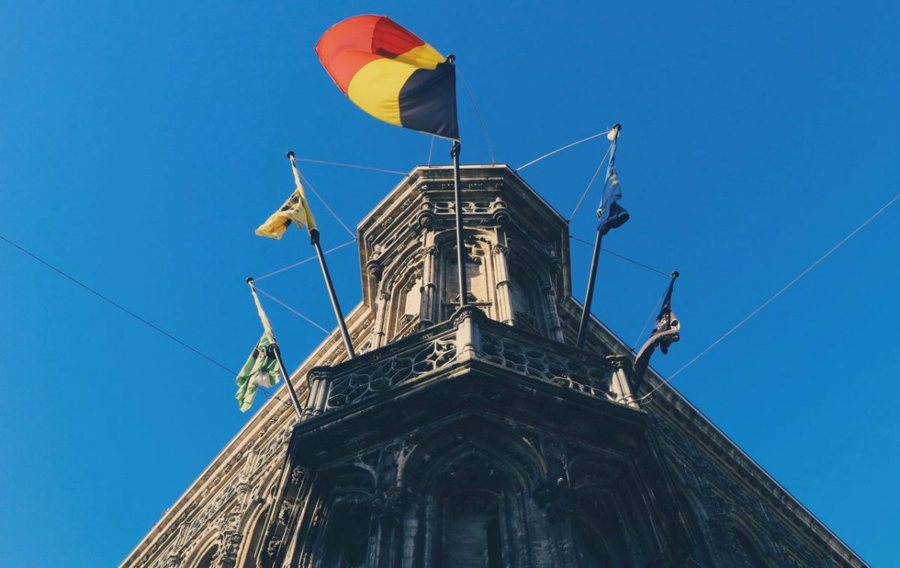
Belgium has many problems with the functioning of state institutions due to a de facto division between Flanders and Wallonia.
Belgium has been without a fully functioning government for 6 months. This is because the endless series of meetings and negotiations that have taken place since the June 24 parliamentary elections have not succeeded in unlocking a very complicated situation.
The leader of the conservative and nationalist party New Flemish Alliance (N-VA), Bart De Wever, is leading the negotiations with the Walloon conservatives of the Reformist Movement (MR), the Walloon centrists of Les Engagés (LE), the Christian Democrats and the Flemish (CD&V) as well as the Flemish progressives of Voorui.
These 5 parties have different positions on issues such as the reform of the pension system, the labor market and the presentation of a budget for the year 2025, which will allow to cut spending by 28 billion euros, and avoid a strict plan coercive measures requested by the European Union.
The outgoing government of Prime Minister Alexander De Croo has limited powers, and in the absence of an agreement on a new government, will be forced to draw up a budget that will force Brussels to step in with a 4-year recovery plan.
But when a new government is formed, it is likely that the fiscal austerity plan will last 7 years and be less severe. As Politico recently recalled, the paradox is that the man who may lead Belgium in the coming years is a Flemish nationalist who, throughout his long political career, has made it his primary objective to topple the pillars of a dysfunctional state. , and which guarantee Flanders a de facto independence.
De Wever, who holds the post of mayor of Antwerp and has led the N-VA since 2004, has transformed his party from a peripheral force into a mainstay of the country's system. He is currently the most popular politician in Belgium.
The N-VA has led the Flanders region for a decade, was part of the national coalition government between 2014-2018, and exerts significant influence over several national institutions. De Wever has tough positions on security, the fight against drug trafficking and terrorism.
His party is a member of the Eurogroup of Conservatives and Reformists, a centre-right formation with a difficult relationship with the European Commission headed by Ursula Von Der Leyen. His appointment as prime minister would equate to a less moderate leader in the European Council.
But on the other hand, it would be relatively good news in a continent that is increasingly looking to the right. The country's second largest party is Vlaams Beelang (VB), a Eurosceptic, anti-immigrant, populist and separatist far-right formation based in Flanders. It received 13.7 percent of the vote nationwide in the June elections, compared to 16.7 percent for N-VA. Some analysts feared a success of the VB, a force so extremist that it was excluded in consultations by all other political formations. But this scenario was not realized thanks to N-VA.
The rise of the VB has led francophone political parties to consider De Weveer as a less threatening and more acceptable alternative, a figure they can negotiate with after excluding him for years. But still not a politician, with whom they can start a reformation of state institutions.
The goal of the N-VA leader is the maximum possible autonomy for Flanders. The Walloon parties cannot fully accept these demands, but they will probably have to come to terms with reality.
Belgium has many problems with the functioning of state institutions due to a de facto division between Flanders and Wallonia. Both regions enjoy extensive powers, almost comparable to those of independent nations. They have autonomous parliaments, vote for different parties than their counterparts, and have very little in common.
A recent report by the National Bank of Belgium highlights how Wallonia has long had weaker economic growth than Flanders, and the French-speaking region's GDP per capita is lower than the Flemish one. .
Despite the presence of strengths, such as an efficient infrastructure network, a growing working-age population and good results in innovation, Wallonia has some structural weaknesses related to the social sphere. From the health sector to the risk of impoverishment and exclusion, moving to the labor market, with an employment rate that is affected by the presence of a large number of inactive people, and without forgetting the education sector and a productivity that is trying to rise.
Flanders' economy, which in 2022 accounted for 79 percent of Belgium's exports, is one of the most advanced in Europe, with higher average growth than the rest of the country and a lower unemployment rate. Linguistic and cultural differences between the two regions help compound the problems.
Brussels is in the middle and despite being a French-speaking city, it enjoys considerable autonomy.
The Belgian electoral system, based on a proportional system with a very low threshold, favors political fragmentation and prevents a party from obtaining an absolute majority of seats in parliament. It is forced to enter into negotiations with the various political formations, and to overcome the differences between them for the common good. This leads to the formation of often inefficient large coalitions, to complex post-election negotiations as well as to the delegitimization of many national institutions.
Belgium's political paralysis is becoming a structural feature, and it is no longer surprising why it takes months to form a government. The next government, which will most likely be led by De Weever, must put an end to this situation, but its task is from the beginning complex and difficult./ Adapted "Pamphlet" from "Linkiesta".




Lini një Përgjigje