


 Shkruar nga Pamfleti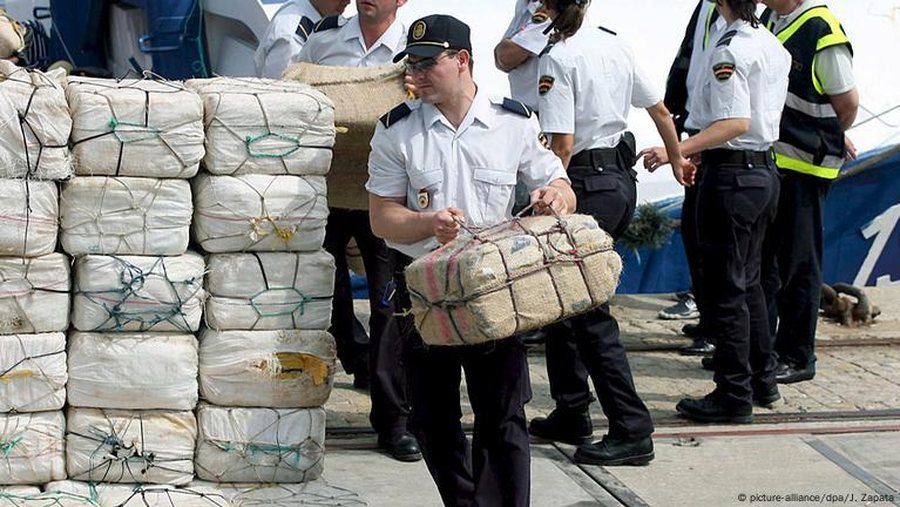
Sweden's Chief of Defense, Lieutenant General Mikael Klaeson, recently stated that Russia's acts of hybrid warfare against the West are not limited to deploying drones, conducting cyberattacks, and committing acts of sabotage.
Moscow has also taken control of illegal migration and drug trafficking routes to Europe through North Africa as part of a broader strategy to destabilize the continent. According to him, NATO leadership must neutralize Russia's activity in the North African region.
“The movement of drugs, illegal immigrants and other criminal activities is spreading very quickly throughout Europe and NATO territory,” the Swedish Defense Chief stressed. According to Frontex, the EU border and coast guard agency, the number of illegal immigrants arriving in Europe via the central and western Mediterranean has increased by 1.5 times this year. The number of immigrants traveling to Europe via Libya alone has increased by 50 percent in the first 9 months of this year. Most arrivals along this route come from Bangladesh, Eritrea and Egypt. The Central Mediterranean remains the busiest route, accounting for almost 40 percent of all illegal entries.
In the Western Mediterranean, Algeria has become the most common point of departure; Algerian nationals account for almost three-quarters of migrants detected on this route. Frontex reports that during the first three quarters of 2025, irregular crossings along this corridor increased by 28 percent.
Drugs enter Europe mainly through the Gulf of Guinea, which is located off the coast of West Africa. The region serves as a major gateway for cocaine shipments from South America to Europe. In recent months, several major anti-narcotics operations have been carried out there.
In September, the French Navy reported that 54 tons of narcotics had been seized in the area since the beginning of the year. In his speech, Claeson also stressed that Moscow is combining “sabotage, special operations and even attacks against individuals” with attacks on critical infrastructure and “exploitation of vulnerabilities in the information environment,” in an effort “to divide us” and “damage the cohesion” of the European community.
The Swedish general's statement shows that Russia is expanding its hybrid warfare arsenal against the West, using not only military and cyber attacks, but also control over illegal migration flows and drug trafficking routes.
This demonstrates the systematic nature of Russia's strategy, which encompasses multiple areas: from border security to social stability. In this way, Moscow aims to exert multidimensional pressure on European states. In this context, Russia's objective is to destabilize Europe and weaken its ability to support Ukraine.
How Russia is involved in drug trafficking in Europe: From Soviet intelligence operations to modern hybrid crime networks
Russia's relationship with the drug trade is old, strategic, and deeply intertwined with its intelligence services. This involvement dates back to the Cold War, when the KGB used drugs as a tool for subversion, and continues today through the FSB-GRU-organized crime nexus, which exploits narcotics for both profit and political influence.
Soviet-era precedents: Drugs as a weapon against the West (1950-1991)
While the US launched Operation CHAOS to uncover foreign influence in the anti-Vietnam War movement, declassified CIA and FBI documents show that the KGB specifically encouraged drug trafficking within Western protest circles.
KGB-linked operatives infiltrated radical leftist groups in West Germany, Italy, and the U.S. They encouraged the use of heroin, cannabis, and LSD to discredit Washington's movements and portrayed the West as morally corrupt.
Although the evidence is partly indirect, Western agencies concluded that Soviet services used drugs as an amplifier of destabilizing campaigns. In the 1970s and 1980s, the KGB also cooperated with Middle Eastern drug sponsors.
This included the Syrian, Bulgarian, Cuban and East German secret services. Thus, the Bulgarian service supervised heroin shipments from Turkey and Lebanon to Western Europe. It used the state-owned shipping line “Bulgaria Maritime Navigation”.
Meanwhile, the Assad regime allowed heroin labs in the Bekaa Valley. Soviet-linked groups used the drug to fund militant organizations and undermine Western influence in the Middle East and Europe. Even the East German STASI turned a blind eye to heroin flowing from East to West Berlin as a means of destabilization.
Soviet military and KGB officers participated in heroin trafficking in Central Asia, Iran, and Eastern Europe. The goal was to finance covert operations and undermine Western forces by stimulating addiction.
Post-Soviet Russia: The Secret Services-Mafia Connection (1991 to Present)
After the collapse of the Soviet Union, the dividing line between the state and organized crime disappeared.
Lojtarët kryesorë janë FSB, GRU, Solntsevskaya Bratva, Mafia e Tambovit, grupet kriminale në Dagestan dhe Çeçeni. Në 35 vitet e fundit, strategjia e Rusisë ka kombinuar fitimin, ndikimin politik dhe destabilizimin.
Skemat kryesore të trafikimit rus të drogës në Evropë, kalojnë përmes “Rrugës Veriore”, pra Afganistan-Rusi-Evropë. 25-35 për qind e heroinës afgane kalon nëpër Rusi dhe Bjellorusi.
Policia ruse, FSB-ja dhe zyrtarët lokalë e lehtësojnë ose e injorojnë trafikun në këmbim të ryshfeteve.
Bandat e krimit të organizuar në Shën Petersburg, Moskë dhe Urale, e kontrollojnë në detaje aktivitetin. Fitimet e mëdha ushqejnë si krimin e organizuar ashtu edhe elementët e korruptuar në strukturat e pushtetit rus. Dhe kjo i jep Moskës ndikim indirekt mbi tregjet kriminale evropiane.
Linja e dytë është mafia ruse në bashkëpunim me kartelet e Amerikës Latine, dhe kjo është dokumentuar nga institucionet evropian (Europol, DIA italiane dhe spanjollja Guardia Civil. Kështu në vitin 2018, 389 kg kokainë e cilësisë së parë u zbulua brenda shkollës së Ambasadës Ruse në Buenos Aires të Argjentinës.
Pastaj është edhe bashkëpunimi i Solntsevskaya Bratva me kartelet kolumbiane, teksa paratë e drogës pastrohen nëpërmjet Qipros, Greqisë, Spanjës dhe Austrisë, dhe më pas riinvestohen në Rusi falë mbrojtjes shtetërore. Në vitin 2008, gjatë operacionit “TROIKA”, policia spanjolle vërtetoi se rrjetet mafioze të lidhura me FSB/GRU, ishin të përfshira në shpërndarjen e kokainës dhe pastrimin e parave.
Nga ana tjetër, duhet kujtuar se Rusia është një prodhuese kryesore e materialeve bazë të metamfetaminës, substancave të reja psikoaktive (NPS) dhe opioidëve sintetikë. Këto hyjnë në BE nëpërmjet Kaliningradit, Bjellorusisë dhe porteve baltike. FSB-ja përdor shpesh kimistë me lidhje historike me laboratorët ushtarakë sovjetikë.
Ndërkaq, ka raporte të besueshme nga inteligjenca perëndimore dhe e Lindjes së Mesme, se policia ushtarake ruse dhe njësitë e lidhura me GRU-në në Siri, kanë lehtësuar eksportin e drogës Captagon në Evropë, një aferë me vlerë mbi 10 miliardë dollarë.
Si e përdor Rusia trafikun e drogës politikisht për të dëmtuar Perëndimin
Së pari, përmes financimit të rrjeteve kriminale besnike në Evropë. Shërbimi sekret rus, mban raport të ngushta me mafien serbe, klanet mafioze malazeze “Kavac” dhe “Skaljari”, përfaqësues të mafies kalabreze Ndrangheta në Itali. Këto rrjete, mund të përdoren për financim politik, operacione ndikimi dhe destabilizim.
Së dyti përmes fragmentimit të bashkëpunimit të zbatimit të ligjit në BE. Rusia përfiton nga korrupsioni në strukturat policore të Ballkanit, ligje e kundërta midis shteteve të BE-së dhe dhënia e azilit për kriminelët rusë. Kjo e zvogëlon kapacitetin e Evropës për të luftuar krimin e organizuar.
The use of drugs to destabilize societies fits with classic KGB doctrine. The high availability of cheap heroin or synthetic drugs increases social pressure, overwhelms Western health systems, fuels crime, and creates political narratives useful for far-right and far-left movements (which Russia supports).
Why Russia uses migration as a weapon
Migration is an extremely powerful hybrid tool because it exerts immediate political and social pressure. Specifically, it polarizes domestic politics, overburdens welfare systems and border security, and empowers far-right and far-left actors (many of whom have financial or ideological ties to Moscow).
This puts pressure on EU cohesion and joint decision-making. Therefore, Russia's involvement in Libya and the Sahel gives it influence over the most sensitive entry points into the EU, including Lampedusa in Italy, the Canary Islands in Spain, and the Western and Central Mediterranean corridors./ Prepared by Pamphlet




Lini një Përgjigje