


 Shkruar nga Pamfleti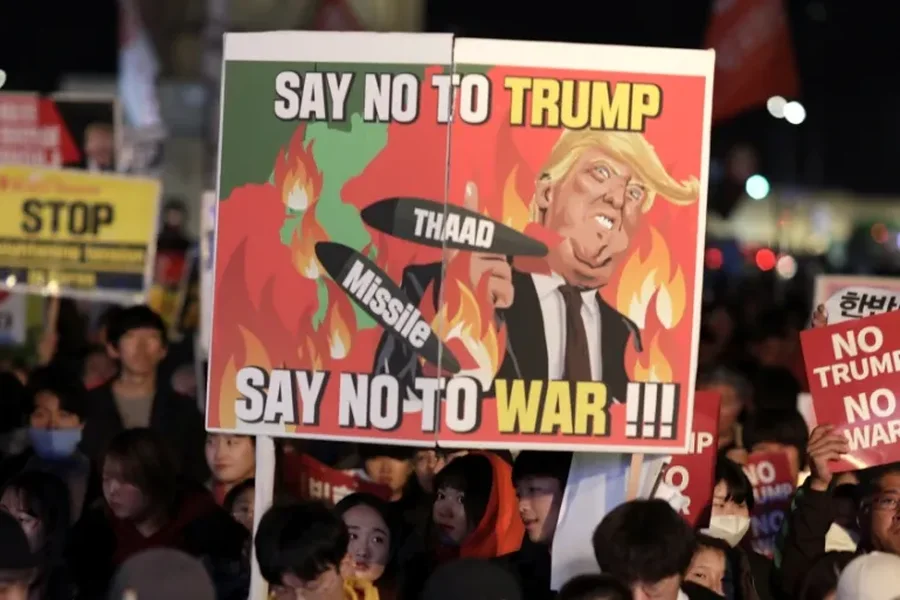
Europeans will have to find a third way...
Donald Trump inaugurated his Peace Council in Davos with some 19 nations in attendance. For Europeans, this is a test of unity. If this Council were to challenge the UN, it would also have consequences for the legal framework for the EU and its member states. Trump is trying to allay their fears, but not very convincingly.
"I'm a big fan of the potential of the UN, but it has never fulfilled its potential. The UN should have solved all the wars that I solved ," Trump declared.
There is some truth to Donald Trump's statement. And it takes Trump's mega-ego to believe he can do better. So far we are still in the excellent phase of establishing his Peace Board, starting with aspirations, not practicalities in Gaza.
In Davos, 19 heads of state attended the signing ceremony. They included Argentina, Morocco, the Gulf states, Turkey, Hungary, Bulgaria, Kosovo, Indonesia, Mongolia and former Soviet republics. Trump said he liked them all. Is that enough for the board to ensure they do a better job than the UN? No. Some of them have experience in protracted conflicts. Does that make them better peacemakers? That depends.
Trump likes to keep the world guessing about what he's doing. At Davos, he assured that the board would work in conjunction with the UN. A few days ago, he responded to a question from Fox News about whether the board would replace the UN by saying that it could, since the UN was not very useful.
How useful the board will be in bringing peace to Gaza is yet to be revealed. Trump’s son-in-law, Jared Kushner, presented at Davos a vision of Gaza as a city of the future with artificial intelligence towers that looks a lot like the skyline of one of the cities in the Persian Gulf. No connection to the reality on the ground in Gaza, where inhumane living conditions prevail for Palestinians. It is as if the suffering in Gaza is now considered a thing of the past, the very opposite of the UN reminding the world of its suffering.
Highly regarded Bulgarian diplomat Nikolay Mladenov will serve as the liaison between the board and the newly formed National Committee for the Administration of Gaza, led by former Palestinian Authority Deputy Prime Minister Ali Shaath. Mladenov has the integrity and eloquence needed for this stage and shares Trump’s vision of the Abraham Accords as the way to bring peace to the Middle East. He is the man the Palestinians, Israel, and the Gulf states trust.
Many nations are still in a quandary. Vladimir Putin is studying the details, according to the Kremlin, and Steve Witkoff met with him yesterday. Benjamin Netanyahu wants to join, but his far-right minister, Bezalel Smotrich, does not. Giorgia Meloni said she needs more time, while Belgium called for a coordinated European response.
After the EU emergency summit in Brussels, Antonio Costa said: "We have considerable doubts about a number of elements in the Peace Council charter."
These relate to the scope of responsibilities, leadership and the initiative's compatibility with the UN Charter. Many diplomats already see this as competition for the UN. That is why Germany declined the invitation, as FAZ reported. France did the same, in response to which Trump threatened a 200% price cut for French wines and champagne.
A coordinated EU response cannot simply be a "no" to Trump's peace initiative. There are many other forms of engagement for Gaza besides membership in his organization, the Peace Board. So diplomacy will have to find a middle ground between institutional aspects and the peace initiative itself.
What competences can they offer in the practical path to peace for Gaza? And what role can Europe play in the relationship between the UN and the Peace Board? Between alternative 1 and 2 to Trump's invitation, the Europeans will have to find a third way./ Adapted from "Pamphlet" by "Eurointelligence"



Euro idioci. OkB me kryetar Verzevulin