


 Shkruar nga Christian Endt & Simone Brunner
It is also surprising that Georgian Dream had installed cameras in about 2,500 polling stations. This is not generally prohibited, but it does have the effect of creating an atmosphere of control, a "Big Brother is watching you!" type of feeling.
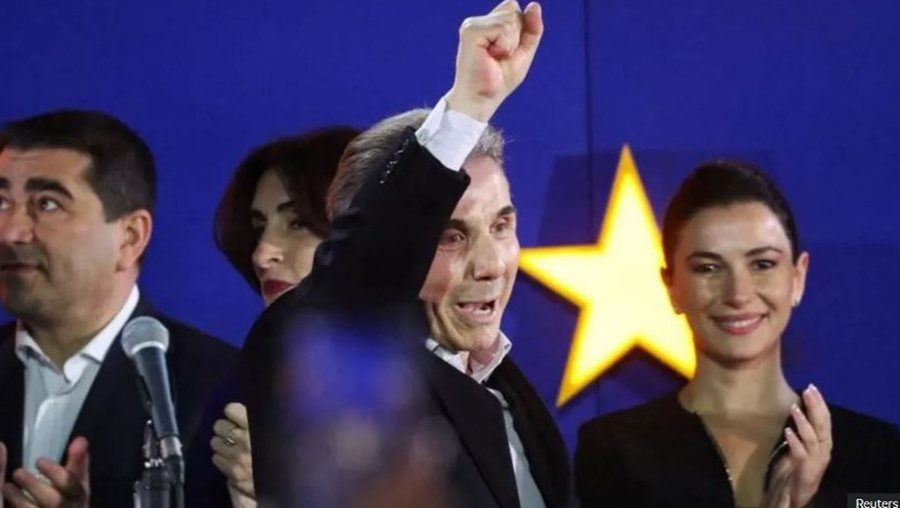
Claiming a comfortable majority of 54 percent of the vote, the increasingly authoritarian and pro-Russian ruling Georgian Dream party declared itself the winner of last Saturday's parliamentary election.
But the result has sparked widespread opposition, not only from the country's president and opposition parties, but also from independent election observers, the United States and some European Union countries, who have harshly criticized the election process.
An analysis of the results by the German newspaper Die Zeit has revealed many signs that the ruling party may have severely distorted the process. On election day, the well-known US-based polling and analysis company, Edison Research, conducted a post-election survey of nearly 15,000 voters in 115 polling stations.
According to their data, the Georgian Dream was supported on the day of the polls by only 41 percent of the electorate. Other earlier polls offered an even bleaker picture for the ruling party, with results that were even worse than in the 2020 parliamentary elections.
The data of the State Election Commission, prepared by the Electoral Graphics portal, show that voting machines were used in 2255 out of a total of 3101 polling stations. These machines count the votes and send the result directly to the capital.
Even according to Western observers of these elections, they are almost impossible to manipulate. Die Zeit's calculations show that the Georgian Dream fared worse in areas where voting machines were used, compared to those where votes were counted by hand.
Participation factor
The Die Zeit team drew two curves that describe voter behavior in the Georgian elections: one representing urban and the other rural voting areas. In big cities, the distribution of votes is not so noticeable. Meanwhile, in rural areas, there is an extremely high number of counties, where the number of votes for the ruling party significantly exceeds the national average.
The analysis is based on an idea by software developer Levan Kvirkvelia. It is a very telling sign of voter manipulation. Roman Udot, a Russian election analyst who runs the Elektoral Graphics portal in exile, reviewed the results of the Georgian elections in detail.
“Teorikisht, pjesa e votave të një partie, nuk duhet të varet nga pjesëmarrja në zgjedhje. Por unë vura re se partia në pushtet, arrinte shpesh rezultate jashtëzakonisht të larta në zona me pjesëmarrje shumë të lartë të votuesve”-thekson ai.
Ky model, i parë tashmë në zgjedhjet në Rusi, është zakonisht një shenjë treguese e manipulimit të votave. Të mërkurën, portali investigativ gjeorgjian iFact, publikoi një raport që dokumenton rritjen e pabesueshme të votave për partinë Ëndrra Gjeorgjiane në disa qarqe.
Ndërsa analizat statistikore, ofrojnë rrallë prova konkrete të manipulimit të zgjedhjeve, raportet e shumta mbi incidentet në qendrat e votimit, i shtojnë më tej dyshimet. “Këto janë modele votimi, të cilat duken shumë të pamundura të ndodhin natyrshëm”- shkruajnë politologët Allen Hicken dhe Walter R.Mebane nga Universiteti i Miçiganit në një artikull analitik mbi këto zgjedhje.
Presione mbi votuesit
Le të jemi të qartë mbi një gjë:në përgjithësi akuzat s’kanë të bëjnë me ndërhyrje të drejtpërdrejtë në regjistrimin e votave, por më tepër me presionet para votimit. Por nëse flitet për kërcënimin e punonjësve të administratës shtetërore (mësuesit, oficerët e policisë, nëpunësit civilë, mund të jenë nxitur të votojnë për partinë e “djathtë”), autobusët që lëviznin nëpër qendrat e votimit, apo bandat kriminale që silleshin rrotull qendrave të votimit për të frikësuar politikanët e opozitës, këto taktika manipulimi duken të shumë-përdorura.
Ëndrra Gjeorgjiane kishte instaluar kamera në qendrat e votimit
Është gjithashtu e habitshme, që Ëndrra Gjeorgjiane kishte vendosur kamera në rreth 2500 qendra votimi. Kjo nuk është në përgjithësi e ndaluar, por megjithatë ndikon në krijimin e një atmosfere kontrolli, një lloj ndjesie e tipit “Big Brother po ju vëzhgon!”.
Shumë nga incidentet, janë të dokumentuara në raportet e organizatave të pavarura. Vëzhguesit e zgjedhjeve, flasin për një sistem dinak por inteligjent të ndikimit në zgjedhje. Frikësimi i votuesve dhe blerja e votave, janë shumë më të vështira për t’u provuar sesa parregullsitë në vetë qendrën e votimit, apo edhe manipulimi zgjedhor.
Këto janë “kushte të padrejta”, të cilat mund t’i identifikojnë vëzhguesit e zgjedhjeve, por nga të cilat nuk mund të nxirren përfundime të drejtpërdrejta se sa mund të kenë ndikuar në rezultatin e zgjedhjeve në përqindje të sakta, thotë Frank Schwabe. Politikani i Partisë Socialdemokrate gjermane shkoi në Gjeorgji si vëzhgues i zgjedhjeve.
Komisioni Zgjedhor, i cili thuhet se është afër partisë Ëndrra Gjeorgjiane, njoftoi së fundmi se do të rinumërojë votat në 14 për qind të qendrave të votimit. Numërimi i votave ka pasur kritika nga vëzhguesit kombëtare dhe ndërkombëtare. “Kjo nuk ka të bëjë me rezultatin e zgjedhjeve, por më tepër me proceset që çuan në ato rezultate të papritura”- thotë Nino Dolidze, kreu i Shoqatës Ndërkombëtare për Zgjedhje të Drejta dhe Demokraci në Tbilisi.
Ndikimi i huaj
The speaker of the parliament and politician of the Georgian Dream party, Shalva Papuashvili, rejects the criticism of the election observers, calling them "pseudo-proofs", and speaks of an "artificial creation of a wave of protests and unrest in Georgia", alluded to the Russian conspiracy theory, according to which all anti-government protests in the post-Soviet space are attempts at a Western-controlled coup.
Russia's exact role in this regard remains unclear. Georgian Dream, widely seen as a pro-Russian party, has recently passed Russian-style laws, including a law against "foreign influence" and a restrictive law aimed at cracking down on the LGBTQ+ community.
Meanwhile, the opposition aims to make Georgia a member of the European Union. The question of geopolitical loyalty was the central theme of these elections. Pro-European President Salome Zurabishvili called the electoral manipulation a "special Russian operation", with a "modern technology", which is allegedly used to "cover up" the manipulation.
However, she has not provided concrete evidence to support these claims. At the request of the Central Electoral Commission, the prosecution requested to interrogate him on Thursday. However, Zurabishvili told reporters on Wednesday evening that he had no intention of going, arguing that "instead of asking me for evidence", the prosecutor's office should investigate signs of electoral manipulation. /Adapted "Pamphlet", from "Worldcrunch"



Lini një Përgjigje