


 Shkruar nga Pamfleti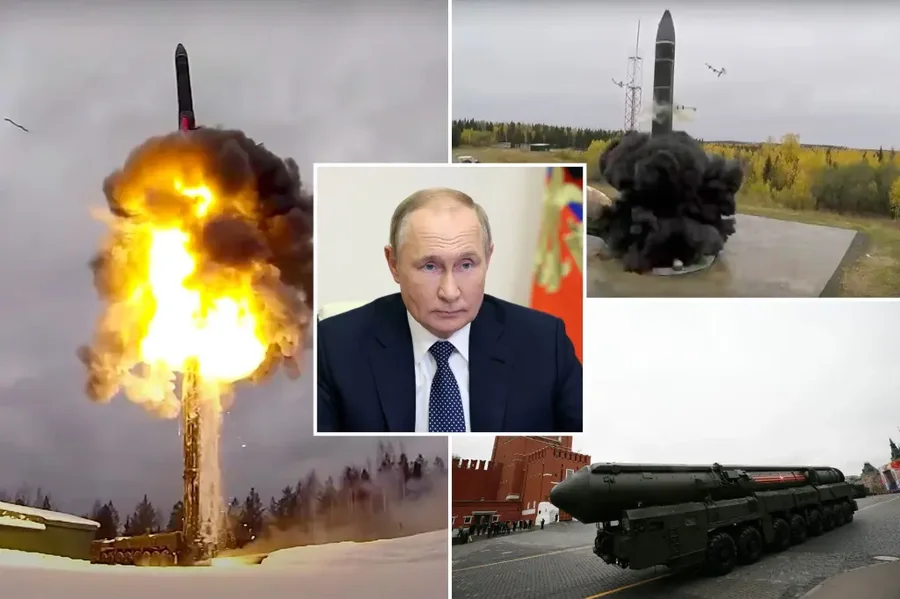
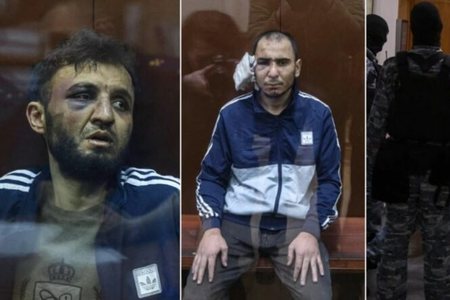
"It was an attack planned for a long time, as in the case of the attack on the Bataclan concert hall in Paris in 2015," said Marco Di Liddo, director of the Italy-based Center for International Studies, commenting on the terrorist attack on the hall. concerts, Crocus Hall, in the northwestern suburbs of Moscow.
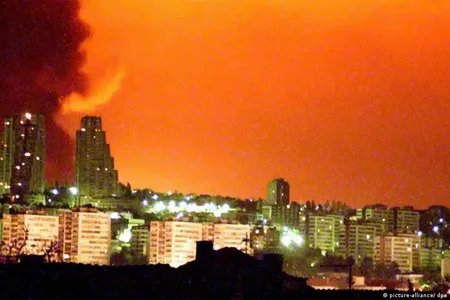
Followed by a massive fire, Friday night's was the worst terrorist attack to ever take place in Russia in the last 20 years. "From 2015 onwards we have identified 'lone wolf' terrorism as a systematic threat, thinking that organized terrorism was in a phase of decline. But this attack proves that this is not true" - he adds, noting that for two years the priority of the Russian secret services is the invasion of Ukraine, and the risk of an internal rebellion by the opposition.
What are the reasons for ISIS-K's attack against Vladimir Putin's Russia?
It has a historical background. Russia is a country that treats Muslims in a very hostile way, and this even long before the serious events of 2011. For this, it is enough to remember the Soviet occupation of Afghanistan or even the wars of the 18th and 19th centuries in the Caucasus, a region that in Islamic culture occupies a very important role. Then we have the wars in Chechnya, Russia's support for the Assad regime in Syria, and discriminatory practices on ethnic-religious grounds.
Can we exclude the hypothesis of an event staged by the Kremlin itself, to justify large-scale military mobilization?
The problem of mobilization on a large scale was solved by a kind of shadow mobilization. Moreover, if the attack was carried out by ISIS-K which is an organization and not a state, then what would the mobilization help? To invade Afghanistan? But if we talk about Ukraine, the reasons for a new mobilization already existed.
It is enough to remember the attack that took the life of Daria Dugina, the daughter of a well-known Russian philosopher, propagandist of the regime in power. Of course, the situation is not like in 1999, when Russia was a broken country and when Putin needed a narrative to unite Russian society around him.
On March 7, the United States warned of possible terrorist attacks in Russia, and most likely shared with Moscow all the information it had. But Putin described these warnings as "open blackmail" that "aims to intimidate and destabilize our society."
And this burdens the responsibility that the Russian authorities have?
Yes, of course. They ignored the fact that when it comes to terrorism, the US is no joke. This is also due to the strong American presence in Russia. For the United States, it is a matter of principle: the war on terrorism is perhaps America's last ideological shield.
What is the Russian people waiting for now?
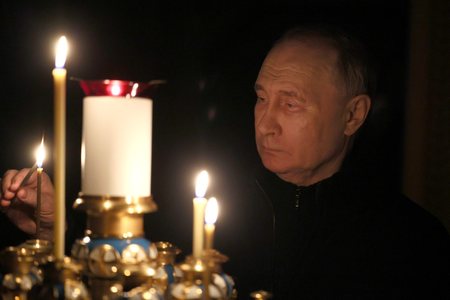
Vladimir Putin has to give an emotional response as he has to deal with internal security dynamics. After many years, the population has discovered that these radical groups can still strike. And he noticed this precisely in a period characterized by the conflict in Ukraine. Under these conditions, a rational response would not suffice.
So what is expected to happen?
Political leadership needs to provide an emotional response to a frightened population that needs something strong, vindictive. But there is a danger that the FSB, which has made a very bad image with this terrorist attack, creates the conditions with narratives and strained ties with Ukraine for a further escalation of attacks against Ukrainian civilian targets, thus rehabilitating itself and all the system.
Is this moment also a test for leadership, and on its ability to manage the balance of power?
Inevitably, someone has to pay for this attack. The problem is that the current head of the FSB is a Putin loyalist. Moreover, in Russia such purges do not happen immediately, but after some time. In the current situation, the Russian leadership cannot send signals that compromise the capabilities of the organization.
In fact, today the main threat to FSB-nw is internal conflicts and not terrorism. For this reason, it is more likely that the cost of this major failure will be paid by an easier figure to sacrifice, such as the head of the counter-terrorism department./Huffington Post Italia



Lini një Përgjigje