


 Shkruar nga Pamfleti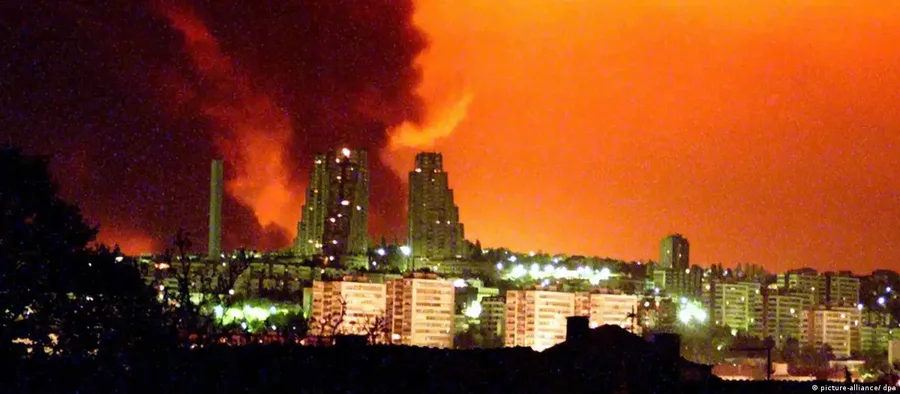
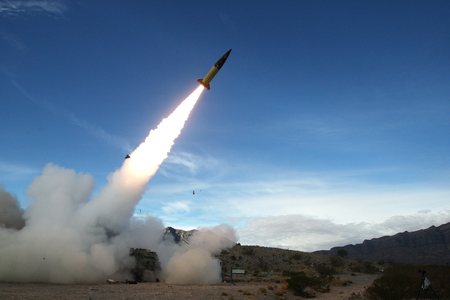
After several months of negotiations, which yielded no results, on March 24, 1999, NATO intervened in the war between the Yugoslav Army and Serbian forces on the one hand and KLA units in Kosovo on the other.
With airstrikes on targets in Serbia, NATO countries wanted to force the president of the RF of Yugoslavia, Slobodan Milosevic, to stop the ethnic cleansing in Kosovo and prevent the humanitarian disaster that the United Nations feared in the Kosovo region.
However, there was no UN mandate for the military strikes, in which many civilians were killed despite the use of precision weapons. NATO countries, under the leadership of US President Bill Clinton, gave themselves a mandate for a "humanitarian intervention" that was necessary to prevent worse things from happening and to implement UN resolutions that Yugoslavia did not comply with. had implemented. But even after 25 years, most jurists who deal with international law believe that NATO's mission was not in accordance with international law.
Illegal thought - dominant
"If you ask about the prevailing opinion, then it was a violation of international law, because it was previously said that military measures against Serbia will be taken only with the approval of the Security Council. Other reasons cannot be considered, at least. according to the prevailing opinions ", says Professor Wolff Heintschel von Heineigg in an interview with DW. Wolff Heintschel von Heineigg teaches international law at the Viadrina European University in Frankfurt am Oder.
The reasons given by Western politicians for NATO's intervention ranged from protecting the population of Kosovo, stabilizing the situation in the war-torn Western Balkans, and the blockade of the UN Security Council by Russia and China. Even the then German Minister of Foreign Affairs, Joschka Fischer, spoke of a morally necessary intervention to prevent massacres like those in Bosnia-Herzegovina. "These are all good reasons, but international law is not created by a small group and it is not customary law. We need a large majority of states. And we just haven't had that," says the expert on of international law Wolf Heinchel von Heinig.
Russia's excuses
NATO's attacks on Yugoslavia, which ended on June 10, 1999, when Slobodan Milosevic surrendered, were a kind of original sin. "We heard the arguments of the eight NATO countries that were involved in this Kosovo campaign again when Crimea was annexed," says Wolff Heinchel von Heinig, describing the aftermath. When it annexed Crimea in 2014, Russia invoked the alleged precedent of protected the population of Crimea from perceived threats. The same pattern was repeated after the attack in Ukraine on February 24, 2022. Russian President Vladimir Putin claimed that the people of eastern Ukraine had asked for help and invoked the UN Charter as justification for a "special operation military".
The judgment of the international law expert Wolf Heinchel von Heinig for these reasons is clear: "Even if the humanitarian intervention is recognized, the Russian arguments are certainly absurd. It cannot be said about the conditions that prevailed at that time in Kosovo. I only mention the cleansing infamous ethnic, which did not happen in Crimea, nor in the south-east of Ukraine".
The Balkans and Ukraine cannot be compared
Therefore, the situation in the Western Balkans 25 years ago cannot be compared with today's Ukraine. Russia's invasion and war against Ukraine remains illegal under international law. "This is the draft law on Kosovo, we are now faced with the same arguments that we did then, even if the facts are of course fundamentally different," said Heinchel von Heinig from the European University in Frankfurt on the Oder.
The legal investigation into NATO's operation against Yugoslavia failed before the United Nations Tribunal for Yugoslavia, as well as before international courts. In the current case of the war in Ukraine, the International Court of Justice in The Hague ordered in March 2022 that Russia cease all combat operations in Ukraine. However, Russia ignores it. The main session related to the Genocide Convention is still ongoing./ DW



Lini një Përgjigje