


 Shkruar nga Pamfleti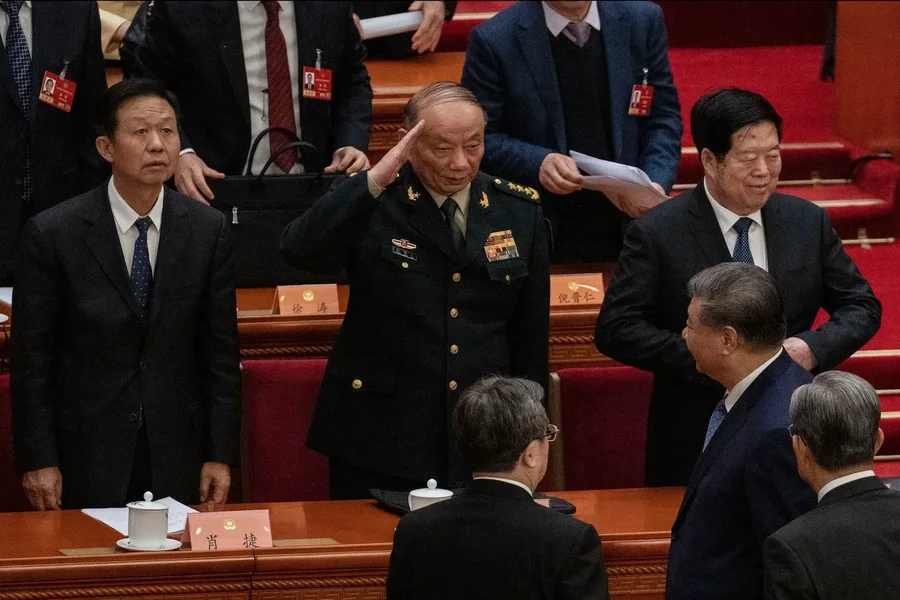
Xi Jinping is promoting officers that previous networks had kept in the shadows
On April 8, China's Central Military Commission (CMC) held a "rectification" training session for the remaining senior officers of the People's Liberation Army (PLA). President Xi Jinping delivered the opening speech, while at the podium, at the National Defense University in Beijing, there was only one colleague: Zhang Shengmin.
The head of the CMC's disciplinary inspection, besides Xi, was the only member of the top military body, after two of the most powerful generals were placed under investigation in January.
Many analysts have interpreted the scene as a cleansing ritual, another step in Xi’s decade-long campaign to ensure the Party’s complete control over the military. The content of the speech, which urged officers to maintain “the purity and glory of the people’s armed forces,” supports this idea. However, the most significant element that day was not the speech but the way the attendees were seated. In previous similar sessions, the front row was filled entirely with senior generals; this time, there were only two, accompanied by lower-ranking generals.
Over the past 18 months, Xi has dismantled two of the most powerful networks within the Chinese military. Because of the lack of transparency in the PLA, these networks are identified by analysts through career histories and shared service connections. The first was the so-called “Fujian faction,” built up by officers with whom Xi had established ties between 1985 and 2007.
This network included He Weidong and Miao Hua, who, as head of the Political Work Department, had controlled the personnel files of almost all senior officers for nearly a decade. Miao was suspended in November 2024 and disappeared the following spring. In October 2025, he and He were expelled from the Party and the military, along with seven other generals associated with this circle.
The second network, linked to the traditional structure of the ground forces and centered around CMC vice chairman Zhang Youxia and chief of staff Liu Zhenli, was cracked down on in January. Their investigation marked the culmination of a wave of purges that has left the active-level general ranks almost empty. Many within the system considered Zhang protected because of his combat experience and family ties to the political elite, but developments have shown that belonging to either of these networks was a risk.
Interpretimi i zakonshëm është se Xi po instalon figura besnike, të përzgjedhura për besueshmëri politike në një mjedis ndërkombëtar gjithnjë e më sfidues. Ky shpjegim nuk është i pasaktë, por mbetet i pamjaftueshëm. Edhe figurat e spastruara ishin zgjedhur mbi këtë kriter. Para hetimeve, pak kush do t’i konsideronte ata të pabesueshëm. Në teori, Xi mund t’i nënshtrojë të gjithë oficerët një verifikimi të ri besnikërie, por koha është e kufizuar. Ai është i lidhur me objektivin për të ndërtuar një ushtri “të klasit botëror” deri në vitin 2027. Një komandë e rrënuar nuk mund ta përmbushë këtë qëllim. Për këtë arsye, ai ka filluar ta rindërtojë strukturën sipas një modeli më të thjeshtë.
Në të gjithë strukturat kryesore të CMC-së dhe komandat rajonale, rreth 20 poste të larta drejtohen aktualisht nga gjeneralë me gradë më të ulët në mënyrë të përkohshme. Për shkak të mungesës së zëvendësuesve me përvojë dhe afateve kohore, shumica pritet të konfirmohen në këto poste. Pothuajse të gjithë kanë një tipar të përbashkët: karrierat e tyre janë zhvilluar jashtë kontrollit të rrjeteve të spastruara. Me fjalë të tjera, Xi po promovon oficerët që më parë ishin mbajtur në hije nga gjeneralët e mëparshëm. Megjithatë, kjo zgjedhje ka pasoja të mundshme.
Oficerëve të sigurtë politikisht, u mungon prestigji, besimi dhe përvoja që kërkon lufta moderne e përbashkët. Brezi që pritet të marrë konfirmimin mund të jetë njëkohësisht më pak i përgatitur për konfliktet që po planifikohen.
Promovimet e Xi po mbështeten kryesisht në dy burime. I pari është struktura e inspektimit disiplinor, një degë brenda sistemit të punës politike, e cila tani ka fituar ndikim të gjerë në komandë. Zhang Shengmin, tashmë nënkryetar i CMC-së, ka ndërtuar karrierën në këtë fushë. Bashkëpunëtorë të tij po marrin role kyçe në organizimin dhe mbikëqyrjen e ushtrisë. Komisarët politikë të përkohshëm të ushtrisë dhe forcave ajrore vijnë gjithashtu nga kjo strukturë dhe raportojnë drejtpërdrejt te ai.
Burimi i dytë është një grup oficerësh të forcave ajrore që tani po drejtojnë funksione thelbësore operative. Disa prej tyre mbajnë poste kyçe në qendrën e komandës së operacioneve të përbashkëta, në trajnim dhe në logjistikë. Edhe komandantë të rinj të teatrove ushtarake vijnë nga forcat ajrore, duke thyer traditën ku këto poste mbaheshin nga forcat tokësore.
Këta oficerë lidhen me trashëgiminë e gjeneralit Xu Qiliang, i cili promovoi rolin e operacioneve të përbashkëta dhe fuqisë ajrore gjatë reformave ushtarake. Pas daljes së tij në pension, ky grup mbeti pa mbështetje në nivelet e larta dhe avancimi i tyre u ndal. Ata nuk u larguan nga sistemi, por karrierat e tyre u stopuan deri në spastrimin e rrjeteve rivale.
An illustrative example is the comparison between two officers who reached the rank of general at different times, despite having similar initial advancement. One was promoted quickly thanks to connections to dominant networks, while the other, connected to the air force, had to wait several years and move through several posts before reaching the same level, only after the rival networks disintegrated.
Overall, the pattern of promotions after the purges is clear: both disciplinary inspection officers and air force officers have a common history: they spent years watching promotions go to others. Xi has not built a new elite from scratch, but has promoted those who had been neglected.
This interpretation suggests that the talent pool in the Chinese military was not as limited as it seemed; it was simply covered by previous power structures. With the PLA approaching its 100th anniversary, it is expected that official confirmations will favor officers who can demonstrate that they have been outside the old networks, not just loyal to the new order.
However, a fundamental question remains: will this group function under operational pressure? Air force officers have spent years waiting for promotion, while those in disciplinary structures have worked primarily in supervision, not combat operations. Neither of these experiences guarantees the preparation required in war.
This lack is not apparent in peacetime, but becomes apparent in war situations. It remains to be seen whether ground force commanders will obey career leaders in the air force, or whether operational commanders will fully cooperate with political commissars who have spent their careers supervising their colleagues.
By promoting officers that previous generals had blocked, Xi Jinping has created a politically secure military command. But it remains unclear whether this command will be able to act in a coordinated manner in a real conflict. /Adapted from ForeignPolicy /


Lini një Përgjigje