


 Shkruar nga Pamfleti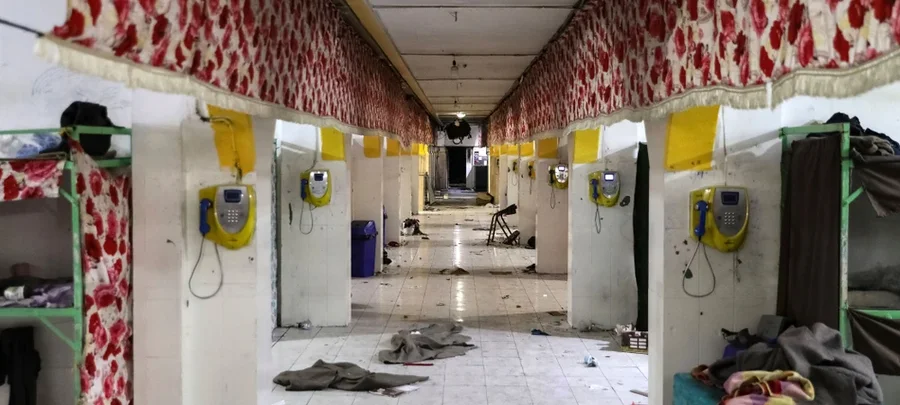
After nearly four years in prison in Iran, Cecile Kohler and Jacques Paris have returned to France. The French couple say they were held hostage by the Iranian state in inhumane conditions, and their case raises suspicions of a prisoner exchange…
Cécile Kohler stares squinting into the spring sun as she speaks of the “inhumane conditions” of her imprisonment in Tehran. The 41-year-old teacher from Alsace stands in the rose garden of the Élysée Palace, shortly after her return after almost four years in the hands of the Iranian terrorist regime. President Emmanuel Macron has invited her relatives and friends to celebrate her release. “We almost made it,” she says, thanking all those who worked for her release.
On the last day of a holiday in Iran with her 72-year-old partner, Jacques Paris, a retired teacher, they were arrested and sent to the notorious Evin prison in May 2022. The French couple joined a string of Western citizens who have been arrested in Tehran on flimsy pretexts. Kohler and Paris were allegedly used as hostages by the regime to force the release of Iranian Mahdieh Esfandiari, who was sentenced to four years in prison, three of which were suspended, in Paris on February 26 for praising terrorism.
"Sensitive issues"
Foreign Minister Jean-Noël Barrot dodged questions about the Esfandiari case in a television interview. He spoke of “sensitive issues.” Esfandiari’s lawyer announced that his client’s house arrest had been lifted after the two Frenchmen returned. “The commissariat has called her,” he told AFP. Esfandiari now hopes to return to her country.
The 39-year-old translator had celebrated the Hamas terrorist attack on October 7, 2023, on social media and had called for attacks on Jews in France. She was arrested in February 2025 while trying to leave the country. Iranian Foreign Minister Abbas Araghchi had mentioned the possibility of a “prisoner exchange” with France in a television interview on September 11, 2025. He spoke by phone with Barrot shortly before the release of the two Frenchmen on Sunday.
“This is a tactical gesture aimed at deepening the Euro-Atlantic divide,” said Middle East expert David Khalfa of the Jean-Jaurès Foundation in Paris. France, as a permanent member of the UN Security Council, strives to pursue an independent foreign policy and has recently criticized US military actions. However, Barrot stressed that the release was achieved without any concessions on foreign policy.

The continued arbitrariness of Iranian guards
“We were hostages, hostages of the state. We lived in extremely difficult conditions. One could even say that the conditions of imprisonment were inhuman,” says Jacques Paris in the Elysee garden. Kohler and Paris were held in ward 209 of Evin prison, known for its torture methods. Paris says they were not allowed to read or write and that the bright neon lights prevented them from sleeping. They were partially isolated in single cells and were frequently interrogated. According to Kohler, they were exposed to “constant arbitrariness”: it was “hell.”
Every time they left the cell, they were blindfolded. “We know how close we were to the worst,” says Kohler. She was sentenced to 20 years in prison and Paris to 17 years, among other things for spying for Israel. The Iranian regime’s goal was to break them. “We didn’t break, we will testify,” says Paris.
The two spent more than three and a half years in Evin Prison and experienced the bombings of the Israeli-American operation “Midnight Hammer” in June 2025. Part of the prison was destroyed and prisoners were killed. The French literature teacher from Sulz, at the foot of the Vosges, is still haunted by the sounds of explosions and screams. In early November 2025, they were released on conditions and have since been kept under house arrest at the French embassy in Tehran.
Unlike the German embassy, the French embassy did not withdraw its staff even after the start of Operation Epic Fury. It was during the bombing that Kohler and Paris received the news that they could leave. A dangerous journey with a diplomatic convoy through Iran to neighboring Azerbaijan followed. From Baku, they were flown to Paris.
Despite the suffering, the teacher from Alsace wants to convey "a message of hope, because we kept hope until the end." /Adapted from FAZ /






Sì nuk po shpëtojnë dot gjermanët nga mëkati i holokaustit, duke ndihmuar holokaustit zionist