


 Shkruar nga Pamfleti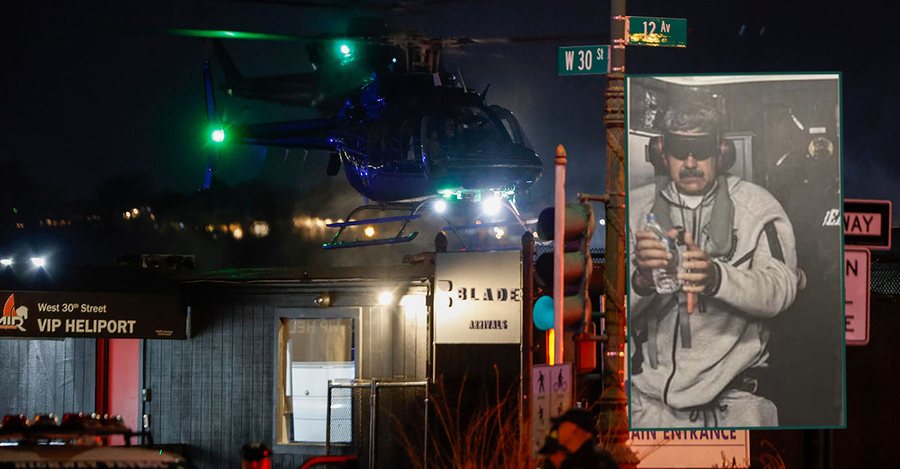
Ultimately, whether these are real events of a large geopolitical scale or a “drama” conveyed through social media platforms with exaggerations and distortions, one thing is certain: the crisis in Venezuela has global implications.
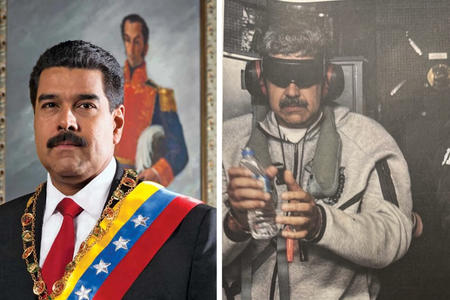
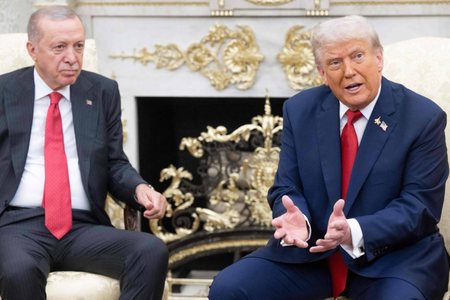
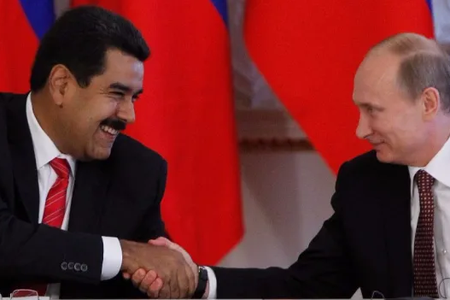
Recently, social media has been flooded with videos showing Maduro putting on a show. However, behind these viral clips, a much more complex reality with geopolitical dimensions is hidden. In November 2025, a leading publication in The Telegraph and other sources reported information about a telephone conversation between Donald Trump and Maduro, where the US president allegedly asked the Venezuelan leader to resign and leave power, something Maduro refused, raising issues of immunity and protection for himself and his family and the money to do so.
In this context, events culminated when Trump announced that US forces had carried out a major operation in Venezuela, resulting in the arrest of Maduro and his wife and their transfer abroad to face charges involving drugs and corruption. These statements provoked strong reactions around the world and were characterized by many as an illegal intervention and violation of Venezuelan sovereignty.
Where were Venezuela's weapons?
One of the most paradoxical points of the issue, which has sparked intense discussions on social media, concerns how this whole scenario evolved - or rather how it did not evolve - militarily. Venezuela is not an unprotected state. It has anti-aircraft systems, extensive military equipment, fighter jets, helicopters and strong armed forces, structured precisely to prevent external intervention. This is a regime that has invested in its military power and conflict rhetoric for years, presenting itself as ready to respond to any threat.
And yet, according to reports, not a single shot was fired. There were no official reports of fighting, no injuries reported, neither by soldiers, nor by civilians, nor even by Maduro’s inner circle. This fact raises a reasonable question: how is it possible, in a country with strong pro-war rhetoric and a tightly controlled state apparatus, to carry out such a critical operation without any military response?
The question becomes even more acute if we consider that we are talking about a president who essentially ruled as a dictator, with a security apparatus loyal to the regime and with the military as a main pillar of his power. The image of a president who was "simply captured" without conflict does not match the image that the regime itself had built up over the years. For many analysts, this indicates either an internal collapse, a form of tacit agreement, or simply that popular and military support had already been lost.
This is where Nicolas Maduro’s political isolation within the country comes into play. The popular sovereignty he once claimed had essentially disappeared. Economic collapse, poverty, the migration of millions of citizens, and the constant pressure on the population had eroded any real social support. When society ceases to support and the military ceases to respond, then even the toughest regime can prove to be fragile.
So the question that arises is not only whether what is circulating is conspiracy theory or a new reality, but whether we are facing the end of a regime that seemed powerful in words, but turned out to be politically and socially naked, in a country with great energy wealth and great geopolitical importance. And this, despite the social media narratives, remains the most disturbing and at the same time revealing element of the issue.
The most interesting thing is that all of this is happening while Venezuela has the largest proven oil reserves in the world, with estimates exceeding 300 billion barrels, which is emerging as a possible factor behind the increasing pressure from the US and other international players. The value of these resources and the political and economic interest around them are fueling conspiracy theories, but also serious analysis of whether there is a real geopolitical game behind the crisis for control of energy resources.
On social media, many posts highlight “secret oil deals” and “behind-the-scenes games of great powers.” Some border on conspiracy theory, talking about “global planning” and “velvet exchanges” behind the closed doors of international negotiations.
Ultimately, whether these are real events of a large geopolitical scale or a “drama” conveyed through social media platforms with exaggerations and distortions, one thing is certain: the crisis in Venezuela has global implications.
Energy markets, international relations, regional stability, and the very concept of national sovereignty are all on the table of public debate. What will come next—political reform, confrontation, or a new phase of diplomatic and military maneuvers—remains open as the situation continues to evolve at a rapid pace.


Lini një Përgjigje