


 Shkruar nga Federico Rampini
The Latin American landscape is threatening, with right-wing governments and barriers to "Made in China" products. Oil is also a problem, exacerbated by the Iranian crisis. But Beijing is even more affected by the blow to its "One Belt, One Road" Initiative, with deals on trade, investment and mineral resources.
Despicable, worried, but helpless.
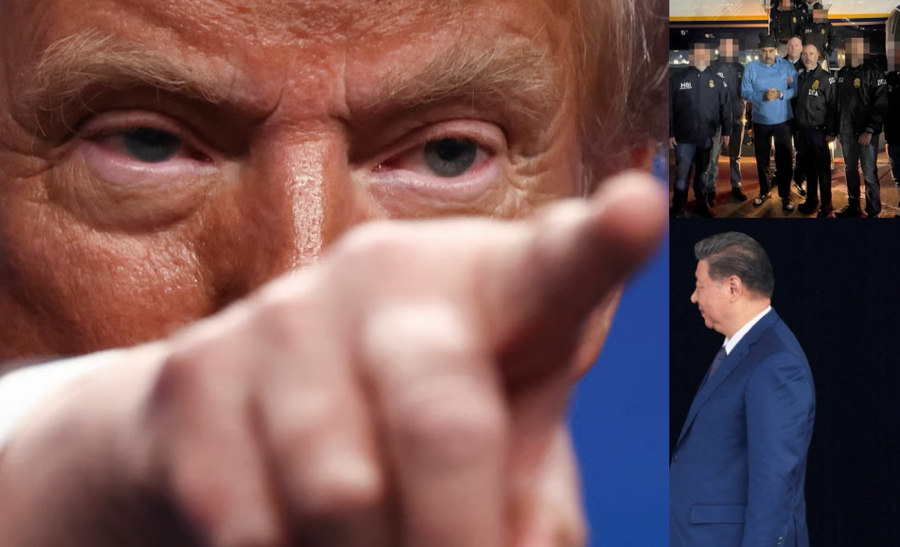
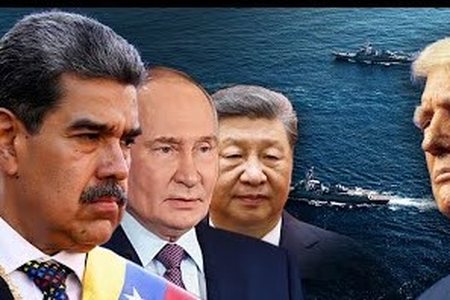
This is China's stance after Trump's attack on Venezuela. Its sanctions are strong, but Xi Jinping cannot go beyond diplomatic protests. More concerned than China's interests in that one country, he is the threat to its grand plan for economic expansion in a key region of the planet.
The Greater Global South is at the heart of Beijing’s strategy, with Latin America occupying a prominent position within it. For more than a decade, the “One Belt, One Road” Initiative (known as the New Silk Roads) has also radiated trade, investment, major infrastructure projects, and agreements for the exploitation of mineral and natural resources in Latin America. Trump’s updated version of the Monroe Doctrine, reaffirming US hegemony across the continent from the Arctic to Tierra del Fuego, directly challenges China’s plans. And it highlights its vulnerability, both economic and military.
The attitude has been harsh.
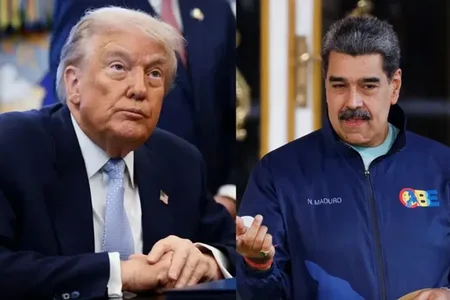
The Beijing government is calling for the immediate release of Maduro and his wife, condemning “hegemonic acts” and “clear violations of international law,” and demanding that the United States abandon its attempt to overthrow the Venezuelan government. But Xi has little to do but voice these judgments. Meanwhile, he sees what seemed like an unstoppable Chinese advance across the continent come to an abrupt halt.
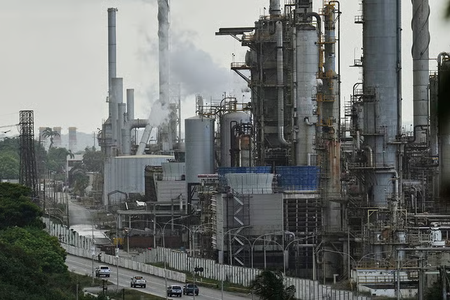
Oil is just one of its problems. China is the largest importer of Venezuelan crude, yet it represents only 5% of its total purchases. Trump has made seemingly reassuring remarks to Xi: if American multinationals invest again in Venezuela, that country’s extraction capacity could increase, and so could sales to Beijing. The situation in Caracas, however, must be seen within a broader context. The political crisis in Iran, another energy supplier to China, exacerbates the concerns.
China, beyond the myth of a "green superpower", remains by far the largest carbon economy on the planet; its dependence on fossil fuels is huge and will remain so for a long time. The global crude oil market, and to some extent the natural gas market, sees America in the role of arbiter: in addition to being the largest, self-sufficient producer with a growing export capacity, America has unparalleled influence in the Arabian-Persian Gulf, which it is now reasserting in Venezuela, and more recently has an equally unique ability to destabilize energy producers such as Russia and Iran with its sanctions.
In general, it is the entire geopolitical and geoeconomic framework of Latin America that threatens Chinese interests. Trump's hegemony, far from isolating the United States, is accompanied by a shift to the right in several countries: Argentina, Bolivia, Chile, Ecuador. Even those still governed by the left, such as Mexico and Brazil, are taking protectionist measures against the invasion of Made in China. The South American continent contains many of the rare metals and strategic minerals on which Xi has been able to build his hegemonic strategy: a semi-monopoly, which puts the West at the mercy of a Chinese embargo on essential supplies for the technology industry and beyond (more simply, rare metals are also used in the magnets of our cars). But nothing lasts forever, not even this monopoly.
The Trump administration recently launched an initiative with the strange Latin name Pax Silica (from silicon, the raw material in microchips): it is a global coalition of countries seeking to free themselves from dependence on China, extending as far as Japan and Australia. If South America returns to US hegemony, Chinese control over certain natural and mineral resources is at risk. And not only that. It is worth remembering that one of Trump's first "muscular" interventions in this second term was in Panama, to exclude a Hong Kong operator from managing the Canal.
Xi is experiencing firsthand the limits of an "unfinished imperial ascension."
Its economic expansion has been formidable around the world, but it has not been matched by a corresponding strategic influence or military capability, at least so far. As Shaun Rein, founder of the China Market Research Group, notes in the face of the American incursion into Caracas, "there is not much China can do; after all, it has only two military bases outside its geographical area, while the United States has 800."/ Adapted from Corriere della Sera


Lini një Përgjigje