


 Shkruar nga Pamfleti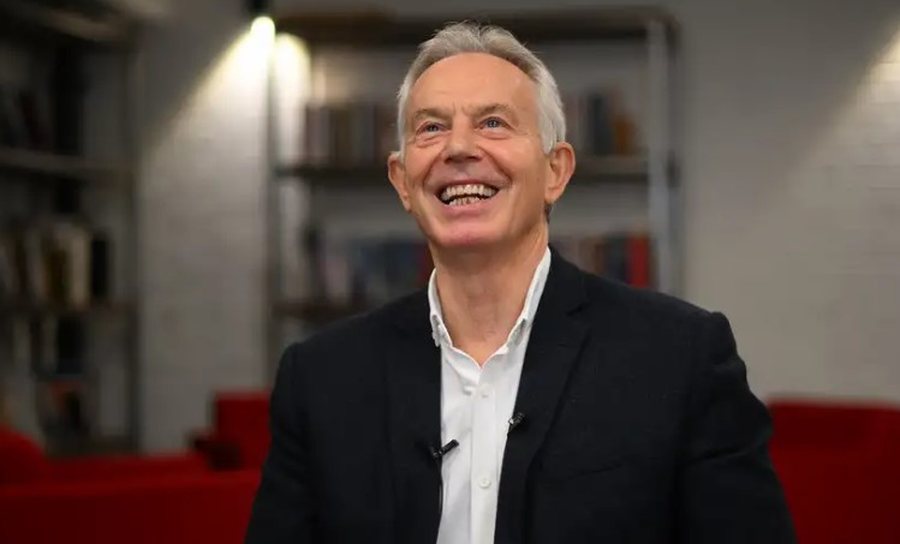
It is still not clear whether the hostages will be released and the war will end. But the second phase is already being considered. Tony Blair would be important in Trump's Peace Council.
Britain and the Palestinians have a long and special history together, long before Tony Blair. In 1922, after the fall of the Ottoman Empire, London received a mandate from the League of Nations to administer Palestine.
Even earlier, in the "Balfour Declaration," the British promised to "establish a homeland" there for Jews from all over the world. This was followed by an increasing immigration of Jews to Palestine, and thus by increasing tensions between the Jewish and Arab populations.
The differences became even greater in World War II: while the Grand Mufti of Jerusalem al Hussein was a great friend and admirer of Hitler, Jews were also conscripted en masse into the British army to fight against the Nazis. After the war, experienced Jewish veterans also came to their ancient homeland, and when the British could no longer contain the conflicts, in 1947 they returned the mandate to the United Nations.
The UN then proposed a plan under which the country would be divided into a Jewish and an Arab state. But the Arabs felt quite deprived - and so in 1948 only the Jewish state was founded: Israel. The rest is history.
Criticism of Blair's role
All of this, of course, happened long before the era of Tony Blair - he was born in 1953. However, the former British prime minister may once again take on some kind of governing mandate in the region, at least according to Donald Trump's plans. Earlier last week, the US President presented a 20-point plan that should end the war in the Gaza Strip, which has been going on for two years.
After the release of the hostages, the end of Israel's attack on Gaza, but also after the disarmament of the Hamas terrorist group, Gaza should be rebuilt and in the transitional period it will be governed by a government of technical experts - under the supervision of an international body called the "Peace Committee". This body will be chaired by Trump himself, while Blair could have an important role, which has caused harsh criticism both in the region and beyond.
Palestinian politician and human rights activist Mohammad Shtayyeh told CNN that "it would be better for him to stay in his place and let the Palestinians govern themselves (...) rather than subject us back to colonial rule."
The UN special rapporteur on the Palestinian territories, Francesca Albanese, was even more direct: "Tony Blair? No chance!" she wrote on X. "Hands off Palestine!" - and added: "Maybe we should meet in The Hague?"
"Bush Puppy"
Albanese was alluding to the darkest spot on Blair's CV: his role in the 2003 Iraq war. Before that, Blair was a highly successful and popular politician. After winning the 1997 election, he became the longest-serving Labour Prime Minister in the country's history.
The Good Friday Agreement, which he helped broker, was a turning point in the long conflict in Northern Ireland. But after the September 11, 2001 terrorist attacks in New York, Blair stood almost unconditionally on the side of then-US President George W. Bush in the "war on terror." This brought him harsh criticism: the opposition even called him "Bush's puppy."
Two years later, along with Bush, he went to war in Iraq, justifying it on the claim that Saddam Hussein possessed weapons of mass destruction and that he had to be stopped. This claim later turned out to be false.
A commission of inquiry led by Sir John Chilcot, set up by the British government to investigate the country's role in the Iraq war, came to a devastating conclusion 13 years later: intelligence reports about suspected weapons should have been verified and the war should not have been waged. Moreover, Blair sent British troops into Iraq unprepared and with no plan for the post-war period. He had to defend himself for years against accusations of being a "war criminal". The Chilcot report did not go as far, but it still weighed heavily on Blair's political legacy.
Blair to lead Middle East Quartet
Despite everything, Blair remained politically active in the region. Just one day after resigning as prime minister in 2007, he was appointed as special envoy to the Middle East Quartet.
This quartet - made up of the US, Russia, the EU and the UN - was supposed to mediate between the Israelis and the Palestinians. But even in this role Blair was increasingly criticized, among other things, because he was simultaneously developing numerous private business interests in the Middle East. He held this position for eight years, but without significant progress.
The Palestinians accused him of increasingly siding with Israel. "We are happy that he is leaving. He should have left a long time ago," then-Palestinian negotiator Mohammad Stajjeh said in 2015.
"He did nothing for the Palestinian cause, but was used by Israel to justify the occupation and settlement policy."
Tony Blair Institute
Tony Blair then continued his business activities and in 2016 founded the Tony Blair Institute for Global Change (TBI). Through it, he advised, among others, Rwandan President Paul Kagame and Saudi Crown Prince Mohammed bin Salman.
Apparently, TBI employees, along with Israeli entrepreneurs, have also been working on a plan for the reconstruction of Gaza after the war - something the Institute denies. This plan, among other things, includes what is called the "Trump Riviera" and an industrial zone named after Elon Musk.
In February 2025, Donald Trump released an artificial intelligence-generated video depicting this vision, and it caused great outrage.
Such plans will probably no longer be relevant if Blair does indeed take the new post. In his statement, he said only that Trump's "bold and well-thought-out" plan offers "the best chance" of ending the war in the Gaza Strip. Blair has not yet commented on whether he will be part of these plans./DW


Lini një Përgjigje