


 Shkruar nga Lucio Caracciolo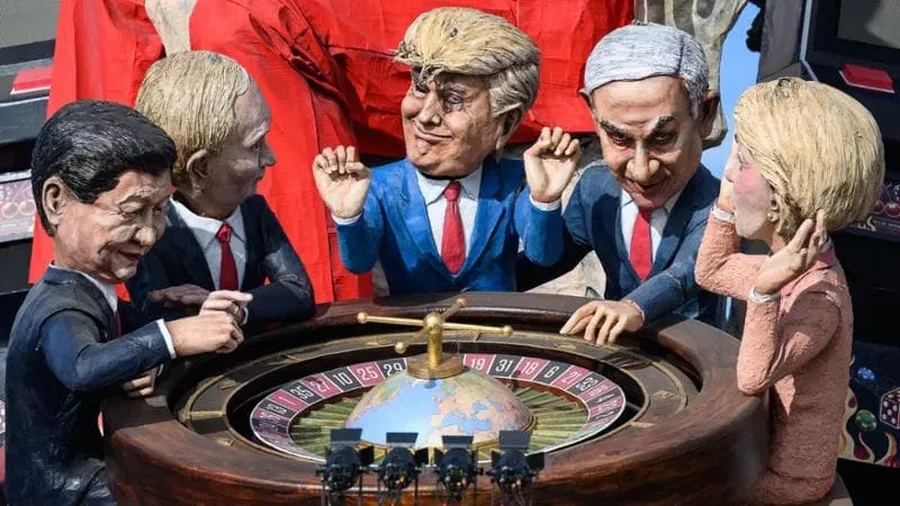
In this triangle, a compromise is being sought to avoid escalation...
Tough times for the Great Powers. The United States, China and, in the distance, Russia, the powers competing for the top of the global order, form a triangle of suffering. Number 1 is experiencing this phase the hardest, in part because the fall from the top is more dangerous. But the challengers are not taking advantage of this situation either; quite the opposite. An unusual configuration in history.
Usually, in hegemonic transitions, one observes the trajectory of a declining power, which is approached and finally surpassed by the main challenger. A process with obstacles, which can last for centuries. In the most recent case, the passing of the baton between the British and American Empires, the process lasted about fifty years. The emergence of the United States on the global stage with the war against Spain (1898) and the exhaustion of the British thalassocracy in the two “victorious” world wars (1945) marked this transition. According to a well-known scheme: The Two affirms itself as the One, while the First steps down from the podium, positioning itself as an accomplice or opponent of the new leader.
The impression is that this time it will not be so, at least in the foreseeable future. The star-studded superpower was superior. The world was accustomed to an absolute hegemon: a universal parameter, the bearer of globalization understood as the Americanization of the planet. Not an actor among equals, with different values in the same system, but an entity above the others. Not simply the first in class, but the champion. America remains a unique case in world history.
The top step of the podium will be a shared seat for the Americans and the Chinese for a time. The other two steps will be filled by successive, equally determined actors. Less certainty, more chaos. A new world order, in the full sense of the word.
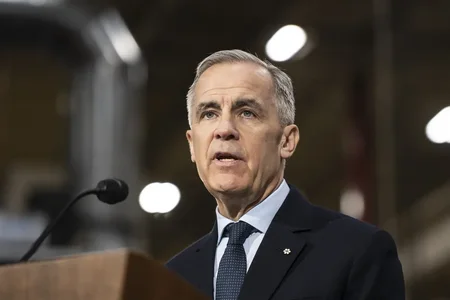
For several years, Washington’s global empire has been in decline. It took the final signal from a symbolic figure of globalism, a British central banker turned Canadian prime minister, for globalist elites to accept the end of the narrative they had believed in or, according to Carney, had pretended to believe.
His idea is to blame Trump for the West's defeat and preserve the core of the system through an alliance of middle powers that embody his values. But these countries do not necessarily share the same interests; otherwise, values would remain secondary, dependent on the rhetoric of good behavior.
And then, how can a dozen willing allies compare with the weight of the former absolute hegemon, even in its most fragile phase? The West without America does not exist. Europeans without a united Europe have no decisive weight. They are carefully counted and selected by China, Russia and the United States according to their respective interests. Italy remains exposed to pressures, because it is worth more than the weight it is given. No umbrella protects it completely.
Is it China’s time to dominate? It’s too early to say. Chinese leaders themselves know that they can’t replace the Americans just yet. The reasons are related to the weaknesses of their economic and financial system, their aging population, the limitations and uncertainties of their regime, and their fragile international image. Above all, China is surrounded by powerful and determined rivals: India, Japan, and Russia – a temporary and unstable ally. A different situation from that of the United States, protected by oceans and surrounded by smaller powers like Canada and Mexico.
In this triangle, a compromise is being sought to avoid escalation. A Washington-Beijing-Moscow agreement to compete below the threshold of war, on the basis of rules that reflect the balance of power, with Russia as the third wheel, currently linked to China, but oscillating between the two main centers. “Grande Componenda”, according to the jargon of the Limes magazine, in a reference to Andrea Camilleri.
The first step would be to define the respective spheres of influence. But geopolitics does not work like geometry. Not even the peoples of this planet of over eight billion inhabitants accept being treated as objects of colonization. The developing global revolution is uncontrollable by any power. Not even the Great Powers, much less the Middle Powers, fully master it. Therefore, we must prepare for the extension of this phase of conflicts.
There are currently about sixty active conflicts in the world, a maximum level. They have in common the return of old disputes, which, after a period of underground calm, erupt again on the surface. Their intensity increases due to the acceleration of military technologies. The solution depends on the ability to understand that only politics can manage and resolve conflicts. The future belongs to diplomacy. To the ability to build an imperfect peace. And perhaps Italy can play its role./ Adapted from “Pamphlet” by “La Repubblica”


Lini një Përgjigje