


 Shkruar nga Joseph S.Nye, Jr.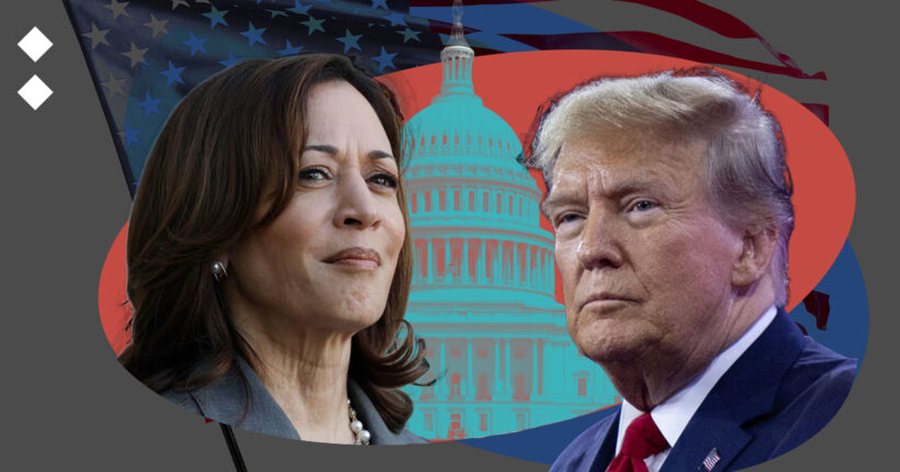
One of the biggest differences has to do with the attitudes of the two candidates towards Europe. Trump and his deputy, JDVance, have made it clear that they have very little interest in supporting Ukraine and NATO...
As the US presidential election approaches, many people are wondering what it means for US foreign policy. The answer is surrounded by a lot of ambiguity. First, who will win this election? In early summer, polls showed Donald Trump well ahead of incumbent Joe Biden.
But now that the Democratic Party's nominee is Vice President Kamala Harris, the polls put her in the lead with a slight lead. Of course, the first problem is that if voter sentiment can fluctuate so much, it's impossible to predict how they'll vote on November 5th. While Harris has so far shown impressive political skills, politics in a democracy is full of surprises.
Second, foreign leaders and actors also have the right to "vote", in the sense that their behavior can suddenly change the US agenda and the probabilities of different outcomes. The modest foreign policy that George W. Bush promised during his 2000 campaign was nothing like the policy he pursued after the terrorist attacks of September 11, 2001.
Who knows what kind of surprise Vladimir Putin or Xi Jinping might bring. The statements that are being made during the campaign offer us some suggestions about the policies that can be followed in the future. If Harris wins, a continuation of Biden's policy can be expected, albeit with some changes.
She seems to care less about promoting democracy - one of Biden's main causes - and talks a little more about Palestinian rights. But in general, it can follow the same policy of strengthening US alliances and promoting multilateral alliances.
In the other camp, Trump is more unpredictable. It's hard to know which of his campaign statements might become policy if he's elected president again. His rhetoric about unilateralism and the breakdown of alliances and multilateral institutions tells us something about the direction of his foreign policy, but does not answer questions about specific issues.
Analysts often try to improve their predictions by analyzing the names of advisers to presidential candidates. The key foreign policy figure on Harris' staff is Philip Gordon, a pragmatic, well-respected centrist who has handled European and Middle Eastern affairs in previous Democratic administrations before becoming a top adviser to the vice president. current for foreign policy.
On the other hand, it is difficult to identify a comparable figure in the Trump camp, although the media sometimes mentions Robert O'Brien, Trump's last national security adviser. What we do know is that Trump regrets appointing traditional Republicans to key positions during his previous term because they limited his freedom of action and made his policies more moderate than he would have liked. to be
However, it is worth highlighting some similarities between the two candidates. More important are their attitudes towards China. In the US today, there is a broad bipartisan consensus that China has not behaved correctly on trade and intellectual property issues, and that its aggressive behavior in the East and South China Seas is threatening US allies such as Japan and the Philippines.
China has stated many times that it does not rule out the use of force to occupy Taiwan, which it considers a rebellious Chinese province. In many respects, Joe Biden continued Trump's China policy, and Harris is likely to do the same, but with some adjustments.
A second similarity between the 2 current candidates is the rejection of neoliberal economic policies. During Trump's presidency, the US abandoned the traditional Republican (Ronald Reagan-era) approach to trade. It raised tariffs and diluted its role in the World Trade Organization.
All of this happened under the direction of US Trade Representative Robert Lighthizer, who remains a very influential figure in Trump's circle. Also, Trump scrapped the Trans-Pacific Partnership that Barack Obama had negotiated and signed with Asian allies, and then Biden did nothing to rejoin that deal or remove the tariffs Trump imposed on imports from China. .
Biden even went further, imposing new controls on technology-focused exports against China (this strategy was also referred to as erecting a “high fence around a small yard”). But with the Californian's close ties to the US tech industry, Harris is unlikely to overturn any of those restrictions.
Meanwhile, it is certain that Trump will expand them. In addition, both Trump and Harris have pledged to increase American strength — military and economic — through investments in the defense budget and its industrial base. Both are expected to continue the current nuclear weapons modernization program, and promote the development of new weapons that use Artificial Intelligence.
One of the biggest differences has to do with the attitudes of the two candidates towards Europe. Trump and his deputy, JDVance, have made it clear that they have very little interest in supporting Ukraine and NATO. Trump claims he will quickly end the war through negotiations.
But it is difficult how this can happen without greatly weakening Ukraine. Regarding the Middle East, both candidates have pledged to protect Israel's security and its right to self-defense, although Kamala Harris is also speaking out for the Palestinians' right to self-determination.
Both are likely to urge Saudi Arabia to continue the process of normalizing relations with Israel, while maintaining a tough stance on Iran. But while Trump doesn't prioritize regions like Africa and Latin America, Harris may pay more attention to them.
The biggest difference has to do with American soft power, that is, with the ability to secure the desired results through persuasion rather than through coercion or payment. During his first presidency, Trump chose unilateralism under the motto "America First", which forced other countries to conclude that their interests were not being considered at all.
Also, he openly rejected multilateralism, withdrawing from the Paris Agreement on the fight against climate change, as well as from the World Health Organization. Biden reversed these decisions, but Trump will probably approve them again, while Harris would maintain US participation in them.
She is also more likely than Trump to make statements promoting human rights and democracy. In short, regardless of who wins the election, there will be broad segments of continuity in US foreign policy. But the differences between the candidates' attitudes toward alliances and multilateralism are significant, and that could make all the difference. / Adapted "Pamphlet" from "Project Syndicate"
Note: Joseph S. Nye, Jr., Co-Chair of the ASPEN Strategy Group, and former US Assistant Secretary of Defense.




Lini një Përgjigje