


 Shkruar nga Pamfleti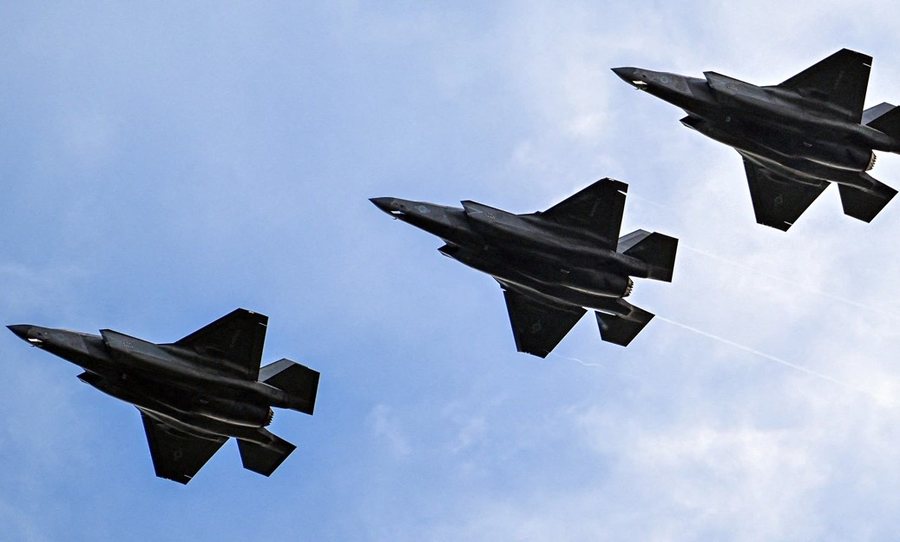
The United States has significantly increased its military presence near Iran, moving more than 150 fighter jets to bases in Europe and the Middle East, following the failure of the second round of nuclear talks on February 17. The Washington Post reported the news, citing flight data and satellite imagery it has analyzed.
According to the report, the current presence of US forces in the region ranks among the largest in the last two decades, since the period before the intervention in Iraq in 2003. This increase comes after statements by President Donald Trump, who has warned that he will attack Iran if an agreement is not reached to limit Iran's nuclear program, without specifying possible targets. Iranian officials have stated that a deal is possible, but takes time.
Experts who have analyzed the deployment of forces say it exceeds the mobilization that preceded the US strikes on Iran's nuclear program in June last year. According to them, the accumulated assets suggest preparations for a several-day air campaign, without involving a ground invasion.
Dozens of additional aircraft are aboard the aircraft carrier USS Gerald R. Ford, which was spotted offshore near Crete on Monday. It is the second aircraft carrier to be deployed to the Middle East, bringing the total number of active US fleet ships deployed to the region to about a third.
Dana Stroul, former deputy assistant secretary of defense for the Middle East and current director of research at the Washington Institute, told the Washington Post that “the high level of concentrated force gives the U.S. military the ability to implement any decision President Trump makes — from a prolonged, high-intensity campaign to more limited, targeted strikes.”
If the administration plans a weeks-long air campaign, additional military assets will be needed, says Mark Cancian, senior advisor at the Center for Strategic and International Studies.
Pentagon officials have acknowledged the large influx of forces to the Middle East, but have declined to comment on details, citing operational security reasons.
More than half of the newly deployed aircraft have landed at bases in Europe, according to satellite imagery and flight tracking data. According to Gregory Brew, senior Iran analyst at Eurasia Group, deploying them in Eastern Europe — out of range of most Iranian missiles and not at Gulf bases — allows the United States to strategically position equipment and personnel without creating direct targets for Iran.
The vast majority of aircraft identified in flight data are transport and aerial refueling aircraft. Fighter jets often deactivate their tracking signals, making them difficult to track unless they are identified through satellite imagery.
Muwaffaq Salti Air Base in Jordan is one of the main destinations for US aircraft in the region. Satellite images from Friday showed more than 60 fighter jets, including more than a dozen F-35s, lined up on the runway. The jets are often used to neutralize enemy air defenses and create safer corridors for other aircraft. The F-35 also has advanced electronic warfare capabilities.
According to flight data and an independent analysis by researcher Stefan Watkins, the US has deployed more than a third of its active fleet of E-3G Sentry early warning aircraft to Europe and the Middle East in recent days. Equipped with a large rotating radar dome, the E-3G can identify targets and conduct surveillance in all weather conditions, providing a real-time view of air activity.






Lini një Përgjigje