


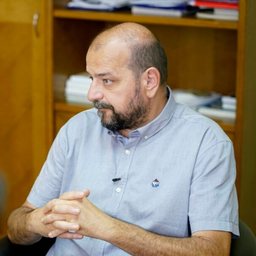
 Shkruar nga Dragan Sormaz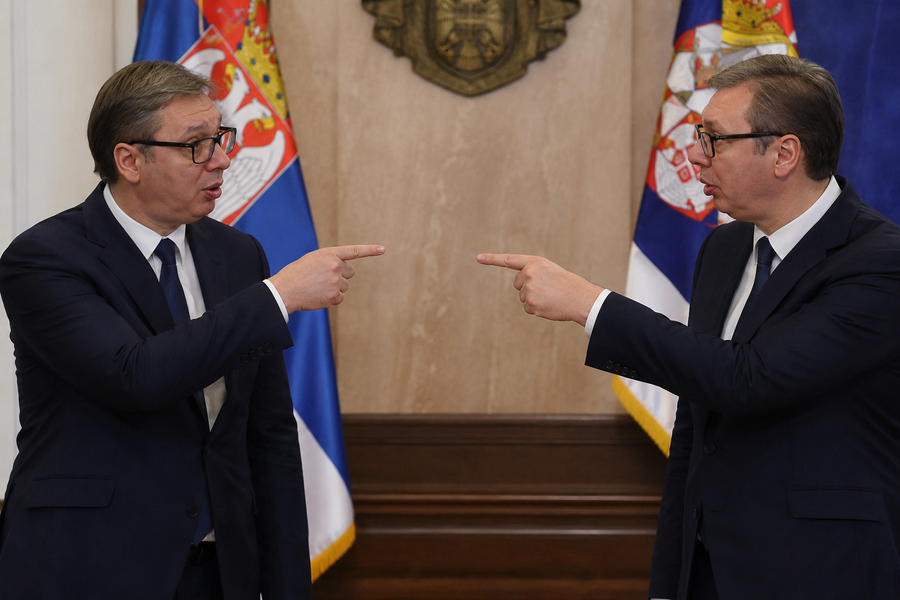
With open demagogic cynicism, Vučić today speaks of the overgrown bureaucracy, the arrogance of power, the inefficient state, outdated education, slow administration, insufficient productivity and the need for reforms...
Aleksandar Vučić's editorial for the tabloid Kurir was, in all likelihood, supposed to present the new major political manifesto of the SNS regime: Serbia of 2035, artificial intelligence, nuclear energy, education reform, productivity, rationalization and modernization of the state.
At first glance, the subject of the text sounds serious, and some of the topics really are. However, the problem is much deeper.
Considering the context in which Vučić and his marketing advisors wrote this demagogic text, it is not just a plan for the future of Serbia, but perhaps for the first time such an open and implicit admission of the failure of the regime that has been governing Serbia for 14 years. This is where the key question arises, the contradiction of the entire text, which has to do with who is responsible for the situation that Vučić has now suddenly “discovered”?
With open demagogic cynicism, Vučić today talks about the overgrown bureaucracy, the arrogance of power, the inefficient state, the outdated education, the slow administration, the insufficient productivity and the need for reforms. But he does not talk about who has governed Serbia over the past 14 years?! Who has appointed the ministers, directors, assistants, advisors, party cadres and heads of institutions?! Who has centralized and criminalized the system to the extent that today almost no serious decision can be made without his approval?! And finally, who has transformed the state into a party apparatus where loyalty, as a rule, has become more important than competence?! It is Vučić who is the creator of the clientelistic and corrupt system, which is so dangerous that in recent years it has even cost some citizens of Serbia their lives!
Precisely for this reason, the text at times sounds almost surreal, as if the opposition is writing a manifesto against the government, and not the man who has practically autocratically and uninterruptedly run the state since May 2012.
One of the most interesting parts of the text is the admission that citizens have not been freed from the “arrogance and conceit of power”. This sentence is perhaps the most accurate in the entire demagogic pamphlet of Vučić. Because it is precisely the principle of arrogance that has become one of the dominant features of the system of power and its arbitrary rule. Party appointments, privileged functionaries, political immunity, the adoption of laws to stop judicial proceedings against ministers, pressure on institutions, control over the media, the intertwining of the state with the underworld, as well as the systematically created atmosphere where the state is often identified with itself or with the party, are the most accurate description of the results of his destructive policy.
However, the problem lies in the fact that Vučić speaks of this as if he were describing a phenomenon that happened to him by chance, and not a deformed system that he himself has built and maintained for years. Today, 14 years later, it is clear to everyone that the arrogance of power is not a “system error”, but a logical result of the model of state governance that Vučić has consciously built.
Besides admitting that he has consciously created a "Frankenstein" state, Vučić devotes a special section to the story of modernization that comes after the lost years. Or, as Winston Churchill would have put it better, after the years eaten by locusts.
There is nothing controversial about the fact that Serbia should talk about artificial intelligence, robotics, the digital economy, energy and technological transformation. On the contrary, these are important topics of the future. But the serious question is: why is Serbia only now entering this debate?
While other countries invested billions in scientific research, innovation, modern universities, startup ecosystems and the development of new technologies, Serbia based its economic strategy for years on completely different premises. First and foremost, on cheap labor, subsidized factories, infrastructure projects, a construction boom and illegal work, which were legalized by the political will of the regime.
At the same time, young professionals were leaving the country, the education system was falling apart, investments in science remained insufficient and among the lowest in Europe, while party control over institutions stifled any meritocracy and accountability. That is why today Vučić's narrative of the "Serbia of the future" seems hypocritical and at least a decade late.
However, Serbia today is plagued by other issues that the text barely mentions. Vučić demagogically avoids serious discussion about the rule of law, independent justice, media freedom, systemic corruption, political competition, or the liberation of institutions from party influence. These are precisely the foundations of any serious development, including what the citizens of Serbia want.
Historia dhe përvoja kanë dëshmuar se asnjë shtet nuk është bërë fuqi teknologjike falë marketingut politik dhe centralizimit të pushtetit. Vendet më të suksesshme të botës nuk i ndërtuan inovacionet duke lejuar që një parti e vetme të kontrollonte institucionet, hapësirën mediatike, ndërmarrjet publike, botën e krimit dhe një pjesë të madhe të sistemit ekonomik. Inovacionet kërkojnë liri, konkurrencë, meritokraci, mendim kritik dhe, më e rëndësishmja, institucione të forta. E pikërisht kjo e rrënon pushtetin autokratik të Vuçiçit, duke e bërë atë të papajtueshëm me çfarëdo koncepti serioz të zhvillimit të ardhshëm.
Është e qartë se pa ndërtimin e sundimit të institucioneve, tregimi për inteligjencën artificiale dhe modernizimin mbetet vetëm një slogan propagandistik, e jo strategji reale zhvillimi.
Në tekst, Vuçiçi insiston në disiplinë, punë dhe produktivitet. Por në një vend ku një numër i madh njerëzish mezi arrijnë të mbijetojnë deri në fund të muajit, ku pagat në shumë sektorë mbeten të ulëta, korrupsioni përbën problem sistemik dhe libreza partiake është burim më i rëndësishëm se dijet, një mesazh i tillë tingëllon jashtëzakonisht cinik. Qytetarët e Serbisë tashmë punojnë më së shumti në Evropë, ndërsa kanë fuqinë blerëse më të dobët!
Qytetarët janë të gatshëm t’i pranojnë reformat dhe kërkesat më të mëdha vetëm nëse shohin se rregullat vlejnë për të gjithë, se institucionet funksionojnë dhe se barra e ndryshimeve nuk u bartet vetëm njerëzve të zakonshëm. Pikërisht këtu regjimi i Vuçiçit sot e ka problemin më të madh me besimin.
Ndoshta gjëja më e rëndësishme lidhur me këtë tekst nuk është ajo që është shkruar, por ajo që Vuçiçi e pranon mes rreshtash. E pranon se modeli i deritanishëm i zhvillimit është harxhuar dhe tejkaluar, se projektet infrastrukturore dhe ndërtimi i rrugëve nuk janë më të mjaftueshme, se qytetarët ndiejnë lodhje nga sistemi dhe se po rritet pakënaqësia ndaj shtetit partiak.
Gjithashtu, Serbia po hyn në një periudhë ku narrativat e vjetra politike, sloganet dhe manipulimet e Vuçiçit nuk funksionojnë më, e aq më pak japin rezultate si më parë. Ai nuk i përmend fare integrimet evropiane të Serbisë?! A nuk premtoi ai miratimin e të gjitha parakushteve teknike për anëtarësim deri në fund të këtij viti, në mënyrë që deri në vitin 2030 të mund të bëhemi anëtar i plotë i bashkësisë?! Si atëherë kjo nuk është pjesë e planit të tij deri në vitin 2035?! A nuk po thotë të vërtetën në tekst apo ka gënjyer më herët?! Pra, si mendon të tërheqë investime nëse nuk planifikon ta përfundojë dialogun me Kosovën?!
Today, only fools are not clear that the war in Ukraine will last longer, that Russia will lose that war and that the European Union will build a wall on the border with it! Sanctions will last long after the war ends and no one will buy energy from Moscow anymore! Vučić has not explained in the text how he intends to stabilize the economy and realize the plan for EU membership if he does not impose sanctions on criminals from the Kremlin?!
After all, there is no economic, social and technological development without security! The last two decades have proven that the policy of military neutrality is wrong and only slows down Serbia in relation to all other European countries! I have said before that the US will slowly focus more on the Pacific, while the EU will take over the defense of NATO's eastern flank! This is exactly what is happening, while Poland, Ukraine and Romania will become militarily more powerful than Russia. Together, they already are today! When this process is completed, and it will be completed within the next ten years, does anyone seriously think that Serbia will be allowed to buy Russian and Chinese military equipment and not be part of the common Euro-Atlantic defense system?!
Therefore, this text is more like an attempt at a political marketing “reset” than a real confrontation with the causes of the problems. Because it is not enough to say that Serbia must change, but it must answer the question of whether the system that produced the existing problems can implement the deep reforms that it now promises? That is, can the regime of the SNS and the radicals associated with it dismantle and transform its own foundations?
And this very question brings down Vučić's entire construction! He is the cause of the problems, not someone who will create and implement solutions. Serbia will be able to move forward on the path of development only when the system, at the foundation of which Vučić's radicalism lies, is dismantled and its protagonists are confronted with the force of the law./ Adapted from "Pamphlet" by "TheGeopost"



Lini një Përgjigje