


 Shkruar nga Pamfleti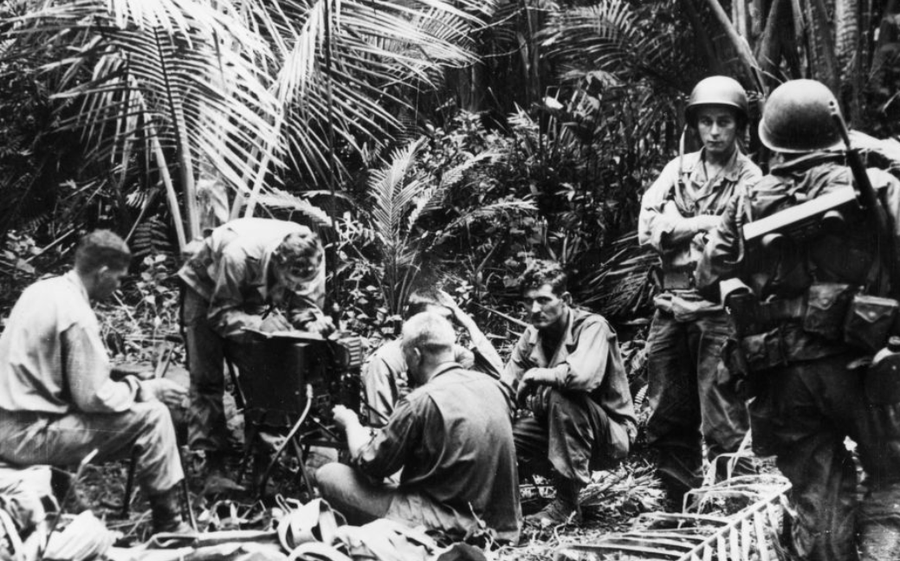
The decline of international norms is transforming the post-war architecture of stability into an increasingly chaotic environment where force prevails over law. This transition signals the end of the era of global institutions and a return to a reality where sovereignty is protected primarily through military power.
The disintegration of the so-called rules-based international order is no longer a theoretical prediction or speculation, but a tangible reality. In trade, diplomacy, politics, and security, the idea that there are “rules” that constrain the behavior of the strong is increasingly outdated.
And this does not require complicated proof. Figures like Canadian economist Mark Carney have openly acknowledged this "breakaway" from the current system in global forums like Davos.
In essence, the post-1945 international order, built on UN institutions and international law, has been more of a normative construct than a pure reality. Even its defenders have acknowledged that it rested decisively on the power of the United States.
However, despite its hypocrisy and limitations, this order has been functional and useful, especially for the Western world that designed and maintained it. In contrast, Henry Kissinger's concept of "world order" is deeper and more realistic.
He defines order as a combination of balance of power and legitimacy, two elements that together produce international stability. Contrary to common perception, Kissinger was not simply a cynical power realist.
His main concern was to maintain stability through a balance of power and an acceptable normative framework. This approach remains valid in every era, from the Europe of the Thirty Years' War to the dynamics of the Cold War.
Meanwhile, the idea of a rules-based order is a relatively new phenomenon, closely associated with the post-World War II period and especially the post-Cold War era.
In this period, what could be called the “Globalist Triad” was formed: an expanded system of international law with a liberal emphasis (especially on human rights), a global economy based on free trade and interconnected networks, and a set of liberal-democratic values that claimed to be universal.
This triad served as the legitimizing basis for an order organized around American hegemony. Today, what we are losing is not just a relatively stable balance of power, as actors like China, Russia, and Iran challenge the West, but also the very standards of international legitimacy.
The retreat from rules, agreements, and shared norms is eroding the foundations of the system. This situation is almost unprecedented in modern history. Since the Peace of Westphalia in 1648, even in periods of fierce conflict, there has been a minimal framework of norms and a shared sense of legitimacy. Even “rebellious” actors, such as revolutionary France or Nazi Germany, were exceptions that provoked a collective reaction.
Today, this logic seems to have completely disintegrated. A series of strategic failures, from the post-9/11 wars to the conflicts in the Middle East, coupled with the rise of rival powers, have significantly weakened Western leadership and altered the global balance of power.
In parallel, legitimacy is also declining. Ironically, some of this erosion comes from the United States itself. The Globalist Triad had become politically unstable, producing strong populist backlash and a turn against globalization, free trade, and liberal universalism.
However, beyond these structural developments, concrete politics have accelerated this disintegration. An increasingly selective approach to international law, the use of force without consensus, and pressure on allies have undermined the very idea of common rules.
Such behavior, even when justified in individual cases, sets dangerous precedents. It weakens any claim to justice and makes it more difficult to mobilize international support against future violations.
So, when standards disappear, the path to arbitrariness and escalation opens. From threats to allies, to the use of tariffs as weapons and interference in the internal politics of other states, a pattern of behavior is being consolidated that does not conform to any traditional concept of international order.
The result is a world that is increasingly approaching a global "jungle", where rules are replaced by power, and where each state relies primarily on its own capacities for survival.
From the illusions of a normative order, the pendulum has swung to the other extreme, to a system where sovereignty is no longer guaranteed by anything but force. Welcome to the jungle! / Adapted from "Pamphlet", by "Brussels Signal"




Lini një Përgjigje