


 Shkruar nga Pamfleti
The smuggling took place under the eyes of SICPA; and today, it continues to be paid for, as the smuggled money ends up in Dubai.

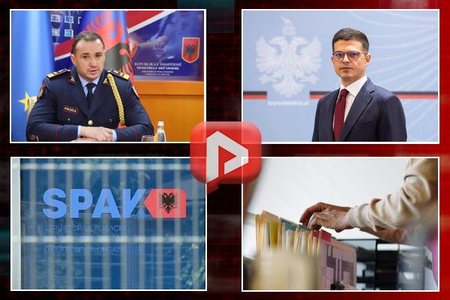
In May 2025, SPAK broke out one of the largest investigations against cigarette smuggling in Albania. A sophisticated network that included manufacturers, distributors and customs officials, used a well-organized scheme to avoid any fiscal obligations. According to investigative documents, tobacco products were produced in the country, declared as exports to countries in the region, but in reality remained within Albanian territory and distributed illegally, without paying excise duty or VAT.
The scheme was simple in form, but alarming in scale: fictitious exports, which cost the Albanian state over 36 million euros in losses in just a few months. But what makes this case even more serious is the fact that it occurred within an infrastructure that has been paid for for years precisely to stop smuggling.
This infrastructure has a name: SICPA.
The Swiss company SICPA was the official concessionaire for the production and management of fiscal stamps in Albania from 2011 to December 2024. It was presented as a technological solution against evasion and was paid with over 110 million euros from the taxes of Albanian citizens to guarantee the control of excise goods.
Its system included stamps with security features, devices placed on production lines, a digital tracking platform, and real-time reporting of any violations. In other words, SICPA was the state's "radar" against smuggling.
From 2011 to December 2024, SICPA was the exclusive concessionaire for the production and management of fiscal stamps in Albania. It undertook to install security technologies, track excise products and signal any deviations. With over 110 million euros paid by Albanian taxes, SICPA presented itself as an indisputable guarantee against smuggling.
But after the revelation of this case, one question remains unanswered:
Where was SICPA?
Did its monitoring system work? Was there an alarm raised? Were there any reports of exports that turned out to be fictitious? If so, were they ignored by the authorities? And if not, are we dealing with a technical and organizational failure that requires investigation, not renewal?
Moreover, at the end of 2024, before SPAK broke the scandal, SICPA returns to the scene, this time not as a concessionaire, but as a co-shareholder in the new state-owned company ALBTrace CO, which has taken over the production of fiscal stamps. The Albanian state holds 51% of the shares, while the rest belongs to an entity registered in the United Arab Emirates. And SICPA itself owns 40% of this Arab partner, through a structure registered in Dubai.
The money paid for our fiscal security today takes a familiar path; towards the Emirates, where it is no longer a secret that some of Albania's most powerful politicians and businessmen have created silent havens for undeclared assets, offshore companies, and million-dollar properties.
Sicpa operates primarily in third world countries, mainly in Africa and Latin America, where institutional control is weak and resistance to corruption is minimal. From Congo to Tanzania, from Uganda to Venezuela, SICPA has built expensive fiscal systems that have in many cases been ignored, criticized, or simply not worked.
In April 2023, the Swiss federal authorities themselves convicted the company SICPA for lack of anti-bribery measures and for indirect involvement in suspicious payments to foreign officials in Latin America. A fine of 1 million francs was imposed and 80 million francs of profits were confiscated. In other words, SICPA is a company convicted in its own country for a systemic failure to control corruption.
And today, this company remains officially connected to the Albanian fiscal system, through a new structure, but with the same real power. /Pamphlet




Lini një Përgjigje