


 Shkruar nga Pamfleti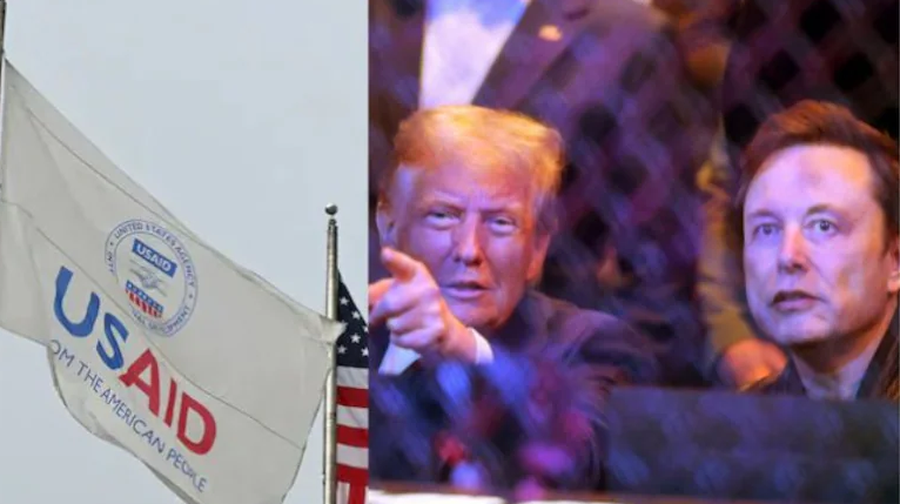
Where was USAID money spent in Albania and what was it used for?
The use of the American debate in Tirana clearly seems to be done by people close to Sali Berisha. They have a specific goal; to smear high American politics, and to bring grist to the Doctor's mill, as if to say that they have also wasted their time on Non-Grata.
The debate over USAID is an internal American mechanism, it is US federal government money, and in this case when our village comes into play, it seems unrelated.
However, since this issue has been raised, it's worth talking about the money that USAID has used in Albania all these years. Because, after all, 'dead words don't do'.
And while we're on this discussion, where was USAID money spent in Albania and what was it used for?
The question comes quite spontaneously.
There are many conspiracy theories about this, where of course there are truths and doubts, and as always the name of the "enemy" is used, in this case Soros. Trump's enemy is in question.
US AID is literally US aid to other countries. These funds were managed by the Foreign Ministry or the State Department. US AID in Europe remains iconic on bags of flour and wheat, where the logo was printed that went to European countries after World War II with the Marshall Plan.
In Albania, USAID, after the fall of communism, started out quite differently. America did not bring oil, sugar, flour, cookies, and chocolate, as European countries or Turkey and the Arabs brought; nor did it bring Arabian dates and endless rosaries, but followed a different policy.
A policy that had capitalist logic, to teach how to fish, not to bring ready-made fish.
In the early 1990s, USAID focused on the establishment of local economic trusts, which had connections with American actors, with its well-known assistance to farmers.
At first, IFDC was started, a farmers' trust, who, through American aid, used scientific methods for agriculture, from seeds and pesticides across the ocean, to reactivate Albanian agriculture.
Which, unlike the Western one, was not as developed in terms of productivity, but was planned by the state, namely it did not have a market logic.
However, it must be said that although the idea was essentially capitalist and logical to make the Albanian farmer a strong producer, that program was not successful. This was most likely not due to the American ideas, which were proven successful in the field, but due to the ownership problem that was never solved in our country, or even the lack of a strategy for agricultural development.
There were some farms that applied American plans and aid, some were successful in production, even exporting. But it was too little to reactivate a basic sector, as it was launched.
Later, American aid was oriented towards a more concrete field, that of services. Thus, the American-Albanian Enterprise Fund and the American Bank of Albania were created, a successful business that created an investment trust, still active today.
This initiative was launched by President Bill Clinton, after he created the 'Friends of Albania' group with Romano Prodi, after the terrible year of 1997.
Meanwhile, USAID has been active for years for organizations, associations, and civil groups in the territory for activism and civic activities.
But since 2012, there has been an increase in funding for what are called gender minorities in Albania. The LGBT community, as well as marginalized groups that were once persecuted because their activities were pursued in the Hajdin Sejdië pit behind the Palace of Culture.
For a few years, these marginalized people managed to come out in their identities, and thanks to support, they left the pit, and perhaps that was a good thing.
However, USAID has allocated a lot of funds for the media, it has financed the so-called "quality journalism laboratory", where young journalists and reporters could make reportages and investigative chronicles. The project leaders, in addition to the media directors at the US embassy, have been Lutfi Dervishi, Artan Hoxha, Bledar Zaganjori, etc. Who, as a board, have also provided funding for new media initiatives in the reporting framework. These may have resulted as good and new initiatives of independent reporting, but have they been effective? The issue is readability. This seems to have not been measured. However, blocking funds is not a small thing. In Kosovo, USAID has invested 2 billion dollars since 1999.
This three-month suspension is of course a problem for the organizations whose funds have been cut off, and there are also important parts such as training and accommodation problems or even payments for SPAK consultants. But this is temporary. The question is what positive has USAID's assistance brought to Albania and Kosovo? This should definitely be analyzed and not left in the hands of some semi-diplomatic local pashalars who seem to have done nothing wrong./ Pamphlet



Lini një Përgjigje