


 Shkruar nga Anton Filippov
 Nearly 4 months after parliamentary elections, Kosovo is unable to elect a new government. The crisis has called into question the credentials of the new state in the eyes of the world. The EU and the US have the power to resolve the impasse, but Richard Grenell, the former US special envoy for Kosovo-Serbia negotiations, maintains very strong ties with Serbian President Vučić and is very critical of Albin Kurti...
The last parliamentary elections in Kosovo were held on February 9. But on Monday, the 25th attempt to form a new government failed. For almost 4 months, members of parliament have been meeting every 48 hours for new sessions, but they are still unable to agree on the choice of the speaker of parliament or the new government.
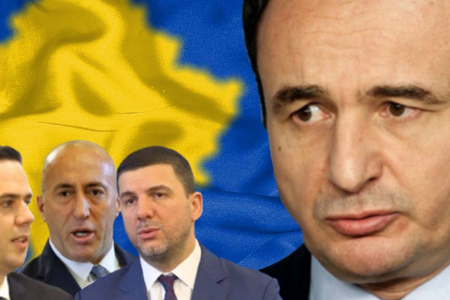
As a result, Europe's newest state finds itself in a deep political crisis, with no clear way out. The recent parliamentary elections brought victory to the Vetëvendosje party, led by incumbent Prime Minister Albin Kurti. But that's where the good news for it ends.
His party fared worse than in previous elections, winning only 48 seats, 10 fewer than last time. That is not enough to form a majority in Kosovo's 120-seat parliament. Forming a coalition has proven extremely difficult.
The main reason for the current crisis is that the opposition wants Kurti out of power, but cannot form a government of its own. But how did it get to this point? First, it is worth noting that Kurti and his party represent a new generation of Kosovar politicians.
A generation that replaced those who had fought for and won Kosovo's independence, as well as its recognition by major Western powers. However, the price of recognition was significant concessions to the Serb minority, made under Western pressure.
For example, the West’s desire to “solve” the issue of the Serbian minority led to the establishment of parallel governing structures in municipalities populated by ethnic Serbs (mainly in the north of the country). Meanwhile, Kurti pursued a much more radical approach, which is unacceptable to the opposition.
In an attempt to bring northern Kosovo fully under Pristina’s control, the prime minister escalated tensions with the EU, and even the United States, to unprecedented levels. As a result, the EU imposed sanctions on Kosovo (albeit mild ones), while Serbia faced no action.
The opposition fears that, amid growing security risks, Kosovo's already strained relations with the West could be very costly for the country. At the same time, it is unable to form a government on its own, as the Serb minority is automatically guaranteed 10 seats in parliament by the constitution.
Most of them are held by the Serbian List party, directly linked to Serbian President Aleksandar Vučić, who is interested in deepening Kosovo's political instability. On the other hand, the country's president, Vjosa Osmani, is in no hurry to dissolve parliament and call new parliamentary elections.
This is also because it is unclear whether the latter would achieve anything other than further deepening the crisis. The political crisis is only worsening Kosovo's already difficult situation: a large part of the population lives in poverty, and the country faces corruption, organized crime and drug trafficking.
These challenges can only be overcome with the help of the European Union. However, the main obstacle on Kosovo's path to integration into the bloc remains the normalization of relations with Serbia through the resumption of bilateral negotiations.
The talks, which have been ongoing since 2013, have been suspended since Serbian terrorists attacked the village of Banjska in Kosovo in 2023. Among the challenges facing Kosovo's newly elected MPs is another important figure: Richard Grenell.
The former US president's special envoy for talks on the normalization of Kosovo-Serbia relations remains very close to President Donald Trump, has close ties to Serbian President Aleksandar Vučić, and is an outspoken critic of the Kosovo government led by Albin Kurti.


Lini një Përgjigje