


 Shkruar nga Monica Porter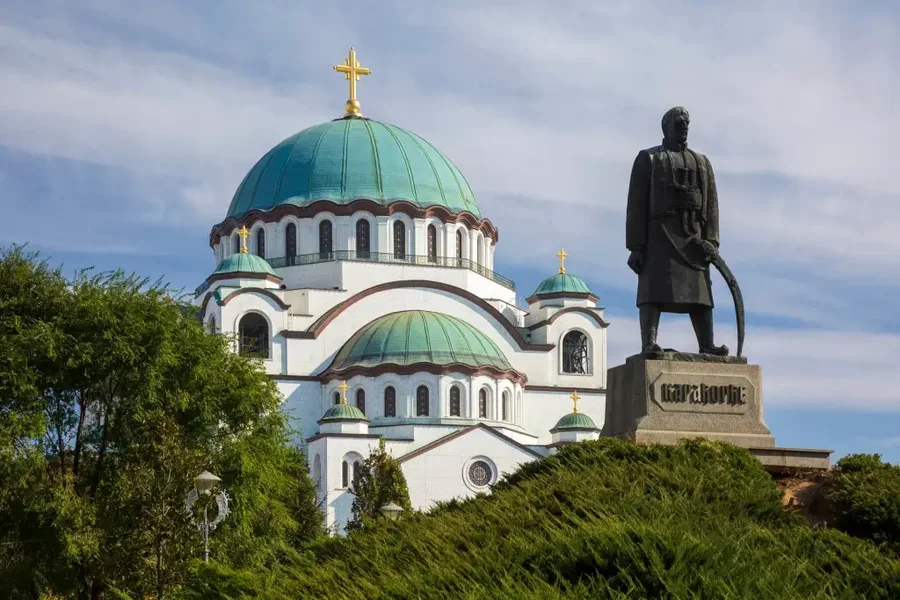
Bulgaria is the poorest country in the EU. The political class is a relic of the communist era; a new, untainted generation of leaders has yet to emerge. Since nothing changes, Bulgarians have given up on their “democracy.” Turnout in the last election was 34 percent. There’s a saying in Sofia: every country has a mafia, but Bulgaria is a mafia with a country...
Our Serbian guide, Zoran, is a funny guy, and as we wander through the streets of Belgrade in our minibus, he entertains us with a joke about the difference between the various nationalities of the former Yugoslavia, which now have their own countries.
"We Serbs are rude. But Croats are selfish, Bosnians are fat, Montenegrins are lazy, and Macedonians are just Serbs with a speech defect. As for Slovenes, they are so polite, they must probably be homosexuals!" he told us.
Making jokes is definitely a step forward, compared to quarreling with each other, as happened for most of the history of the peoples of the former Yugoslav federation. The countries on my Balkan tour - Serbia, Romania and Bulgaria - have been struggling with their post-communist problems for more than 3 decades.
But their citizens like to make fun of them. The Serbian capital, Belgrade, is located at the confluence of the Sava and Danube rivers. These rivers once marked the border between the southern part of Serbia, ruled by the Ottomans for 400 years, and the northern part, which was controlled by the Habsburg Empire.
If Belgrade seems more dilapidated than other European capitals, Zoran believes it is because "the legacy left behind by the Turks is the Eastern mentality of many Serbs, instead of the more organized and efficient Austrian attitude."
“We just let things take their course,” he stressed. However, perhaps the truly problematic legacy is that of the communist era, with its endemic corruption and lack of transparency.
A recent example of this phenomenon is the collapse of a poorly constructed roof at the Novi Sad railway station, which claimed the lives of 15 people. The contractor apparently prioritized profit over safety. There were widespread public protests over this tragic event.
As we pass a dilapidated building, Zoran explains that it was destroyed during the NATO bombing of Belgrade in 1999. The bombing was prompted by President Slobodan Milosevic's massacres of ethnic Albanians in Kosovo, and the failure of diplomatic efforts to stop it.
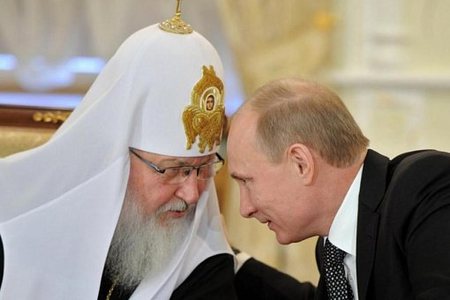
Zoran does not mention this detail. But he speaks in a slightly hurt tone, as if there was no need for such a cruel destruction. The Serbs are hostile to NATO, as are their supporters, the Russians. These two Slavic peoples have long been united politically and culturally through their shared Eastern Orthodox religion and the Cyrillic alphabet.
Vladimir Putin even proposed Serbia as a country with a peacekeeping role after the war in Ukraine. (Although even he must recognize the absurdity of this statement.) Along the pedestrian Knez Mihailova street, Belgrade's main place for shops, restaurants and cafes, souvenir stalls sell mugs and socks with Putin's image.
Serbs seem to like the Russian leader very much. There is also a rare sense of social cohesion among Serbs. All generations regularly attend church services and when they leave the building, they turn towards it and make the sign of the cross.
Young people are no exception. “They are not necessarily religious. But we all respect our national Church,” Zoran declared. The fact that Romania is doing much better than Serbia, with higher wages, a relatively strong economy and better national infrastructure, has happened because it is a major beneficiary of European Union funds.
The capital Bucharest, founded by Vlad the Impaler in 1459, is now one of the most overcrowded cities in the world, with endless traffic jams and a plethora of ugly graffiti. But local guide Marius is optimistic.
"Just as NATO membership has given us security, EU membership has gradually helped us escape the long shadow of communism, with its many injustices. Today we better understand democracy, good governance and the rule of law. Of course there is still corruption, but it is decreasing," he emphasizes.
Then he adds with a smile: "And we are a safe country. There is less crime on our streets, because thanks to freedom of movement, our thieves fled to other EU countries!" As for mass migration in Europe, Romania has not been affected. Former communist countries are not the preferred destinations for immigrants. "A few years ago, the police found two illegal African immigrants in the back of a truck. When they discovered they were in Romania, they screamed in terror: No, we want to go to Germany!", he says.
On the other hand, Romania is currently hosting around 200,000 Ukrainians who have fled their country because of Putin's war. And there is growing resentment towards them from the locals, because many of the Ukrainians have better cars than the Romanians.
With the victory last week of centrist candidate Nicușor Dan in the presidential election, Romania could continue on its pro-European path. But it was a very close race. The campaign of his rival, the right-wing ultranationalist and pro-Kremlin George Simion, had received a major boost through a Russian-designed TikTok campaign, which provided him with support among the Romanian diaspora.
In a move that will prolong political instability, Simion is contesting the election result.
The Danube marks the border between Romania and Bulgaria, and we enter the latter by crossing the now rusting Friendship Bridge built in 1954. Bulgaria is the poorest country in the EU.
As the locals ironically say: “We are at the bottom of the barrel, but at least the barrel is on the first floor of the house and not in the basement!” The country’s political class is a remnant of the communist era; and a new, untainted generation of leaders has yet to emerge.
But since it clearly lacked the necessary prerequisites for membership, why was it admitted to the EU? Elena, our Bulgarian guide, a smiling middle-aged woman, explains to me as we stroll through the capital Sofia that EU bureaucrats decided it was probably better to have Bulgaria in the bloc than under Russian influence.
Young aspirants, especially those who managed to learn English despite the sub-EU education system, have fled the country. Those who remain are infected with apathy. Since nothing changes, they have given up on their “democracy.”
Voter turnout in last year's parliamentary elections was 34 percent, the lowest since the end of communist rule in 1989. And crime is rampant. Elena quotes a saying: every country has a mafia, but Bulgaria is a mafia with a country.
In the old town of Plovdiv, a cultural center and architectural gem, local resident Milos says that despite his failures, he will not abandon his country because he cares. “We have given up politics. That’s why we do satire!” he emphasizes.
As in the darkest days of communism, it is humor that keeps them going and encourages them to move forward./ Adapted from "Pamphlet", from "The Spectator"


Lini një Përgjigje