


 Shkruar nga Gjergj Zefi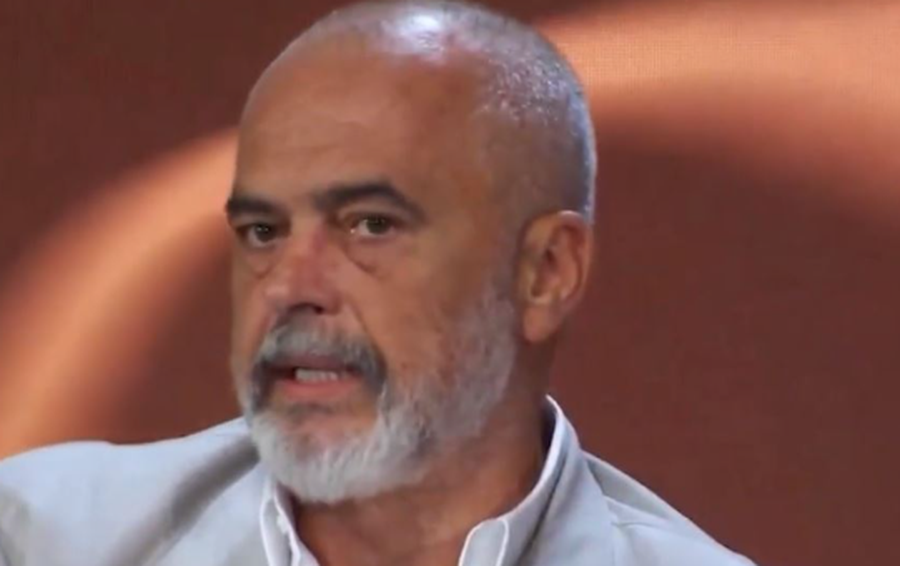
The parallel with the practices of leaders who use displays of force to cover up failures...
Edi Rama, 12 years in power, wakes up in the morning and does the same thing that every ruler who has run out of ideas and energy does: he produces a scene of strength. Today, it was not reform, the economy, the youth fleeing or the doctors who are missing that mattered. Today, TNT mattered.
On Facebook, as a self-proclaimed reality filmmaker, he published the TNT collapse of a three-story building in Vlora. It was not technical news from a municipality, nor a simple announcement of an urban intervention. It was a propaganda ritual. Positioned cameras, dramatic angles, dust rising in the air, and the ending edited as another victory.
But what is this spectacle?
It's the way Rama speaks to his people. He doesn't say "we'll build this." He says "look what I can destroy." Because this is true power for him: to destroy in front of everyone, to show that anything can disappear with his order.
Instead of a factory opening, we see the collapse of a building. Instead of a development plan, we see a cloud of dust. Instead of a vision for the future, we see a moment of unbridled strength. It is the symbolism of a power that no longer knows how to build and that has become addicted to the adrenaline of destruction.
The bad thing is that this ritual is not random. It is repetitive. Construction requires a plan, a budget, transparency, accountability. Destruction requires only a firm and some explosives. It is the fastest way to make noise without doing any work.
If another building collapses tomorrow and another the day after, does that mean Albania is being cleaned up? Or does it mean that propaganda is covering the void? Because while the dust settles, the country's problems remain standing, untouched. And TNT cannot bring them down.
History knows this language of power well. Benito Mussolini set fire to entire neighborhoods to make way for his grand boulevards and show the people who he was. Adolf Hitler demolished entire structures to build his monumental vision, using architecture as a propaganda tool. Nicolae Ceaușescu in Romania destroyed hundreds of historic buildings to build his gigantic palace, filming each collapse as a testament to his strength.
In the current century, Recep Tayyip Erdoğan used bulldozers and police to demolish Gezi Park, sending a clear message to his political opponents. Aleksandar Vučić in Serbia closed off entire neighborhoods in Belgrade to make way for his clientelistic projects, always under the pretext of “modernization.”
Edi Rama doesn't need a big explanation. He needs a video. Positioned cameras, dramatic moments, clouds of dust rising, and a narrative ready to be shared on social media. It doesn't matter what kind of building it was, or if there was an alternative. What matters is the ritual of destruction.
This ritual is dangerous not only because it normalizes the use of visual violence as a political instrument, but because it diverts attention from what is essential. Construction requires thought, budget, transparency, and time. Destruction requires only an order and a few kilograms of TNT. It is the fastest way to create noise, but also the surest way to hide the emptiness of ideas.
And this is the difference between a state that moves forward and a government that survives on spectacles./ Pamphlet





Lini një Përgjigje