


 Shkruar nga Pamfleti
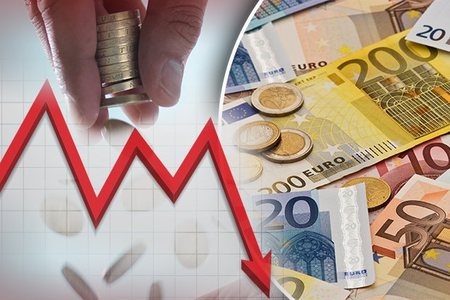
The devaluation of the euro during the tourist season is a phenomenon that is repeated regularly, not only by returning immigrants, but also by foreign tourists who have significantly increased in our country this year. But unlike other seasons, this year the euro plummeted, beyond the limit we are used to in exchange rate fluctuations. If one euro in January of this year was exchanged for approximately 114 ALL, at the end of July its value fell to less than 100 ALL.
This strong change has brought the Bank of Albania into a collision with the Albanian exporters, who suffer colossal losses from the volatility of the exchange rate. A few days ago, the exporters came to the conference and asked the Bank of Albania to intervene. "There is no official explanation or justification from the Bank of Albania, as to why the appreciation of the lek is a logical consequence of the economic development of the country - which means that exporting businesses first, but also all businesses and even citizens, effectively exercise activity economic and financial in an uncertain environment!" - said the exporters.
In their complaint, they mentioned the losses they had suffered and requested an immediate intervention of the institutions. Governor Gent Sejko responded to the request in a press conference. From the position he took, Sejko did not seem to share the same concern as the exporters. He told traders that "we remain mindful of the speed of the rate's strengthening and volatility over the past few months."
He then explained that he saw the causes of the devaluation of the euro in 1) remittances, 2) tourism and 3) foreign investments. "We are at the peak of the season and historically such a movement has been noticed. So these show that we have a strengthening of the exchange rate", concluded the Governor of the Bank of Albania, assuring that he would keep the situation under monitoring.
The fact that the Bank of Albania will not intervene in the market simply warns of further losses for exporters. Left in the mud by the Bank of Albania, this Thursday they have sent a letter to the leaders of the International Monetary Fund, the World Bank and the European Development Bank in the hope that they can find a solution from the internationals.
The Committee of Exporters says that they represent more than 5,000 exporting companies, over 200,000 employees and that they have a nearly 23% contribution to GDP. In their message, they clarify for foreigners that the strengthening of the Albanian lek does not come from the fact that there is more productivity in the Albanian economy, nor that there is more competition, nor that there are more foreign investments or more income from immigrants.
"The large and temporary fluctuations that seriously damage exporters and tourism seem to be affected by informal or criminal money in the Albanian economy, mainly in real estate and profitable businesses," the traders write.
The circulation of informal money can be a concern for traders, but so far it has never worried Albanian institutions. Even when the euro plummeted during the campaign for the local elections on May 14, the move was justified by the Minister of Finance Delina Ibrahimaj with the same arguments brought by the governor Gent Sejko in August.
“Flukset hyrëse kanë qenë në rritje nga turizmi, remitancat dhe investimet e huaja”, shprehej Ibrahimaj në Prill të këtij viti. Në fakt, atëherë sezoni turistik ende nuk kishte nisur. Më shumë se turistët e Prillit, efektin e zhvlerësimit të euros e kryente lëvizja e parave për blerjen e votave.
The fight against money laundering has never been a priority of the Albanian government. On the contrary, Prime Minister Rama has ready a draft for fiscal amnesty of up to 2 million euros for every immigrant and every foreigner who wants to bring his money to Albania. The draft has not been approved, because it has been strongly opposed by the US embassy and the ambassadors of Germany and France, who fear the fact that Albania may turn into a safe haven for money earned by crime in Europe. The fluctuations of the euro and the lek in these months show that all the premises are in place to realize such a scenario./Lapsi.al


Lini një Përgjigje