


 Shkruar nga Alexander Howard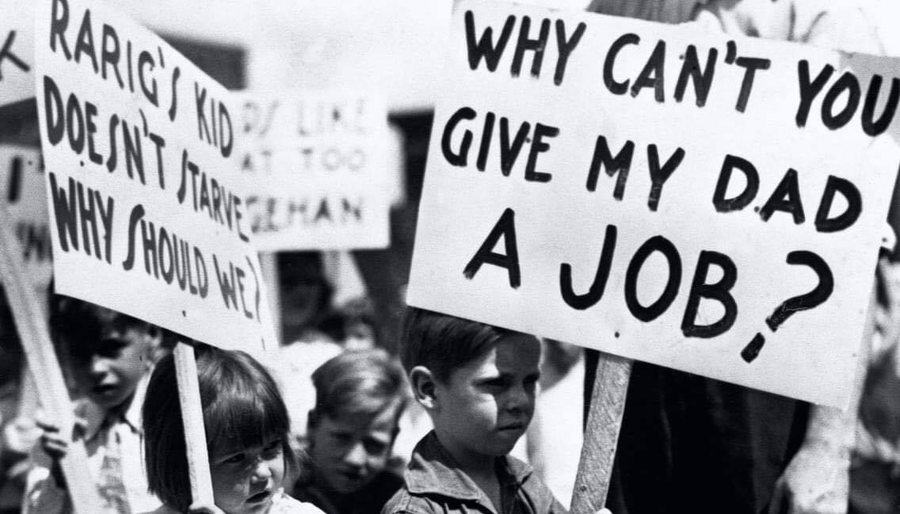
As a species, we humans seem completely incapable of learning from our own mistakes, let alone from the mistakes of others.
Winston Churchill had just arrived in New York. It was October 6, 1929. Traveling with several members of his family, the British statesman checked into the Plaza Hotel, synonymous with wealth and fame and certainly not cheap. But that didn't bother him.
Because the cost of his stay, along with his cigars and whiskey, was covered by his old friend, financier Bernard Barush.
After eight weeks of traveling across North America, and after contacts with his business friends, it is no wonder that Churchill was “struck by stock market fever,” writes journalist Andrew Sorkin in his stunning new book, “1929: The Untold Story of the Greatest Stock Market Crash in Wall Street History.”
His account is based on a description of conditions in the United States in the weeks leading up to the Wall Street Crash of October 1929. The first day of real panic, October 24, known as Black Thursday, came just a few weeks after Churchill's visit. A record 12.9 million shares were traded on the stock exchange that day, marking the beginning of the crisis.
In just two days, $30 billion of the stock market's $80 billion value disappeared. The publication of this book seems to have come at the right time: many analysts are drawing parallels between 1929 and the current period.
“The economy of the 1920s boomed at a time when America was recovering from a deadly pandemic, the 1918 flu, ” William A. Birdish, former director of Investment Management at the U.S. Securities and Exchange Commission, wrote in the New York Times last month.
"Car and cellphone stocks are the fastest-growing tech investments of their time. Two of them are Tesla and Apple," he adds. And consider the huge excitement surrounding Artificial Intelligence.
Michael Berry, made famous by “The Big Short” for making money during the 2008 financial crisis, “announced he was selling his shares in Nvidia and Palantir and warned of an Artificial Intelligence bubble, before abruptly closing his investment firm, Scion Asset Management,” the British newspaper The Guardian reported last week.
Jamie Dimon, chairman and CEO of the giant Wall Street bank, JPMorgan Chase, recently predicted a serious market correction in the next 6 months to 2 years. Meanwhile, those at the top continue to fill their coffers and continue to act as if nothing is wrong.
From development to poverty
In October 1929, “ Churchill saw a good opportunity to make money in Canada and the United States, and everywhere, it seems,” Sorkin writes. This is confirmed by a cable he sent to his wife. He wrote, among other things: “There is a stock exchange in every big hotel. You go and sit there and see the figures being written on the boards every few minutes .”
Speculation on the stock market had permeated everyday life. Finance was no longer a fanatically guarded property of bankers and brokers. It had become almost a national pastime.
The noise of the stock exchange's recording equipment could be heard in all the hotel lobbies and restaurants.
Easy, fast, and seemingly endless credit was available to anyone with a pen. Buying and selling stocks had become almost routine, and ordinary Americans accepted the idea that the market's dizzying ascent would continue forever; that the good times of the roaring 1920s would give way to the equally prosperous 1930s.
But within weeks of Churchill's visit, the collective fantasy of what we would now characterize as an irrational euphoria would collapse like a house of cards. The bright, vibrant world he loved so much would give way to years of mass unemployment, long bread lines, and slums.
Churchill, a tireless marketer, lost a considerable sum of money. But born into wealth and privilege, he managed to weather the storm that followed. But many ordinary Americans, who had essentially been fooled into believing that the boom would only continue, were not so lucky.
Large parts of the population remained completely poor. America was transformed from a nation intoxicated by the dream of perpetual prosperity, into a nation facing the nightmare of the most severe economic crisis in history, the consequences of which were felt across the globe.
It's impossible to deal with Sorkin's painstaking reconstruction of those hectic weeks without thinking about present-day times.
How did the stock market collapse happen?
The year 1929 brought major disagreements between brokers and policymakers, frantic efforts to keep the "economic ship" in a calm state, and mistakes that helped bring down the entire financial system.
"Gradually and then suddenly ," is how the famous writer Ernest Hemingway described the bankruptcy process.
This phrase can easily be reused to refer to the events of 1929. Stock prices had risen to dizzying levels from uncontrolled speculation, mountains of borrowed money, and secret banking practices that encouraged people to spend more than they should by taking out loans.
Pasi besimi u lëkund, u kërkuan kreditë me diferencë (kredi që i lejojnë investitorët të blejnë aksione me para të huazuara, duke përdorur vetë aksionet si kolateral), duke i përshpejtuar më tej shitjet dhe duke shkaktuar një spirale të fortë rënëse, e cila nuk mund të ndalej.
Ajo që u shfaq, ishte një pamje që ndihet çuditërisht e njohur: një elitë financiare dhe politike e bindur se Rezerva Federale po tregohej shumë e kujdesshme, shumë ndërhyrëse dhe shumë e gatshme që t’ua prishte festën. Rezerva Federale, luan një rol vendimtar në rrëfimin e Sorkin, ashtu siç luan edhe sot.
Në vitin 1929, udhëheqësit e saj u gjendën të zënë midis presioneve konkurruese: nga njëra anë, financuesit që i nxisnin ata të lehtësonin kontrollet mbi kreditë dhe të vazhdonin spekulimet; nga ana tjetër, shenjat në rritje se tregu ishte mbinxehur në mënyrë të rrezikshme.
Sorkin i referohet paralajmërimit të dhënë më 2 shtator 1929 nga ekonomisti Roxher Babson, i cili argumentoi se disa tregues kyç sugjeronin se ekonomia amerikane po fillonte të binte, edhe pse çmimet e aksioneve arritën nivele të reja.
Ai theksoi se shifrat e prodhimit dhe të transportit të mallrave, kishin filluar të binin dhe numri i aksioneve në rënie po rritej ngadalë, një shenjë kjo e sigurt se forca e dukshme e tregut po maskonte një brishtësinë gjithnjë e më të madhe. Me sa duket, ky tension nuk është zgjidhur kurrë vërtet.
Duke lexuar këtë, mendova menjëherë për presionin që po ushtron aktualisht Donald Trump mbi Rezervën Federale. Ai i ka kërkuar vazhdimisht Rezervës Federale të ulë normat e interesit, e ka akuzuar udhëheqjen e saj për pengim të qëllimshëm të rritjes ekonomike dhe ka shprehur dëshirën për ta vënë sistemin nën kontrollin e tij më të drejtpërdrejtë.
Dhe ishte e vështirë të mos e vihej re simbolika, kur vetëm pak orë para se miliona amerikanëve në nevojë t’u hiqeshin ndihmat ushqimore, Trump organizoi një festë Halloëeeni me temë nga “Great Getsby” në rezidencën e tij në Mar-a-Lago. Ishte një homazh për epokën e teprimit, iluzionit dhe manisë spekulative që solli katastrofën e tetorit 1929.
Në vitin 2009, Sorkin botoi librin “Too Big to Fail” (Shumë i madh për të dështuar), një libër i ndërtuar mbi dëshmi të drejtpërdrejta nga figura kyçe brenda institucioneve të mëdha bankare dhe autoriteteve rregullatore në zemër të krizës financiare të vitit 2008.
Sipas fjalëve të vetë Sorkin, ai studim ishte “kronikë e një dështimi, që e gjunjëzoi botën dhe ngriti pyetje rreth vetë natyrës së kapitalizmit”.
Stuhia e re është pranë
Ashtu si financuesit e vitit 1929, baronët dhe mbështetësit e teknologjisë së sotme këmbëngulin sot se bumi i Inteligjencës Artificiale, përfaqëson një hap përpara që ndodh një herë në jetë: një inovacion kaq i rëndësishëm dhe transformues, sa që ai duhet të klasifikohet (përsëri) si shumë i madh për të dështuar.
These swindlers and their supporters are always ready and quick to calm the masses. Don't worry, they say. And don't ask too many questions. This is what we call a storm in the making. All of this reminds me of Marx's old adage about history repeating itself: first as tragedy, then as farce.
However, when I stop to think about it a little deeper, it doesn't seem quite right, given how often these cycles repeat themselves. Instead, the 1929 epigraph seems much closer to the point: The average human being does not live long enough to derive any significant benefit from his experience.
And apparently no one can benefit from the experiences of others either. Being both a father and a teacher, I know that we cannot teach our children anything. We cannot pass on to them our knowledge of life or mathematics. Everyone must learn their own lesson from scratch.
These words belong to Albert Einstein, taken from an interview he gave to "The Saturday Evening Post".
Einstein was talking about parenting and mathematics, not financial markets. However, the interview was published on October 26, 1929, just two days after Black Thursday.
Today his words carry an unmistakable air of prophecy. He is right. As a species, we humans seem utterly incapable of learning from our own mistakes, let alone from the mistakes of others. And it is hard to avoid the feeling that we may soon be reminded of this again./ Adapted from "Pamphlet", taken from "The Conversation"







Lini një Përgjigje