


 Shkruar nga Ben Andoni
Could Rama be caught off guard by the idea of a moment of early elections and with this, fascinate the mountain with accusations and the problems of his government?
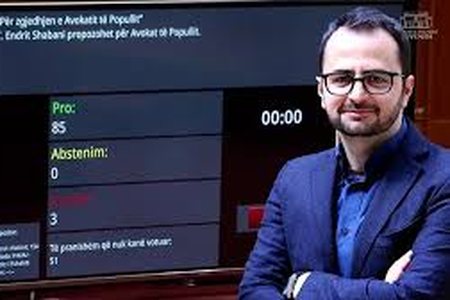
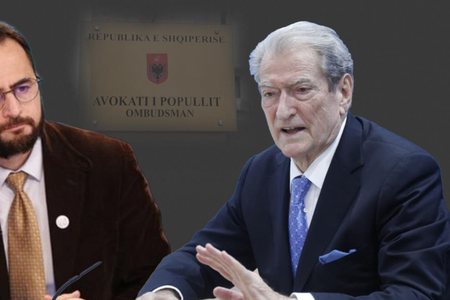
The main demand of the Adriatic Lapaj Movement, now locked in front of the prime minister's office, is for a transitional government and after a transitional period, where technocrats will take over the country, a model organization of elections to be realized. The opposition demands the same thing, but of course with no cooperation with the prime minister. The paradox is that hand in hand they often cooperate with him. The last was the bitter story of the election of the People's Advocate, after several of them previously in Parliament.
In this habitat, an attempt is taking place to show and address the problems of the DP as they should be. But the mindset of real change is foreign to the DP. At least until now. And, in the wake of this, there is a great effort to relativize the movement of the “Salianji” group within the Democratic Party. In the last meeting, the biggest confrontation was on matters of political morality and precisely about principles, but above all the surprise at the awakening of a group that will modify the system within the Democratic Party.
As usual, a whole herd that has shown itself not only harsh but also cynical, has done what it knows best: To use insults and stereotypes as usual. The anxiety of the DP is the disruption of the status quo and especially the loss of balance for a part of the membership that enjoys all the privileges. Therefore, this reaction to “Salianji” is understandable. “Collective fear stimulates the herd instinct and tends to produce cruelty towards those who are not considered members of the herd,” says Bertrand Russell in one of his reflections on politics.
In this sense, overwhelmed by many developments, the Democratic Party is "escaping" the analysis again and, worse still, is trying to go into its dormant state. On the other hand, the majority is struggling hard to maintain a power that is being bent to the ground by accusations and that is surviving with great difficulty the problems and especially corruption. Finally, the statements in the podcast of Prime Minister Rama towards the people of BKH who have knocked on the prime minister's door and have not wanted to give up their weapons, more than cynicism is an indirect acceptance of a situation that is not so favorable for him. It also constitutes a departure from reality. Not only his own but also those around him.
In short, Albania will probably need or want early elections to enter a normal democratic environment. But is the opposition ready? They have not yet done the analysis of 2021 and apparently now that six months have passed since the last elections, it is unlikely that this analysis will be done in depth for 2025. This is where the "Salianji" movement is penetrating.
But how can we go to early elections? There is a distant sign, since during the campaign when Prime Minister Rama envisaged the year 2030 as his target, while the mandate ends in 2029! The first justification is that he remains convinced of victory. With a machine eager for such competitions, his SP only needs to have a signal and it will turn on strongly, while the DP structure lacks everything from simple gears to a real helmsman.
Can Rama be caught off guard by the idea of a moment of early elections and with this to fascinate and the mountain with accusations and the problems of his government? This is a good but also democratically reasonable path, where he is sure of victory, while the opposition does not want him to lead this process. The partial elections showed the opposition and the individuals proposed by Civil Society to be extremely weak in the face of the Socialists. Meanwhile, the opposition is trying and an interesting form is the one chosen by Lapaj in an attempt to awaken the courage and hope of sacrifice in others as well. Especially in the parties that, thanks to the DP, only have leaders in parliament.
In this forecast, we should not forget one more fact: The status quo created by the SP and the DP, especially the names they brought to parliament, can hardly bear the weight and historical responsibility of Albania's preparation for full integration. The debates so far have shown this legislature without identity, the majority cynical, and the opposition very chaotic and with the same rhetoric as before: Accusations and complaints, but also failed efforts to bring the authorities of the Executive to parliament.
The elections seem like a blessing for everyone to put the country on a bed of trust, while their preparation is a manifestation of the possibilities of democratic Albania in the 21st century. Meanwhile, Serbia, North Macedonia, and Kosovo have made some of them.
Regular elections in Albania are mandated by the Constitution and legislation passed by Parliament. The Albanian Parliament has 140 members elected for a four-year term. The electoral system for the Albanian Parliament is the proportional system with multi-member constituencies, with closed and open lists.
But some mechanisms are needed to make early elections work. But can we try them? Albania seeks it to enter a normality that it lacks, but only if early elections are fair and the parties respect each other. Impossible so far, but not indefinitely.


Lini një Përgjigje