


 Shkruar nga Andi Bushati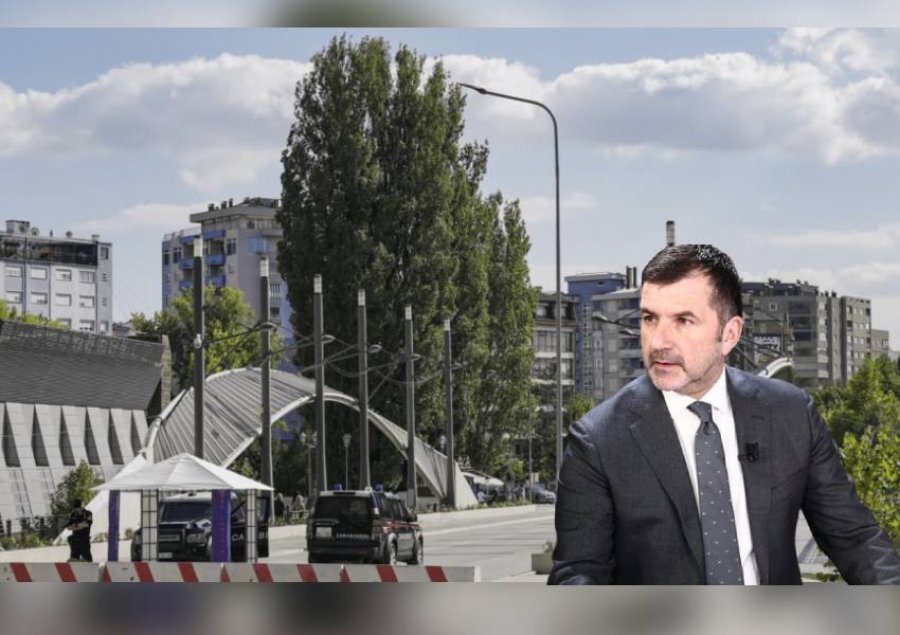
It is important to understand, whether it is anti-American or not, do opposing positions make sense with the directives given by Western diplomats in recent days.
Two events that have reignited tensions in northern Kosovo, the closure of several unlicensed Serbian post offices and the Kurti government's initiative to reopen the Ibri bridge, have prompted Radio Free Europe to make an observation regarding the addition of anti-Americanism.
In her research, the strong reactions, the anger, and why not the insults that have taken off on social networks against the statements of Western diplomats on these two cases were cited.
In fact, in the concrete examples cited by this media funded by the US Congress, you could find a lot of disagreement with the daily policy of Ambassador Hovenier or Quint's diplomats, but there was no trace of anti-Americanism. But, here on our side, there is usually a confusion, often with the goals and often from a provincial mentality, of criticism towards a specific attitude, with the approach towards a nation, a model, or a certain culture. Well that's another story.
It is important to understand, whether it is anti-American or not, do opposing positions make sense with the directives given by Western diplomats in recent days. To find out about this, you need to know more or less what is happening. For days, the Kurti government, after having staged a request from the municipal council of northern Mitrovica, has been giving signals that it will open the famous bridge over the Ibër river for car traffic. It has been non-functional since the liberation of Kosovo, in 1999, when the French KFOR forces decided to de facto divide Mitrovica in two, to save the Serbs from the revenge of the locals with still troubled emotions.
The local minority opposes this approach, which once and for all buries the most visible symbol of a divided Kosovo. Staying hostage to the time when they had blocked traffic with barricades, they have reacted with protests, claiming that this action paves the way for a greater persecution of Albanians.
And here shines with all its blindness the hypocrisy of the internationals. Although since 2015-2016, in the dialogue between Prishtina and Belgrade, it has been decided to open; although in its reports the EU writes in black and white that traffic must resume on the Iber, although it itself has financed its reconstruction with 1.5 million euros, yet the Western diplomats now express themselves against the opening. Between principles, preaching about free movement and bridges that connect people and communities, they have chosen the status quo and false stability. Between the right and keeping Aleksndar Vučić's mood under control, they bet on the second one.
To Albin Kurti's public statements that it is not harmful to anyone and that "Bridges unite us, and together let's make it a symbol of normalization", the American ambassador responded to the journalists with a wooden language: "we do not support a change of the current status of the Mitrovica bridge at this time".
It is precisely attitudes like these of Jeffrey Hovenier that make citizens put their minds to work. Is it easy for the American lovers of Kosovo who adore this country even for Reagan's expression; "Mr. Gorbachev, they want this all!", do you understand today's US ambassador? Can they logically explain why people and not cars can cross the Iber? Does it make sense to them why traffic should be stopped only at this symbolic point, when you can go from one part of Mitrovica to another by different roads? Can you think of how a matter of local administration should be turned into a point of dialogue with Serbia in Brussels, where, moreover, a decision was made about this a decade ago?
Well, it is these double standards, this blatant hypocrisy and not anti-Americanism that make many people react on social networks. Those who have respect for themselves, for their integrity and their minds cannot sit without expressing what they think. But ama, what is true is found elsewhere. It can be seen in the lack of understanding that a large part of Albanians have, for the criticism that the USA and the EU have made these three years to Albin Kurti, that he sought to implement reciprocity measures, "without coordination", that he postponed and held the partial elections in north when the allies told him, who again flogged him after failing to convince the Serbs, or that he did not accept that the dinar would continue to be the legal currency of Kosovo.
A good part of the people is frustrated by the idea that the country is currently under sanctions, while Vučić, who instigated and supported an armed terrorist attack in Banjska, has not yet had a thorn in his side. Yes, these are positions that raise questions. If they multiply and turn into a line of behavior, if the attitude of the USA is equal to that of its ambassador Kris Hill, in Belgrade, there will definitely come a day when we can talk about anti-Americanism. But this day still seems far away and it is unlikely that an episode like that of the Ibri bridge will bring it closer. Because even when they pass over it, the majority of Albanians, with a naive optimism, will make their chests hollow by boasting that they are part of the most American-loving people in the region.



Lini një Përgjigje