


 Shkruar nga Ben Andoni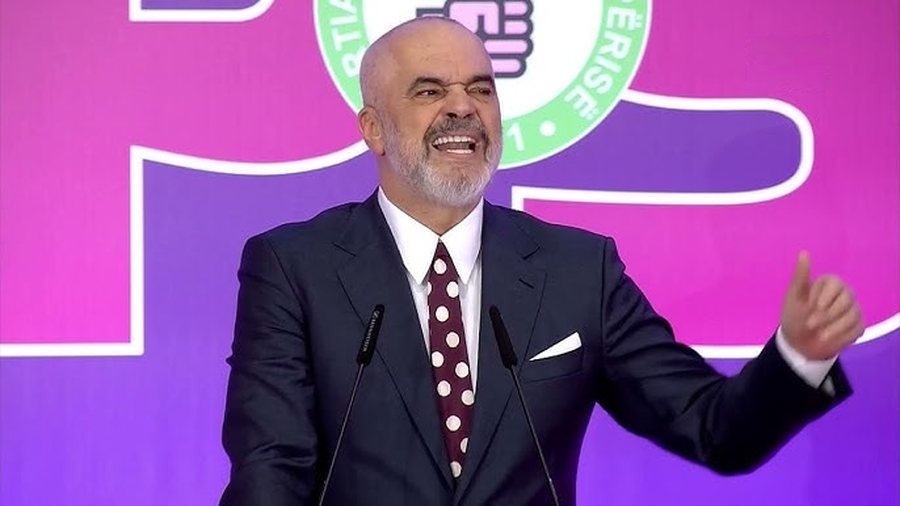
Corruption is not a sin for the individual in Albania, but a virtue, and this is seen in many who confront us with a gluttonous wealth.
Society was born before the state and in literature it is believed that there is still much to be researched by historians and anthropologists. A process that is everywhere enriched by the views of researchers. Today, we find ourselves at a stage where the Albanian state is consolidated with its positive and negative parts and the challenges of survival in a continent filled with wars.
Can our society influence politics and change it in its own interest? So far it has failed. A society is a body of individuals described by functional interdependence boundaries, perhaps including characteristics such as national or cultural identity, social solidarity, language, or hierarchical structure, the literature says. Why has our society not been able to form a strong state?
On a more subtle level in our times: In the general public and political discussion (mainly by the opposition), Rama's power today is considered absolute. It is endowed with autocratic elements, which Prime Minister Rama actually demonstrates with the absolute authority he has over the government and most of the other political powers; just as the intervention of the Rama-3 government and his own in the economy and other areas is clearly present. The result is painful, not simply in the social aspect, but also in an area where we are increasingly sensitive: Our country performs worse than many countries in the Balkans in the "Lack of Corruption" indicator, ranking 107th, which indicates a high level of corruption, according to the Rule of Law Index 2024, published by the World Justice Project.
Not by comparing, but by taking a developing country model that started from the minus: India, very far from us and in an area that always attracts the attention of economic specialists, is continuing its growth. A country with proverbial poverty, with three Nigerias inside, that is, more than 300 million people, living on less than 1 dollar a day (the reference of a decade ago), writes Fareed Zakaria in his book "The Post-American World", on the other hand, has managed to have several Silicon Valleys of its own. And, in reality, its poverty has not disappeared, but is developing at a great pace. Democracy, institutions and language, which the English left behind, are the main drivers of its economy.
In his Independence Day speech, Prime Minister Narendra Modi made a bold promise, just months before he takes office for a third term in 2024: India would become a developed economy by 2047, when it will celebrate 100 years since its founding. The country had three things going for it, the prime minister declared: “demographics, democracy and diversity.”
Modi's famous 3D is not very applicable in Albania, in terms of demographic diversity, because we are a country where the Albanian ethnic group dominates, while others are in the minority. Meanwhile, Albanians are leaving en masse. Albania's population has been reduced, but it has aged by 7 years, from 2011 to 2023. The 2023 Census data indicated that, out of 103 thousand people living alone, 62.5% of them were 60 years old and over (64,375 people) (Monitor, 2025).
Regarding democracy in the Bertelsmann Foundation Transformation Index in terms of political transformation, Albania does not receive a good grade and is considered a “flawed democracy”, but is assessed well in terms of economic transformation and governance. Albania ranks 21st, while Kosovo ranks 37th among 137 countries that are seen as developing or expanding countries in the ranking of the political transformation aspect, which takes into account the rule of law, the stability of institutions, political participation and political and social integration (DW, 2024). Albanian society is not able to cope with corruption, as trust in its moral institutions has long been declining. Civil servants are not trusted, the state itself is often ruthless towards citizens, and the administration still leaves much to be desired. Although we have more and more believers of religions in the country, morality that stems from respect for providence is far from creating trust in a state with strong canons.
Corruption is not a sin for the individual in Albania, but a virtue, and this is seen by many who confront us with a gluttonous wealth. Our state favors quite a few businesses and individuals who do not know much about parity and the implementation of the law. As for diversity, it leaves much to be desired, at least in the economy, since the main weight has already fallen on tourism and construction, neglecting all other areas, including agriculture. Albania has the potential and opportunity to attract foreign investment, due to its nature, strategic position and low labor costs, which in fact in Albania are also related to informality. Experts note that investors are often deterred by bureaucracy, corruption and an unpredictable tax system.
“Albania has undergone a broad economic transformation in recent years. As countries develop, the importance of low-value-added sectors decreases, while that of more sophisticated sectors increases. To continue economic growth, the Albanian economy needs diversification and more sophistication,” says Ekaterina Solovova, EBRD Resident Representative in Albania. Elements that are confronted by informality and the confrontation of the Albanian individual who has little trust in his state. “But, on the other hand, although we see a draft strategy for income that is promoted as part of a new approach in favor of stabilizing tax policies and avoiding frequent legal changes, in fact various initiatives by the administration with electoral political goals and mindset have not shown that it is happening as declared,” the studies explain. (Altax, 2025)
In its development, Albania is being mentioned for its airports and ports, but we have problems in front of our eyes in the infrastructural connection, which in many cases is a burden on the economy and the heavy traffic everywhere. Albanian society fails to raise its voice about these as well as the lack of water and empty promises especially during electoral campaigns, such as this one in 2025. Our workforce, two decades ago the main element in the economic model, lacks the skills for high value-added sectors. The increase in wages, driven by the pressure of immigration and not by productivity, found the industry unprepared, rapidly losing the main advantage of cheap cost that had characterized it in these three decades (Monitor, 2025).
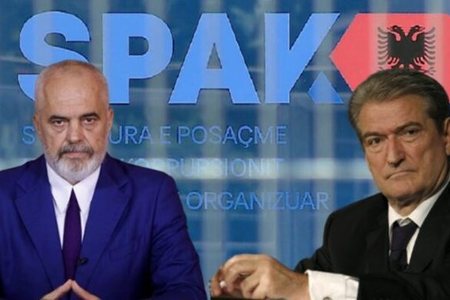
Just as the state, with its intervention and uncertainty, has caused quite a few problems in terms of education, and especially in adapting curricula to the demands of the labor market and training the workforce for new economic sectors. The refrain is often heard: there are jobs but there are no professionals. Perhaps, the integration process that is proceeding at previously unforeseen rates could create the opportunity to work more on education, agriculture and trade, but things could only increase and be respected if we had long-term strategies. Besides, our society does not raise these issues for discussion. The biggest discourse now is to listen to Rama-Berisha and their promises, which have been going on for years, without bringing a different image to the country.
And, let's go back to India. The great fortune of this country was and remains the democracy, which is deeply rooted and the fact that, just like in the USA, writes Zakaria, society has managed to consolidate its dominance over the state. But will the Albanian society of 2025 be able to create the maturity to replace the state? Unfortunately, so far, the state has defeated society. Rama-Berisha & Co are examples of this level that is driving Albanians away without return.


Lini një Përgjigje