


 Shkruar nga Roland Lami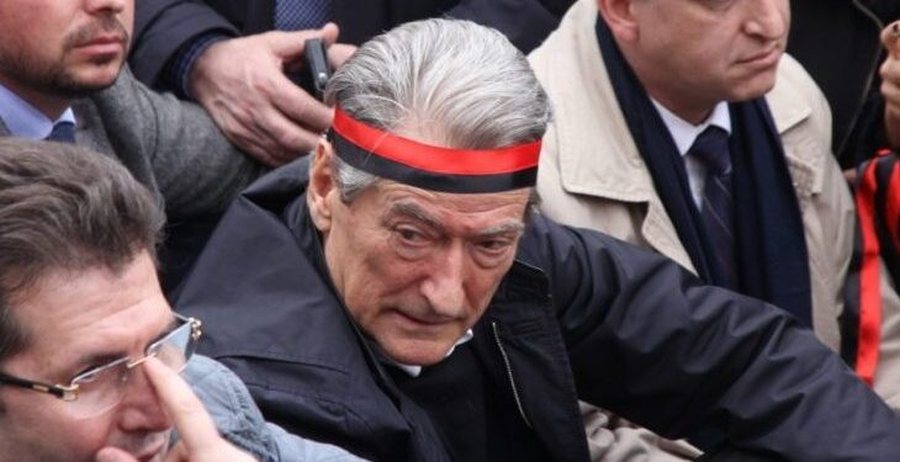
In the end, the umbrella serves neither as a political program nor as a governing alternative, but only as a symbol of the lack of a true roadmap.
The opposition action set up around the tent tomorrow is the perfect example of Albanian politics moving from institution to improvisation. Instead of being a parliamentary alternative, the opposition creates a “parallel power with tents”, where rhetoric is great, clarity is small and the goal is blurred. The tent, which was supposed to be a symbol of protest, turns into a stage of absurd theater, where no one understands exactly whether reform, elections, justice or simply political shelter for the internal crisis is being sought.
Sarcasm comes naturally: a weakened party leaves the Parliament hall to take shelter under a plastic sheet, claiming that democracy is "really" found there. The absurdity culminates in the fact that, despite the noise, it remains unclear what the tent is specifically intended to do, other than to keep the cause, the tension or the troubles of the historic leader who has turned the protest into a ritual, not a strategy, arousing.
In the end, the tent serves neither as a political program nor as a governing alternative, but only as a symbol of the lack of a true roadmap: an opposition that sits outside the institutions, claiming that change comes from the sidewalk, not from the law. A big tent, a small vision, and a country that expects something more serious than improvised political speeches.
In political philosophy, there is an interesting notion about this type of behavior, that the leader, fearing to lose himself, takes everyone else with him. It is that moment when the leader no longer distinguishes the boundary between his own crisis and the crisis of the party, so he raises the entire structure to the top of a shaky ladder and says to them: "Have faith, this is the path to salvation."
In this absurd logic, the tent is no longer just a tent, it becomes a metaphor for self-enclosed thought, the imaginary shelter where the leader seeks to escape the political rain, while plunging the party into the downpour he himself creates. Thus, the party ends up like a large body tucked into the tight hood of a single man, and no one asks anymore whether the hood holds the head or the head holds the hood.
Thus, politics slips from institutions to improvisation. Instead of analysis comes the constant ritual of justification, instead of strategy, the wandering in a symbolic act that does not even know what it aims for. The absurd becomes a method of action, and the party functions as a body bound by the humor, troubles and interests of a single man. This is the essence of parallel power, a project without a clear direction, which is held up not by political vision, but by the fear of admitting that the path so far leads nowhere.
And here begins our collective predicament, a country that remains in power, but without a counterweight. Democracy, which theoretically walks on two legs, the government and the opposition, walks today with a single leg and a folded umbrella in the other hand. In the absence of real opposition, power is pushed forward without brakes in the absence of control, institutions are transformed into formalities and citizens remain spectators of a game where no one is playing the role of the opponent.
In this vacuum, the country functions not as a parliamentary republic, but as a mechanism that rotates slowly on its own, without direction, with a lingering sense of expectation for an opposition to emerge from the shadows, enter the institutions, and restore the balance that the system lacks.



Lini një Përgjigje