


 Shkruar nga Spartak Ngjela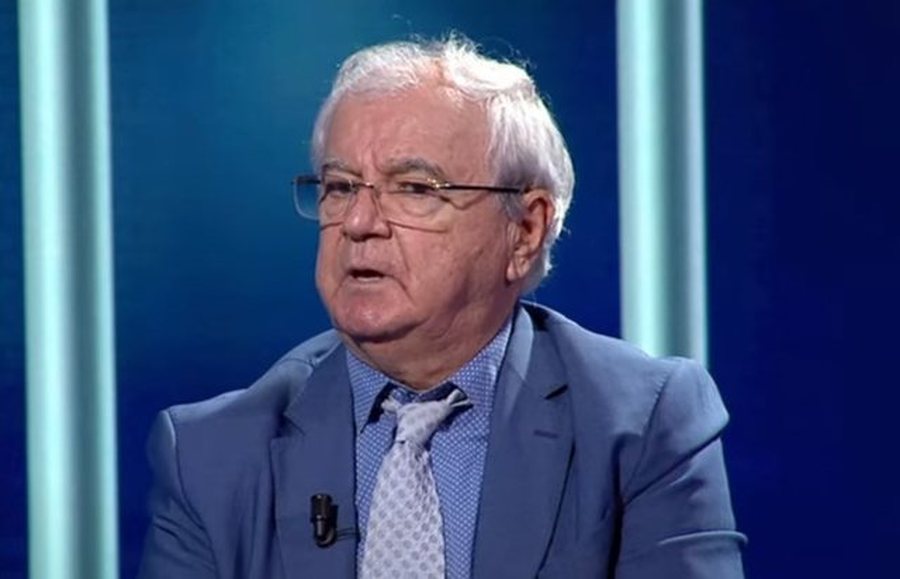
Essentially, as a rule, national unity is the union of two societies of one language and one nationality, but unity always comes from the national consciousness of the leaders.
So, a few years ago, I was asked in a meeting: How is it explained that there are currently two Albanian states, Albania and Kosovo; there are two streams of intellectual thinkers: writers; philosophers; renowned thinkers; artists and great actors on a European and global scale - but no one talks about national unification?
I had nothing to say to her, because the question was true at its core.
But after a while, pondering the question I wrote above; I came to my conclusion that:
Essentially, as a rule, national unity is the union of two societies of one language and one nationality, but unity always comes from the national consciousness of the leaders.
Therefore, this is precisely where this question arises that holds the truth within itself:
Since the time of Gjergj Kastriot Skanderbeg, has there been any occasion when Albanians have united?
No, there is no such case; but we must remember that in the time of Skanderbeg, unity was mandatory against the Turkish invasion.
What about the Second World War?
It was a good opportunity, but the partisan war in Albania was led by Yugoslavia; that is, Serbia. That is, it was led by the centuries-old occupiers.
But, World War II brought a historical innovation for Albanianism: because the Yugoslav federation recognized the Albanians of Kosovo as the Autonomous Province of Kosovo.
And here, precisely here, the new history of Albanianness began, which continues today with two Albanian states.
But there are not only two Albanian states, because in historical anticipation it is understood that there are also two other Albanian states: Chameria and North Macedonia.
And if you look at it through a historical prism, right here and at this time, in the Albanian world, the historical demand of the National Renaissance has begun to be reborn internally: national unity.
But the question that arises here is this:
Who is stopping the national unification of Albanians in the Illyrian Peninsula?
This unification is being prevented by the historical incompetence of the political leaders of both countries; because it is understood that these leaders have two factors of interest that prevent this unification:
The Serbian interest of those leaders who have been and are in the service of Serbia; and:
The personal interest of the high-ranking officials in Pristina, who are affected by the old Arbëro disease of the Albanian princes who have always said:
Either I'm at the top to lead Albania, or none of us.
And so; that's why we are right here, at this point, in this historical time that is calling us for the UNIFICATION of Ethnic Albania.



Lini një Përgjigje