


 Shkruar nga Ylli Pata
This recovery reopened the game in the capital for a revival of political competition.
An important politician in the DP, Edi Paloka, declared in the media that there cannot be a candidacy for Tirana without having a decision on whether to participate in the elections or not.
A bluff statement, or a real opportunity? The situation in the DP clearly seems to be unprepared for a well-thought-out and structured race in Tirana, which seemed to be happening for a long time. A race that is not complete, as it is a warm-up for the next campaign in 2027.
For a normal political force, even a slight flare-up is important, as it provides a stimulus to the structures and motivates supporters, regenerating the political process.
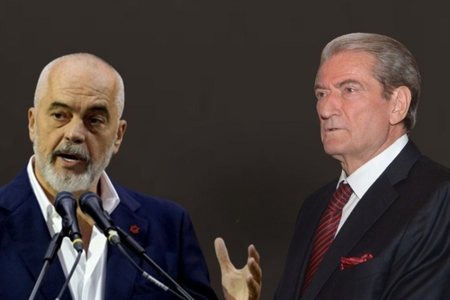
However, the Democratic Party has two strong reasons for frustration that bring to their subconscious the option of abandonment. In reality, not the Democratic Party as a whole or a political group, but the establishment of Sali Berisha, namely the party's dome.
The first reason is that the DP is pre-prepared and a consecutive negative result after May 11 could further ruin the already problematic leadership situation. In this regard, the DP leadership is clearly experiencing a complex that this process is a political trap of Edi Rama, prepared to bring in the opposition.
Meanwhile, the other reason is that Tirana has become a political nightmare for the DP, as a result of a vacuum created over the years, both from the consecutive victories of the SP, but also from the internal war within the DP.
A war that has had an overwhelming impact on grassroots structures, but which is not very visible in public, where there is more space for the political and media establishment around Sali Berisha.
The Democratic Party has long had a huge political hole in the municipality of Tirana, whether in local or parliamentary elections. The hole that the DP has, if looked at carefully over the years, is neither permanent nor an antipathy of the capital for the opposition. However, the fact is that this antipathy has only one name - Sali Berisha and this is obvious. The DP had the capital from 1991 to 1996, creating an important base in the city, as well as the surrounding areas.
The DP's problems with the capital began with the rapid processes of property seizure in the outskirts of Tirana, as well as the problem of resolving property issues in Tirana in a corrupt and violent manner. In the 1994 Constitutional referendum, the DP lost badly in the capital, thus causing great anxiety for Sali Berisha, then President, who resorted to the version of interference in the process. What happened in 1996, both in the parliamentary elections on May 26, and in the local elections on October 20. This then led to the major problems that led to the 1997 conflict, which plunged Albania into total chaos.
Tirana, however, in 1997, was the only city that was calm and with some control of the state and police structures. In the June 1997 elections, the DP received a catastrophic result, losing all 15 areas of the majoritarian system, from the center to the outskirts. A political result, which was nothing more than a political message for Sali Berisha and his politics.
Meanwhile, in the 2000 elections, the era of Edi Rama began in the municipality of Tirana, giving local power to the Socialist Party for the first time. Despite the heavy defeat, a year later, in the 2001 parliamentary elections, the DP recovered several areas of the capital, winning its candidates in direct competition. Spartak Ngjela won in zone 1, an old and informal area, Bamir Topi won in a difficult area like zone 4, it also recovered zone 10 in the center and zone 11 in Lapraka.
In 2003, Spartak Ngjela lost the elections to Edi Rama, but fought a strong battle, leading several zones to a recount. In the 2005 elections, thanks also to the split of the SP due to the exit of the LSI, the DP recovered zone 8 or old Tirana, zone 10 in the center of the capital, zone 9 where Bamir Topi won and zone 7 or 21 where Lulzim Basha won, etc.
This recovery reopened the game in the capital for a revival of political competition. The 2005 vote was a political signal to encourage new figures like Lulzim Basha, as well as calm and non-polarizing characters like Bamir Topi.
But as always happens, Sali Berisha's intervention, like an elephant in a glass shop, ruined everything. With the idea of gaining even more territory against Edi Rama, showing a strong hand, Berisha decides to demolish the Zogu i Zi overpass, which was a node expected by the people to ease traffic.
The demolition was simply for clientelistic reasons, as it was taking away the view of a palace that was being built by a client of his family. In place of the overpass, the famous roundabout was built that still stands today, with a fountain inside.
The process for the demolition of the overpass turned into a political battle, showing verbal and real muscles, which increased tensions in Tirana. It was precisely for this polarizing behavior that Tirana severely punished Berisha in the 2007 elections, even though the late Sokol Olldashi fought a fantastic battle in territory, pore and politics, taking many left-wing figures around him, starting with the historical leader of the socialists Fatos Nano. Although the campaign was quite strong and had all the colors, Rama won by 20 thousand votes plus.
In 2011, the DP installed Lulzim Basha, hired an important image company from the US, which forced Sali Berisha to leave the capital's campaign. As is already known, Basha received a large number of votes, of which of course some were oriented and engineered, but still there was a real increase for many reasons, whether Basha was a new face, whether he created a broad coalition both left and right in the territory, but above all that Berisha was not seen for a day.
The public saw this signal as a warning of a gentle departure of the doctor and the handing over of the baton to Lul Basha. That is why he gave his political signal. But Berisha returned the day the elections closed, doing what he did to disrupt the process to win the elections, which in reality he lost. Then the situation, as is known, worsened, also as a result of the creation of a polarizing climate with Erion Veliaj, who was an electoral engine that managed to receive the largest number of votes that a mayor has ever received in three consecutive terms.
Today, the DP is in this big hole, which requires a political bing bang to fill, which cannot be solved by a single candidate but by a large political process. That is why it is afraid to enter the by-elections. After missing the train in the local elections, the DP intends to strike only in the general elections, where the competition is wider, and there is time. But time is precisely the biggest problem of the DP, since by misusing this vital term in politics it has come this far. The DP's tactic is to degrade the power itself to produce the effect that they will come to us. But in the capital, in all likelihood, the situation on the ground is for a new figure or political party to emerge, instead of votes going to Berisha. And the signs were given on May 11.


Lini një Përgjigje