


 Shkruar nga Eduard Zaloshnja
The 'gray electorate' has a younger average age than the general electorate here. Also, the 'gray electorate' has a higher educational level.
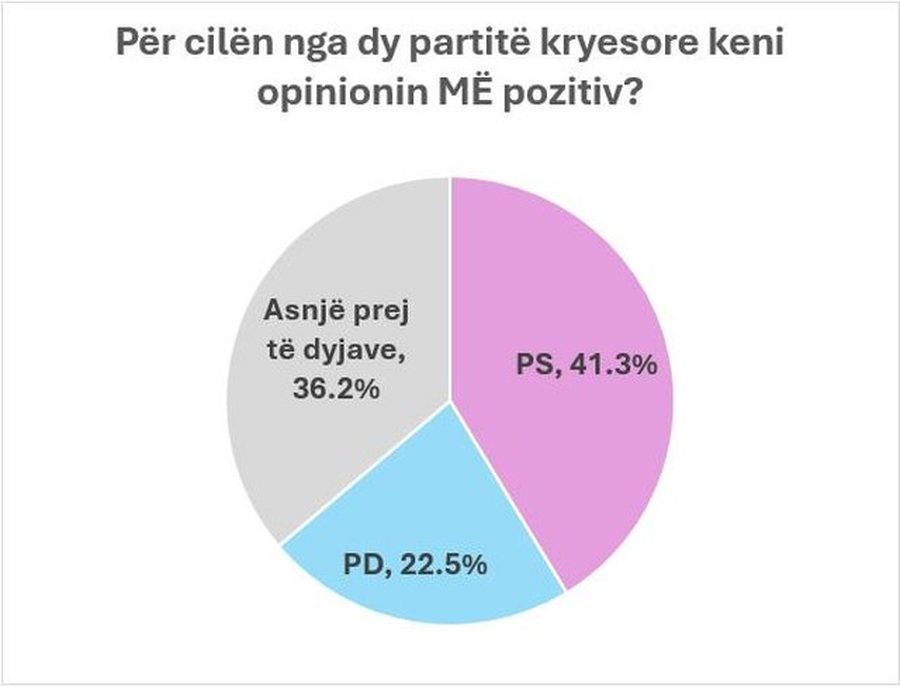
With rough statistical extrapolation, it turns out that about 700 thousand adult inhabitants of the country (out of about 1.9 million in total) do not sympathize with either of the two main parties. This is shown by the weekly Monday poll "Voice of the Albanians", which I conduct for ABC television.
In countries where two main political parties dominate the electoral system, the electorate that does not sympathize with either of them is usually called the 'grey electorate'. In our country, the two main parties currently hold a full 133 parliamentary seats (out of 140 in total). That is, the 'grey electorate' is practically unrepresented in the Albanian parliament.
What is the current political-demographic-educational-geographic composition of the 'gray electorate'?
From the aforementioned survey, it turns out that almost 7/10 of the 'gray voters' did not vote at all on May 11, while 3/10 voted mainly for small parties. Which may have now become even smaller electorally, after the post-election internal disputes...
The 'gray electorate' has a younger average age than the general electorate here. Also, the 'gray electorate' has a higher educational level.
From a geographical point of view, the 'grey electorate' is concentrated in the regions of Tirana, Durrës, Shkodër and Elbasan. While from a residential point of view, the 'grey electorate' is concentrated in large urban areas.
These demographic-educational-geographical characteristics of the 'gray electorate' may be useful to those who intend to eventually challenge the two major parties, which currently dominate the Assembly with their 133 deputies...



Lini një Përgjigje