


 Shkruar nga Stoycho Velev
Albania between the EU dream and internal obstacles: 2030, horizon or illusion?
For more than six decades, few aspects of European integration have been as transformative, or politically consequential, as the enlargement of the European Union's borders. Each new wave of EU territorial growth has brought political stability to a continent that, after the optimism of the Cold War, faced the tragedy of the violent disintegration of the former Yugoslavia.
However, after many Eastern European countries were anchored in the EU institutional framework, enlargement fatigue set in. In the last two decades, only Romania, Bulgaria and Croatia have joined the Union. This situation seems most acute in the Western Balkans, where candidate countries are facing an increasingly lengthy and politically uncertain process.
In her 2023 State of the Union address, European Commission President Ursula von der Leyen called enlargement “a geopolitical imperative”, underlining the widely accepted need to strengthen the EU’s presence in the Western Balkans. This position was confirmed in the October 2023 Enlargement Package, which stressed that the EU should be politically ready for new members by 2030. It added, however, that candidates must meet the required standards with concrete and measurable reforms. Conditionality remains essential; progress must be based on merit, and the rule of law, democratic governance and fundamental rights are key elements of the process.
This consensus makes it clear that rushing for purely geopolitical reasons carries serious risks and could undermine the credibility that enlargement policy has gained over the years.
Albania: a history of aspirations and tension with conditionality
In this panorama, Albania appears as both a case of hope and a warning. A candidate since 2014, the country officially opened membership negotiations in July 2022. So far, five clusters and 28 negotiation chapters have been opened, including the judiciary, fundamental rights, and external and economic relations.
But despite the first positive steps, the tension between geopolitics and conditionality risks hindering the process. On the one hand, Albania has proven to be a loyal partner of the EU, contributing to regional stability through participation in regional initiatives and NATO operations. On the other hand, international attention continues to focus on the weaknesses of democratic institutions, on the still unfinished reforms of the justice system, and on the clash between strategic ambition and legal commitments.
Prime Minister Edi Rama, who after his re-election in May 2025 declared EU membership as his main political objective by 2030, has a strong parliamentary majority that theoretically gives him room for deep reforms. The European Council at the Western Balkans Summit in June 2024 welcomed his commitment, while the Commission's 2023 report on Albania highlighted progress in the judiciary, particularly in the vetting process and the prosecution of high-level corruption cases by SPAK.
Progress under pressure
However, this progress has been accompanied by concerns about democratic balances. The same report cites persistent corruption, lack of transparency, and political and private interference in the national media. OSCE/ODIHR observers in the recent parliamentary elections noted a “deeply polarized” climate and the use of state resources to the advantage of the ruling party.
In the international arena, the 2023 agreement with Italy to set up migrant processing centres on Albanian territory has sparked major legal and ethical controversies. The Council of Europe Commissioner for Human Rights has strongly criticised the agreement, warning that it could undermine international asylum obligations. The Albanian Constitutional Court has suspended its implementation pending a legal review. This was presented by Tirana as a gesture of strategic partnership with a key EU country, but it risks being perceived as a violation of fundamental principles of international law.
Balancing urgency and integrity
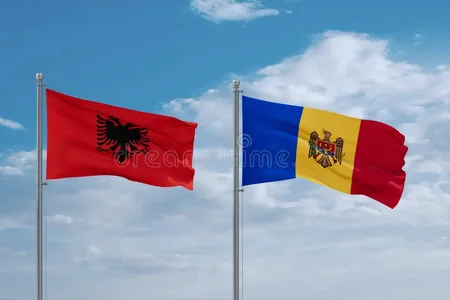
Some analysts argue that accelerating the accession of Albania and other countries in the region would demonstrate the EU’s strategic resolve. But others warn that lowering standards risks bringing democratic regression within the Union itself, undermining the credibility of enlargement and reinforcing institutional weaknesses that then become irreversible. Such a message would also be problematic for new candidates such as Ukraine, Moldova or Georgia – giving them the impression that geopolitical compatibility is more important than institutional readiness.
To preserve the integrity of the process, the EU must remain consistent in implementing the conditions. This includes continuous monitoring of elections, the independence of the judiciary, media pluralism and the fight against corruption. Instruments such as IPA III and the Reform and Growth Mechanism for the Western Balkans offer opportunities for greater engagement without compromising standards.
The aspirations of Albania and the region are real and legitimate. Although delays may open up space for other regional and geopolitical influences, such a monumental step as EU membership should remain a matter of real readiness, not political urgency. The future of European enlargement should not be seen as a choice between geopolitics and standards; the two can go hand in hand, but only if a balance is maintained. Otherwise, the risk is that membership will turn from a long-term strategy into a short-term maneuver. /Adapted from “Pamphlet” “Geopolitical Monitor”



Çfarë nuk ndodh në Shqipëri. Dje me amendament kushtetues Sllovakia njohu se kishte vetëm dy gjini - mashkull dhe femër. Rregullimi kushtetues i të drejtave sociale u zgjerua gjithashtu. Statusi i familjes dhe të drejtat e prindërve u forcuan. Nëna zëvendësuese apo surugato u ndalua. Ndërsa tek ne qeveria ecën me axhenda të dyshimta, të cilat dhe vendet e BE po i rrefuzojnë!