


 Shkruar nga Ylli Pata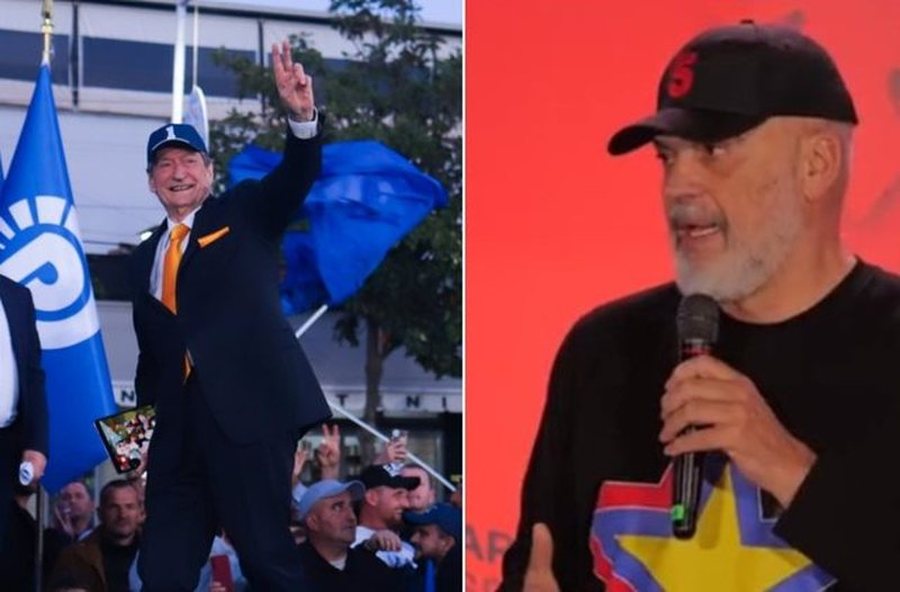
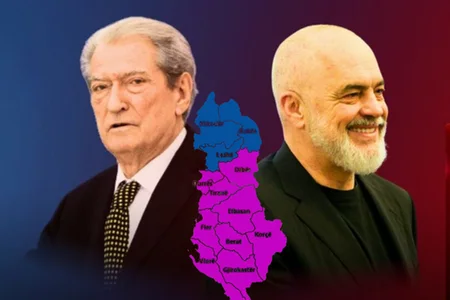
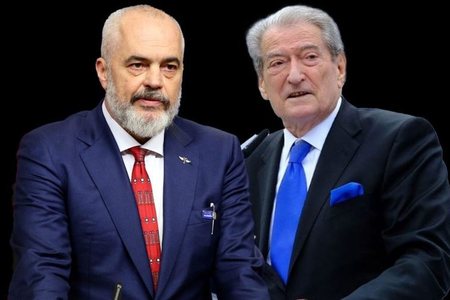
The SP ran for a fourth term in a normal consumerist logic and the DP competed with a politically and diplomatically dead horse such as Sali Berisha.
The insistence circulating in the first post-election analyses, that we are not dealing with a change in political balance, but simply an electoral tactic, does not seem to hold up very well when you look at the figures in detail.
The main thesis circulating that the SP does not have an exponential increase in votes, but is at the "usual" number it receives in elections, is in reality worth analyzing from a less superficial perspective.
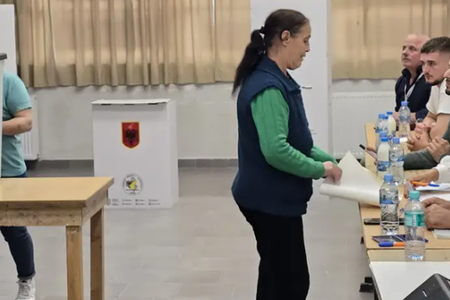
Because the situation on the ground is different than that. And this is done both in general figures and in specific districts. Without opening the votes of Greek immigrants, at the insistence of the DP, we are dealing with a total figure of over 804 thousand votes for the Socialist Party. It is an unprecedented figure if we analyze the fact that Tom Doshi's Social Democratic Party, but also Arlind Qori's "Bashke" party, have received traditionalist votes that voted left. The Social Democratic Party has received approximately 50 thousand votes, through the direct and clientelistic relations of Doshi's party leadership with socialist organizations. Mainly in the Shkodra district, where it has traditionally received or at least requested 2 votes per organization, based on a calculation to receive the mandate.
Meanwhile, the Together Movement has received over 23 thousand votes, which together with Doshi's exceeds the 70 thousand mark. The Socialists have significantly increased their votes from several segments of the electorate: firstly, young voters, gray voters, former non-fanatic voters of the Democratic Party, and of course, former voters of Ilir Meta, who have abandoned him completely.
The litmus test for analyzing this increase is the Shkodra region. In the Shkodra municipality alone, a bastion of the DP for years, and which still votes with a majority for this party, the SP has increased by 6,800 votes. A result that is far from being engineered to this extent, even if we are dealing with rural areas, where tribal votes do not exist.
In the Malësia e Madhe Municipality, the SP has increased by 400 votes, in the Puka Municipality, where the DP won the municipality on May 14, 2023, the Socialist Party has increased by 1200 votes. The same figure is also in the Vau i Dejës Municipality, where the leading force has been Tom Doshi's PSD, which has also received left-wing votes.
Only in the municipality of Fushë-Arrës, which is again run by the DP, has the Socialist Party fallen by 200 votes compared to 2021.
Meanwhile, in the Vlora region, the difference is over 33 thousand votes between the SP and the DP, and for every election follower, the amount of 3 tens is a massive increase. The numerical analysis can continue in other regions where we are of course at the same level.
In the Tirana municipality alone, the difference between the SP and the DP is over 56 thousand votes. When only in this territory there is an increase in the votes of new parties. However, the difference is larger, about 10 thousand votes more than in 2021. Although both the DP, which this time enjoyed the votes of the former LSI, has fallen, but the SP has also fallen.
The votes of the Municipality of Tirana are a litmus test, as in the case that happened to Mayor Veliaj, where of course the hataja was expected to occur, but also that clientelism is more excluded than rural areas.
That said, what is clearly readable, for those who want to read it, is the analytical, rather than mathematical, argument which is purely political.
The SP ran for a fourth term in a normal consumerist logic and the DP competed with a politically and diplomatically dead horse such as Sali Berisha.
Analyzing today what the PS's outcome would be in the event of a new and empathetic leader to the non-fanatic electorate is an impossible possibility as it enters the "Cako" sphere. Since it was the opposition that accepted the Berisha factor, equating it with the Rama factor.
These are two political phenomena and models that are not simply completely different, but proven to be unable to compete together. Berisha knows this too, who, in the days when he had the strongest and greatest power, in the 2011 local elections, disappeared from the Tirana campaign, so as not to arouse the fear or anger of the gray electorate.
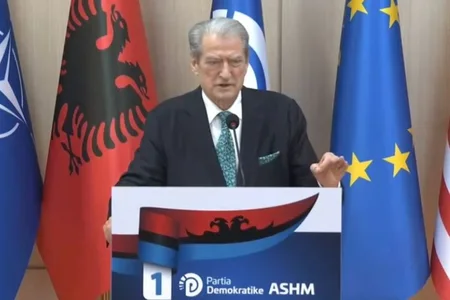
Sali Berisha is an influential man, a politician with grit and problematic international connections, starting from his relations with Greece. But only fanatics who want to remove Edi Rama, seeing him as an alternative when he is not, "die" for Berisha.
Edi Rama was the first Albanian politician to fight for votes outside the Socialist Party since 2000. And he has won them in every electoral process. Of course, working with a non-chaotic agenda, but one that is calculated as to which part of this electorate he will address at the right time when the elections are held.
If the votes of Greece, that is, of our emigrants there, are also opened, we will see an even more blatant signal of this political stance. But it seems that there are circles outside Berisha's office and outside Albania that fear that those votes would politically hit Athens, giving it a second checkmate after 2023.
The causes and consequences of this unprecedented triumph of Edi Rama are neither the "Bulgarian train" nor the strongest alliances in the territories. It is simply a clear political logic to create an electoral fable, which has been different in every election, as well as to find the electorate to whom it will appeal.
The search for dead ends may even bring back dinner panels at some point, but the causes of this consequence are purely political.


Lini një Përgjigje