


 Shkruar nga Lorenc Vangjeli
Attempts to address the supposedly political battle between the non-ideological left and the denatured right as the main problem of the day, in fact only mask the extraordinary tension, the terrifying stress, and the pent-up energy of Albanian society.
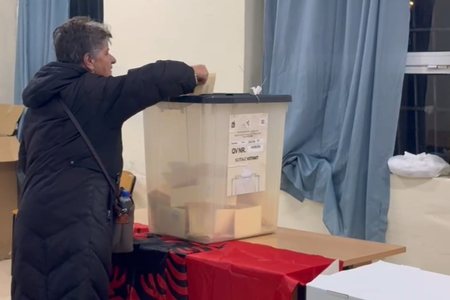
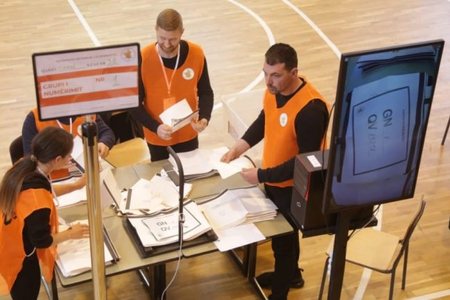
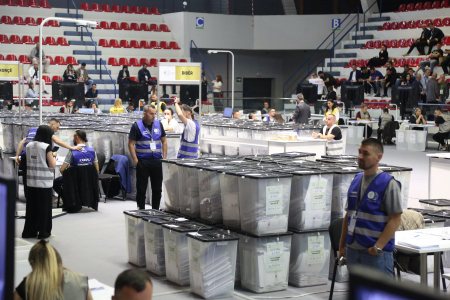
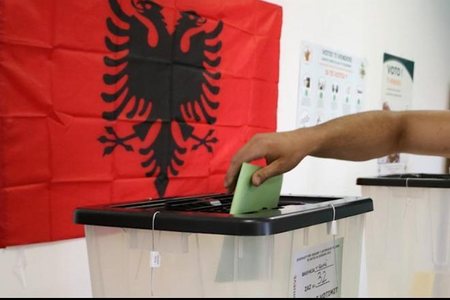
Few people knew that in Albania there were early local elections in five cities. Even the people of Vlora, Berat, Tepelena, Matjan, or the voters of Cerrik themselves did not have the slightest interest in them. Out of about 350 thousand registered voters, in total only about 2 out of ten expected votes ended up in the ballot box. In Vlora it was even worse, almost only one voter in ten went to vote. The other strange record was that under the slogan of the main opposition party, the Democratic Party, no rival was running. Three years ago, Dr. Berisha's faction, precisely because it defeated the official slogan of the PD, returned to controlling the power package within the party. This time it hid the party behind independent candidates, as if to prove itself independent of the ambition to return to power.
This almost official survey, with an extremely large sample, provides some bitter explanations for the increasingly gray mood of Albanian society. It marks the extraordinary difference, wider than an abyss and more depressing than a sliver of society from the political class that represents it. It defines the distance between what is expected, what is needed and what is regularly promised with copy paste by those seeking to be voted in. And it is shocking evidence of the increasingly massive rejection of a caste installed in central power, in the opposition government, at the top of the high administration and in local government. The public is giving clear signals that it is identifying an SP ruined by scandals and silent internal conflicts, an atrophied DP and new parties that only have such acronyms. This week's elections proved the disgust with politics and the public's conviction that it cannot expect solutions from politics. Especially from that part of politics, mostly left-wing, but also a certain caste on the right, that has been transformed for years into the most profitable business in the country. This human mutation, with zero expenses, zero taxes, often even with zero personal skills, is a symbol of success in today's Albania.
There is almost no public competition that is not infected by suspicion, that is not considered rigged by prejudice and predetermination. That is not dictated by arrogance and greed. The World Bank specifies that over ten percent of state budgets in countries like Albania end up in the pockets of officials and businesses connected to them. In Albania, this figure could likely be even higher.
Coupled with the still very high level of relative and absolute poverty in the country, with the frightening difference with the standard of living in the European Union average and the creation and consolidation of a super-rich layer that benefits from politics, the trauma of the citizen is depressing. But completely disconnected from reality or from life in a bubble of hypocrisy where politics has inserted itself, the political class has not understood that it itself is a prisoner of luxury in Albania. Even though everything may be temporary and that the end may come from the endless traces they have left, from the arrogant demonstration of the lifestyle, from the naive ways of theft and from the door knocking by SPAK that is no longer afraid of any door.
Attempts to address the supposedly political battle between the non-ideological left and the denatured right as the main problem of the day, in fact only mask the extraordinary tension, the terrifying stress and the collected energy of the Albanian society. As a rule, the reaction is not logical and everyday, but disproportionate, immediate and emotional when it occurs. The distant year 1991, 1997 or the strong outbursts in 2005 and 2013 with elections, are a mix that can be mixed again.
The history of these three decades and some pluralism has proven what history in Europe has often written in a very bloody way until the last century. Revolutions are made by crowds, but as a rule, the scoundrels emerge at its head. In Albania, when political solutions are lacking and weapons are mentioned, as some public hawks do, they are directed only at the neighbor for old grudges. Never at the guilty. And for Europe, which seeks solutions only within the system, this is a debate that has passed. And it is by no means a solution to the problem, but it is transformed into a problem that must be solved. Not revolution, but the evolution that can come from a more enlightened minority is the formula that provides a solution. But this will not happen tomorrow. In Europe, it has been a process that has lasted for centuries and has indeed gone through revolutions. In Albania, it will be delayed, but nevertheless it will come one day. The moment when sinners will realize that there is no light in the cell, that inside it the night is darker and that there is no greater misery than remembering the happy time when you fell into misfortune! In essence, the world has not changed much since this frightening warning of Dante Alighieri in his Inferno. In the real world, paradise, even if it exists, is not permanent, but only a temporary whim of fate.


Lini një Përgjigje