


 Shkruar nga Giulia Pompili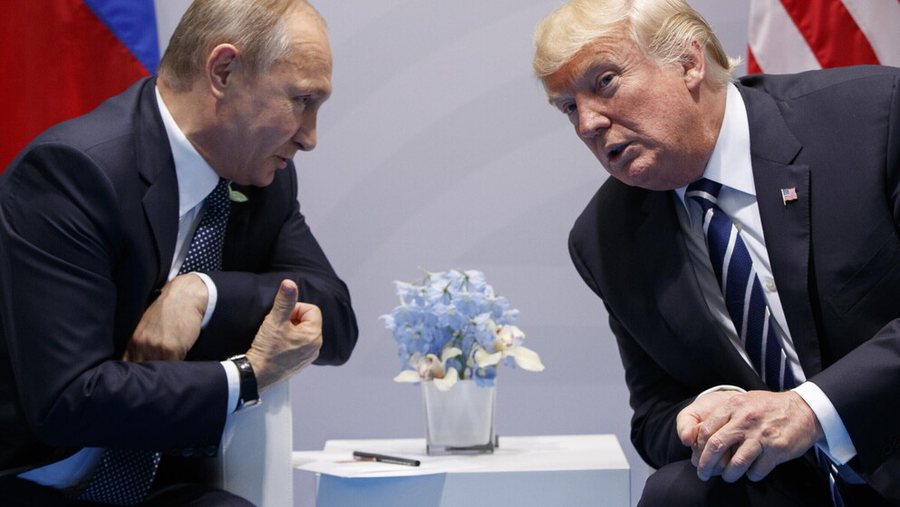
While Putin keeps Trump busy with talks, he is using the time to strengthen the war machine. The day before yesterday, they signed the draft of 160,000 more men into the Russian army by July 15, or 10,000 more than the 150,000 who were drafted last year and 134,500 in 2022.
After several weeks of a noticeably warmer demeanor toward Russian President Vladimir Putin, US President Donald Trump has for the first time shown a slight impatience toward the Kremlin leader.
He said he was "angry" with Putin because the peace deal with Ukraine is not going as planned. Trump spoke about this on the phone with NBC journalist Kristen Welker, and according to American media, the American president's reaction could
to have been caused by Putin's repeated demand for the establishment of a "transitional government" in Kiev.
"If Russia and I can't come to an agreement to stop the bloodshed in Ukraine, and if I think that's Russia's fault... then I will put secondary tariffs on all the oil coming out of Russia," Trump told Welker.
One of the Biden administration's strategies against Russia, immediately after the start of the large-scale invasion of Ukraine in February 2022, was to force the Kremlin to "pay a very high price" for its decision to start the war.
In March 2022, Biden announced a ban on all oil, gas, and energy imports from Russia, explaining that they were also the main sources of revenue for the regime and Moscow's war machine.
The European Union also adapted to this movement, managing to overcome the Russian propaganda that was hitting European citizens, based on the scenario of a cold winter for them. But over the next 3 years, the Kremlin, helped by China, Iran and North Korea, has learned how to bypass economic sanctions and how to market its oil despite the sanctions.
The possibility of secondary sanctions from the US on countries that do business selling Russian oil would be a very serious blow to Putin. But in practice, what Trump said looks more like a message to China and India, the main buyers of Russian oil.
Imposing tariffs on all Russian crude oil, according to Trump, means that “if you buy oil from Russia, then you can’t do business in the United States.” And there will be a 25-50 percent tariff on all Russian oil.
New Delhi enjoys a privileged position in the White House, and has so far tried to convince Trump to eliminate tariffs on imports of liquefied natural gas from America to increase the amount of purchases.
But Prime Minister Narendra Modi's India is also the country that has been buying Russian oil at very low prices after the invasion of Ukraine, and if Trump asks it to divert its supplies, it would face a major problem.
Reuters' Clyde Russell wrote that "China is less likely to bow to US pressure, as it remains the only major buyer of Iranian crude, and continues to be the largest importer of Russian oil."
If new tariffs of up to 50 percent are imposed on US imports from China, in addition to the 20 percent already imposed by the White House, Beijing could enter a new phase of "suffering for its economy, which is struggling to regain its former very high rates."
But so far, oil-related market indices have moved little, and perhaps everyone is waiting to find out whether Donald Trump's announcement is concrete or just a threat.
Because the US administration is the same one that, during the G7 negotiations, rejected the proposal of Canada, the current G7 president, to set up a task force to deal in a coordinated manner with the so-called phantom Russian oil deposits.
Trump has been making constant threats — including against Iran and Venezuela — but his statements have had little effect on international diplomacy. On Sunday, he told reporters that Ukrainian President Volodymyr Zelensky “is trying to pull out of the rare earths deal, and if he does, there will be a lot of problems.”
Zelensky said last Friday that the draft agreement contains some new things that had not been discussed before, and that he would not sign anything that would "pose a threat to Ukraine's accession to the EU."
At the same time, Kirill Dmitriev, director of the Russian Direct Investment Fund, told the media that Moscow and Washington have begun discussions on projects involving Russian rare minerals, and that "there has already been interest from American companies in possible deals."
While Putin keeps Trump busy with talks, he is taking advantage of the time to strengthen the war machine. The day before yesterday they signed the conscription of 160,000 more men into the Russian army by July 15, or 10,000 more than the 150,000 who were conscripted last year and 134,500 in 2022./ Pamphlet from "Il Foglio"


Lini një Përgjigje