


 Shkruar nga Mero Baze
What is happening today is not simply an institutional crisis, nor a constitutional crisis, nor a governing crisis in the classic sense of losing a parliamentary majority. The current crisis is a clear political crisis, produced by the inaction of politics in exercising its constitutional responsibilities...
We must admit that news about justice and debates about the need for standards in investigation and trial are not popular news. The need to have an independent judiciary capable of bringing high-ranking officials to justice, and the artificial architecture that we built on the other hand for the Justice Reform, seem to have eliminated this debate.
On the whole, public opinion is satisfied that SPAK has become a guillotine for any high-ranking official accused of corruption, and if you try to debate standards, violations of the law, or even worse, lack of evidence, you will face an army of offended people. And this comes from the fact that attention to these shortcomings has become popular when they have been faced by high-ranking officials, politicians who share public opinion, and not the fates of ordinary citizens.
Just like them, justice acts on us and on ordinary citizens, without support, without a voice, and without hope that one day there will be a fair trial for them. But no one has remembered them.
Almost a year ago, Prime Minister Edi Rama promised that there would be parliamentary hearings and public debates about how the Justice Reform is working; how the standards of investigation and trial are being created that are ending impunity; and how the balance of power within the judiciary is working, but nothing has been done. Everyone is complex that if they now discuss the standards of justice, they seem to be against the Justice Reform. Even today, Sali Berisha, who curses Altin Dumani every Monday, agreed that the Justice Reform should not be touched anymore. And it seems to him in his favor.
What is happening today is not simply an institutional crisis, nor a constitutional crisis, nor a governing crisis in the classic sense of losing a parliamentary majority. The current crisis is a clear political crisis, produced by the inaction of politics in exercising its constitutional responsibilities.
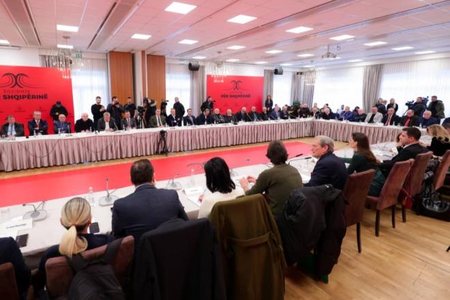
Politics today appears paralyzed and surrendered in the exercise of its functions. The majority, blocked by the complexes it has built around the defense of the justice reform that it itself implemented. The opposition, eager for power without going through elections, after being repeatedly rejected by the citizens. The new political forces, in the absence of ideas and governing projects, are trying to replace politics with justice, appearing in the role of public prosecutor. The media, for its part, is exalted by this process, because it has been transformed into the arena where the public trial takes place, a national "Big Brother" of justice, where investigation and punishment are consumed as a spectacle.
Meanwhile, the idea that internationals are using justice as an instrument of political influence, more in the interest of their taxpayers than of Albanian citizens, is increasingly being articulated in the public debate. But, regardless of the role of all these actors, one essential truth remains: in this political crisis, the main responsibility falls on the force that holds power, on the sovereign actor of the democratic system, the one that has received the greatest mandate from Albanian citizens to govern, the Socialist Party of Albania.
Like any political crisis, this one does not arise in a day or from the acts of a single institution. It is the product of a series of institutional and political (in)actions, spread over time. For years now, the political force that leads the country has rightly adopted a thesis that can be considered an institutional virtue: “we do not deal with justice”. This was understood as non-interference in concrete files and as a break from a centuries-old culture where politics controlled every criminal case with political responsibilities. But over time, this thesis turned into something much more harmful: a renunciation of the constitutional function of politics, to set limits, to balance and correct the judicial power. Politics gave up the attributes that the Constitution itself gives it to keep justice within the law, allowing the deformation of the law by a power that, according to the constitution, is obliged to act only within it. In other words, justice was left without a handle.
Në një shtet të së drejtës, politika nuk i thotë drejtësisë kë të hetojë apo kë të dënojë. Por politika ka detyrimin kushtetues t’i vendosë drejtësisë kufijtë dhe mekanizmat e kontrollit, për të mbrojtur interesin publik nga abuzimi i çdo pushteti. Kur kjo nuk ndodh, problemi nuk është drejtësia “e fortë”, por politika e dobët dhe e heshtur, që heq dorë nga ushtrimi i sovranitetit të deleguar nga qytetarët. Pasoja është kjo që sot duket qartë: një sistem drejtësie që vepron gjithnjë e më shpesh jashtë standarde procedurale kushtetuese; masa sigurie që shërbejnë më shumë për ndëshkim publik sesa për mbrojtjen e hetimit; gjykata që konfirmojnë mekanikisht kërkesat e prokurorisë, jo nga bindja juridike, por nga frika se mos nesër bëhen vetë subjekt i hetimit; institucione të qeverisjes së gjyqësorit që, më shumë se sa qeverisës të sistemit, duken të varura prej tij.
Kjo nuk është drejtësi evropiane. Ne kemi kaluar nga paprekshmëria e politikës, tek pushteti i pakufizuar politik i drejtësisë. Ky parim nuk është “akuzë” por themel i eikulibrit të pushteteve. Drejtësia, ashtu si çdo pushtet tjetër në Republikë, nuk ndërtohet mbi supozimin e virtytit absolut të aktorëve të saj, por mbi llogaridhënie institucionale, kufijt kushtetues dhe kontroll demokratik. Kur këto mungojnë, pushteti nuk bëhet më i fortë; bëhet më i rrezikshëm, bëhet më abuziv.
Dhe në këtë kuadër nuk është aspak problem se SPAK po heton këto fenomene apo politikanë; ky është një detyrim kushtetues. Problemi lind kur drejtësia nuk vepron më brenda ligjit dhe Kushtetutës, por shndërrohet në ligjvënës de facto, duke anashkaluar me shkathtësi kufijtë kushtetues. Problem akoma edhe më i madh është se politika e ka lejuar këtë. Kur arrestime dhe masa sigurie paralizojnë bashki, ministri dhe agjenci shtetërore; kur kryetarë të zgjedhur largohen de facto nga detyra pa vendim përfundimtar; kur prezumimi i pafajësisë shndërrohet në dënim publik, atëherë nuk kemi më thjesht problem drejtësie. Kemi problem qeverisjeje të shtetit dhe përgjegjësia për qeverisjen e shtetit, si një tërësi institucionale, është politike. Kryeministri dhe mazhoranca e mbajnë këtë përgjegjësi drejtpërdrejt nga vota e qytetarëve për të mbrojtur rendin kushtetues dhe funksionimin e shtetit; ata nuk mund të sillen si spektatorë. Ky model drejtësie është ndërtuar nën qeverisjen e Partisë Socialiste, me miratimin dhe me heshtjen e saj.
Në emër të reformës, u relativizuan standardet evropiane të procesit të rregullt ligjor; në emër të luftës kundër korrupsionit, u normalizua ideja se qëllimi justifikon mjetin. Por kjo është një logjikë thellësisht antievropiane: Europa nuk e mat drejtësinë me numrin e “golave” të shënuar, por me cilësinë e “lojës” dhe zbatimit të rregullave të saj.
Albania no longer needs a punitive spectacle, but a politics that takes responsibility and leads even at electoral cost. The independence of the judiciary is not a privilege or immunity from the law, but a state responsibility. This crisis is not solved by rhetoric against justice, nor by political victimization. It is solved only by accepting the fundamental truth: this is a political crisis and as such, it requires a political solution, with political means and with political actors who bear the weight of political responsibility: Clear establishment of constitutional boundaries. Serious institutional reassessment. Real and effective restoration of the role of the Parliament. European standards implemented in practice, not slogans repeated in declarations.
This is the moment for political courage. Without amnestying anyone. By supporting justice, but not the mistakes of its temporary actors nor the misleading fireworks that often accompany its activity. The justice reform was not done for spectacle, nor for statistics, nor to build "new heroes of integration."


Lini një Përgjigje