


 Shkruar nga Ben Andoni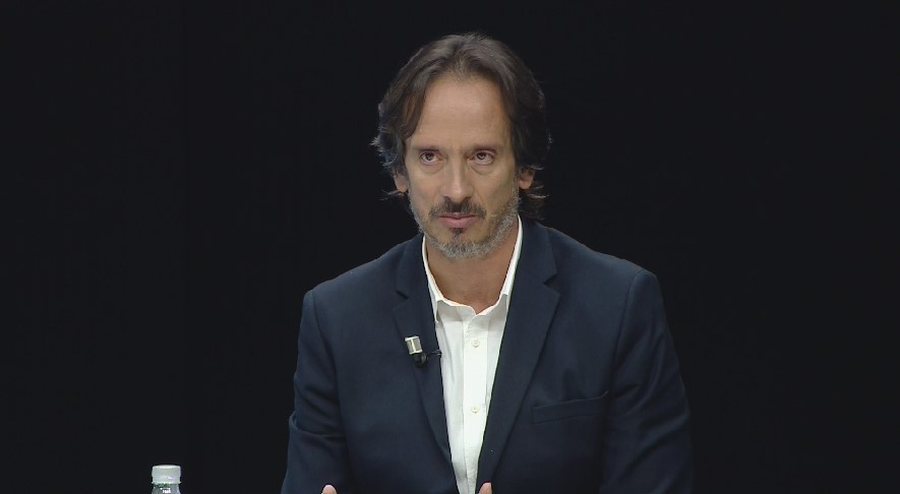
For the sake of truth, power is a goal and this makes the SP have no scruples. And, if for them it is normalcy, for the public it has turned into drudgery and complete mental confusion.
The idyll of the first years of democracy for political parties is over, especially in Albania, when until then only the Party of Labor and its symbolism existed, as a subject equal to the state. Now, apart from the two main parties and very few others that survived May 11, 2025, dozens of others constitute mere statistics for names and especially addresses that in many cases are not even identified. In the last General Elections, a full 53 political parties were registered, it is understood that fewer formations crossed the threshold than the fingers of one hand, so from now on they are simply part of the history of elections rather than having changed anything for the country. In fact, our entire political history after the '90s gathers around the two main parties, the Socialist Party and the Democratic Party, and then a few others, which have barely crossed the threshold, sometimes thanks to clever coalitions and alliances.
Now, their history is faded. What distinguishes them is their cleverness, which is often translated as violating morality to maximize votes in the interest of power. The paradoxes and wonders do not end here. The DP's move in the former local elections is not forgotten, when it brought the communists into its fold, the very party of the persecuted that stood for the cause of anti-communism! The SP is today on an attack to recruit anyone who has connections to the DP, other 'Rightists' or the Freedom Party and who can serve it.
The recruitment of many second and third-line opposition names in recent weeks has shown how politicians represent their public. For the sake of truth, power is the goal and this makes the SP have no scruples. And, if for them it is normalcy for the public, it has turned into drudgery and complete mental confusion. The reforms that are initiated remain in parliament, like the last one for the Electoral and Territorial Reform. The simmering conflict supposedly does not subside. However, when you look further and get to know our reality, you understand the network of factions, corruption and the names that cooperate on both sides and you realize that the functionalization of the state and democracy are simply slogans in countries like ours. We are now in the midst of the so-called inability of politics to build visions and the "crisis of the system". Today, people everywhere are losing the meaning of parties and the need for them. The last former president, Ramiz Alia, tried to make an "interesting" diversion by presenting the mass organizations, as they were then called, as electoral groups. The experiment did not work.
Today, the party regime everywhere in the world is taking major blows and even for the very concept of party identification. The well-known political researcher Giovanni Sartori defined the political formation as follows: “A party is a political group identified with an official label that stands in elections and is capable of placing candidates for public office through elections”. His definition separates the most rigorous criteria for identifying a formation from other organizations that aim to carry out political activities. But it is political movements that are now appearing as alternatives. “Self-determination” showed it in Kosovo, in Albania young people are being channeled into political movements. In the end, it is no longer unspoken: Political parties today are generally unpopular and are not trusted by the general public. The case of Albania, where less than 50% of the population votes, is no different from the Balkans, where the voting rate is the same and even lower.
A survey on public attitudes towards democracy by the Foundation for Political Innovation (Fondapol) together with the International Republican Institute (IRI), which was published in 2021, showed that: Political parties stood out as the least trusted institutions globally in the democratic world, with only 27% of overall trust versus 73% distrust. Parties were much more untrustworthy than parliament (42% trust versus 58% distrust), government (43% versus 57%), the media (44% versus 56%) or trade unions (48% versus 52%), the other institutions that had more distrust than trust. Political scientists see with concern that political parties: not only are they not trusted as institutions, but their membership seems to have reached historic lows.
The Conservative Party of the United Kingdom once boasted about 1.5 million party members in the mid-1970s, while now it barely crosses the threshold of two hundred thousand members! In Albania, this is seen from the lack of identification of the base with the DP but also the extinction of the former organizations of the SP in capillary form, where different opinions were fought and the voice of the masses was conveyed, to make way for the patronageists. Both are now far from the basic ideologies, Left or Right.
“The decline of political parties is part of a long-term social trend (Martens Center, 2021) that is linked to more fundamental changes that have affected European societies, including the declining role of ideologies, the atomization of societies, and the weakening of old social networks that constituted entire social ecosystems, of which political parties were only one aspect,” say authors Paul McCarthy, Thibault Muzergues, and Patrick Quirk in their article “Unloved but Indispensable: Political Parties in Europe.” The above researchers see the trend as linked to the individualism of the 1980s, an element that has made their citizens less aware of their belonging to a political family, or to a particular social class, and as a result, they conclude: their political identities have become more fluid, resulting in less loyalty to parties or platforms and more support for a particular personality, they argue. But it seems that the biggest challenge to parties, as well as to society, is the rise in the power of the internet and social media in the 2000s and 2010s.
There can no longer be any talk of long-term projects of political parties, which means respecting their ideology, adapting to global interests and presenting candidates to defend these interests and ideologies in elections with the aim of exercising power in the name of principles or for the common good. This does not matter. Life has become a Big Brother and the very existence of parties is irrelevant to modern politics. The flight of individuals from party to party is no longer a trend or a surprise.
Therefore, there is more and more talk about the extinction of political parties and new ideas in an era of social media, where the idea is that we are now moving from centralization to the directed organization of a political decentralization. And the result: The Atlantic Council's Freedom and Prosperity Indexes show that political freedom in Europe has been steadily declining, while the Greek case with the decline of historical parties; France followed with the historic change, where the two parties that dominated the country's political life in the 2000s and early 2010s, respectively the Socialist Party (PS) and the Republicans (LR), were eliminated within a single election year (2017) by Emmanuel Macron. In the 2022 presidential election, their combined share of the vote in the first round was just over 6%.


Lini një Përgjigje