


 Shkruar nga Skënder Asani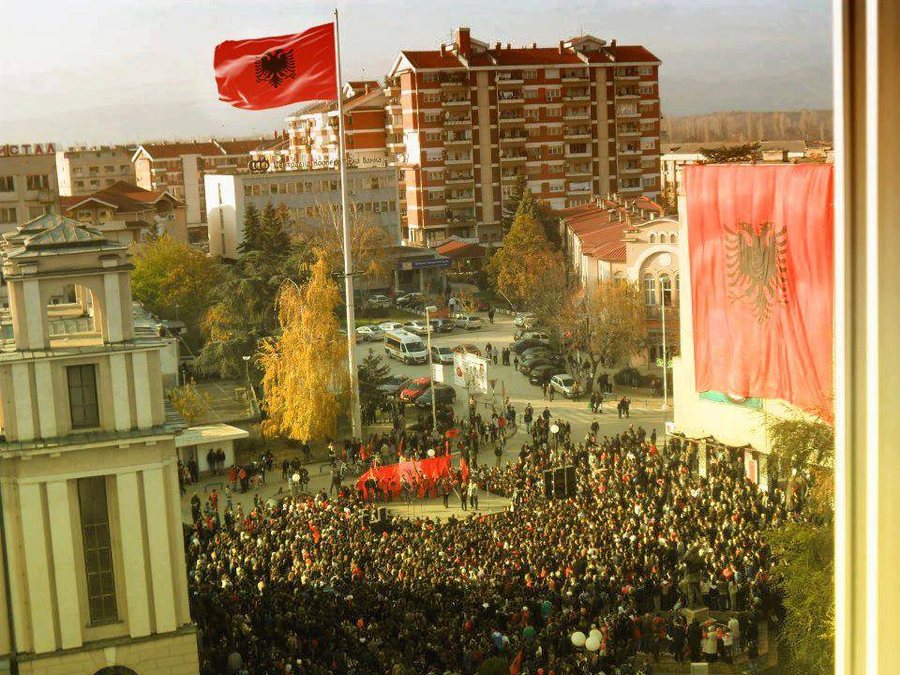
Kumanovo is proof that history is not simply the past, it is a project that reappears in different forms, whenever there is a lack of will to close it with justice. For Albanians, this is the time to move from rhetoric to organization, from passivity to measured action and from sensitivity to symbolism, to building a new political architecture, which puts an end to the cycle of repetitions...
In the history of the Balkans, there are cities that, more than geographical spaces, represent states of mind, turning points and long-term political projections. Kumanovo is one of them. It is not simply a city on the border between ethnic and political realities, it is a symbolic code, filled with memory, tensions and projections. In October 1912, this city became the scene of a geopolitical project aimed at reconfiguring the regional order, through a violent paradigm, where Albanians and other communities were pushed to the margins of institutional and historical existence.
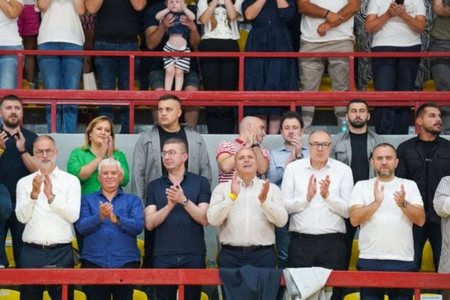
More than a century later, in an era when the spirit of equality and democratic coexistence should have dominated, it seems that a similar episode is unfolding on the same streets of this city, with different means but with known goals. The hateful language, exclusionary rhetoric and alarmist messages heard in the sports venues of Kumanovo cannot be treated as isolated episodes. They represent the symptoms of a political culture that has been tolerated in silence, which now seems to be surfacing with dangerous self-confidence.
During the year of the new government, Kumanovo has become the scene of a series of institutional manifestations that, instead of promoting coexistence, have amplified the symbolism of the Serbian world and its hegemonic narratives. The culmination of this approach was seen in the manifestation in Zebrnjak, where the triumphalist symbolism of 1912 was revived in an organized and official manner, through a discourse that affirms the hegemony and dominance of a world that reads history as a justification for the exclusion of the other. The demonstrative marching of high political figures, such as Ivica Dačić, along with many other similar events, were not spontaneous actions, but part of a direct political message that aims to convince the Serbian voter that the project of the "Serbian world" is being successfully implemented also at the local level. In this context, the recent event in the Kumanovo sports hall is not isolated or accidental, but a well-coordinated act, which aims to consolidate this narrative through the silence of the state structures present at the scene. This silence is not just a lack of reaction, it is a calculated part of a strategy of legitimizing the exclusionary rhetoric, which from an extreme manifestation is risking to take its place at the center of institutional politics.
The reaction or rather, the lack of reaction from the highest state authorities, including the Prime Minister, who chose to remain passive in the face of a discourse that undermines the foundations of coexistence, sends a strong political signal: that exclusionary language no longer constitutes an exception to the norm. This deliberate silence, which is repeated in other cases where public figures articulate offensive attitudes towards Albanians, becomes an indirect policy of legitimacy of exclusion.
Moreover, the current government, which emerged from the elections with a rhetoric of restoring the state, has very quickly oriented its discourse and action towards narrowing the rights guaranteed by the Ohrid Agreement, with clear tendencies for the strategic repositioning of the country towards the BRICS axis, thus challenging the Euro-Atlantic orientation that has been built through the joint effort of all communities. This reality cannot be read outside a broader regional framework, where alternative projects to the West are seeking new spaces of influence, often through the rehabilitation of old narratives.
The event in Kumanovo, then, is not a peripheral incident, but a clear historical reminder. In the late 1980s, a sports match became the catalyst for the breakup of Yugoslavia, proving that sport, in polarized societies, is rarely just sport. When slogans with ethnic connotations are articulated in the stands, when institutions are silent, and when silence confuses determination with neutrality, a climate is created where polarization gains strength and coexistence weakens.
In this context, Prime Minister Hristijan Mickovski's warning about support for Albanian candidates in the local elections cannot be separated from the big question that is being asked: what is being asked in return? If this support is translated into a request for silence, submission or conformism, then we are not dealing with sincere cooperation, but with a silent pact for the status quo, which does not see Albanianness as a partnership, but as an obstacle to another political project.
The reactions of Albanian political entities, instead of being synchronized and powerful, often appeared fragmented and weak, focused more on image management than on building a long-term strategy. What is required today is not just an emotional or declarative reaction, it is the need for a clear political platform, for a new Albanian consciousness that knows history, reads the present and prepares the future with democratic, institutional means and with reliable partners.
Because the current challenges cannot be addressed with the logic of permanent victimization. We must overcome the paradigm of reactive response and build an active presence, which does not seek privileges, but guarantees equality. It is no longer enough to condemn a word, a gesture or an event; a framework must be built that prevents the recycling of these phenomena and guarantees real coexistence.
Kumanovo is proof that history is not simply the past, it is a project that resurfaces in different forms, whenever the will to close it with justice is lacking. For Albanians, this is the time to move from rhetoric to organization, from passivity to measured action and from sensitivity to symbolism, to building a new political architecture, which ends the cycle of repetition.
Because the future does not belong to those who remember the past as an alibi, but to those who understand it as a lesson to prevent the same history from being written again with new means, but with the same consequences.
Skopje, 04 August 2025



Lini një Përgjigje