


 Shkruar nga Paolo Garimberti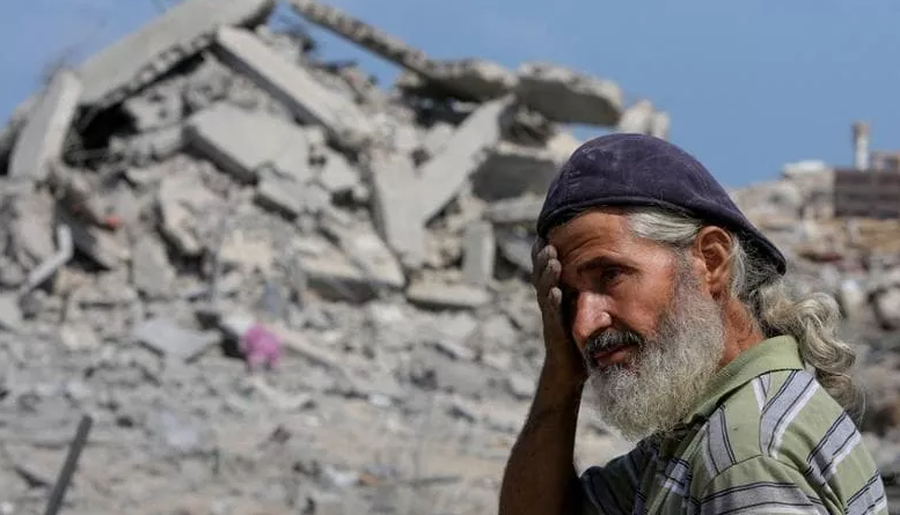
For Vladimir Putin and Benjamin Netanyahu, war serves their personal interests, but casts a dark shadow over the countries they govern.
It is no coincidence that President Mattarella, in his speech two days ago at the Fan Ceremony, compared the "shocking" situation in Gaza to the "painful" war in Russia and Ukraine. Because these two crises, with no end in sight in the near future, have one thing in common that makes them unacceptable: for Vladimir Putin and Benjamin Netanyahu, war is an instrument of power, a guarantee of survival. It serves their personal interests, but it casts a dark shadow over the states they govern. Indeed, both are under a mandate from the International Criminal Court.
The Israeli prime minister would end up on trial in his own country if he were to lose his status, making him a hostage to the far right, to fanatical ministers like Smotrich and Ben Givr, and causing him to ignore the fate of the fifty hostages, thereby prolonging the senseless violence in Gaza. If the Russian president were not able to successfully complete the "special military operation", he would lose the face and consensus he enjoys, especially in the westernmost part of Russia, less affected by the war.
That is why he continues to bomb Kiev - he did so again last night, even killing a child - and continues his offensive on the front, taking tens of thousands of lives. During the day, people in Gaza die from IDF shells targeting civilians, while at night people die in Kiev from Russian Army missiles.
There is another element that unites Putin and Netanyahu. Both scoff at Donald Trump's pressure and ultimatums, which infuriates the US president. After declaring that there is "a real famine" in Gaza (contradicting the Israeli prime minister) and that he has "different plans" for the Gaza Strip, Trump sent his negotiator Steve Witkoff to Gaza and put all the blame on Hamas. He wrote yesterday that it must "surrender and release the hostages" (in his usual imperative style with capital letters and exclamation marks).
Putin, on the other hand, ignores Trump's ultimatums for "very tough" sanctions, which the tycoon always pronounces in large capital letters and exclamation points. The Kremlin's response to the White House's latest threat was cold, even mocking: "We're considering it." Trump, who before his re-election had announced that he would end the war in a day, no longer hides his disappointment at the deceptions of the former KGB colonel, who, after speaking with him privately, called for the bombing of Ukrainian cities.
Trump, along with Putin and Netanyahu, also fits into the discouraging picture of the international situation described by Mattarella, having been placed on the blacklist of "Russophobes", according to the Kremlin's consistent line: "Today, many protagonists in international life aspire to be feared rather than appreciated and admired."
The Russian president and the Israeli prime minister, with their wars, and the American president with his bombastic (often false) announcements, fit this description perfectly.
Of the two wars, the one in Gaza seems less distant, although not in the immediate future. The announcement of the recognition of a Palestinian state by several countries, including two major powers such as France and Great Britain (permanent members with veto power in the UN Security Council), and the Arab League document itself - with the influence of Qatocui - calling for the disarmament of Hamas and the relinquishment of power over the Strip: these are still faint signals, but they should not be ignored.
However, in Ukraine there are no signs of this. If anything, it is the indefinite prolongation of the war. Yesterday, with an overwhelming majority, the Parliament approved the new law, largely prompted by street protests, which restores their autonomy. The mistake has been corrected, but the wound in Ukrainian civil society remains open.
Corruption is endemic (the two agencies are targeting 31 current members of parliament and 40 former deputies). Even the president's "magic circle" is not immune. Because the affair confirms the enormous power of the eminence grise Andriy Yermak, Zelensky's chief of staff, who supported the later repealed law.
Finally, because the president's "unnecessary mistake" damages the image of Ukrainian democracy, undermines the morale of troops at the front, and encourages desertions and flight abroad. Putin, indeed, needed this gift./ Adapted from "Pamphlet" by "La Repubblica".


Lini një Përgjigje